HPD May Have Shared Your License Plate Data With The IRS
Oct 01, 2026 | 6:01 am ET
Description
Photo courtesy of Honolulu Civil Beat
Honolulu motorists had their license plate information and driving locations accessed by the U.S. Internal Revenue Service more than 2,000 times this year through a data-sharing agreement with the Honolulu Police Department.
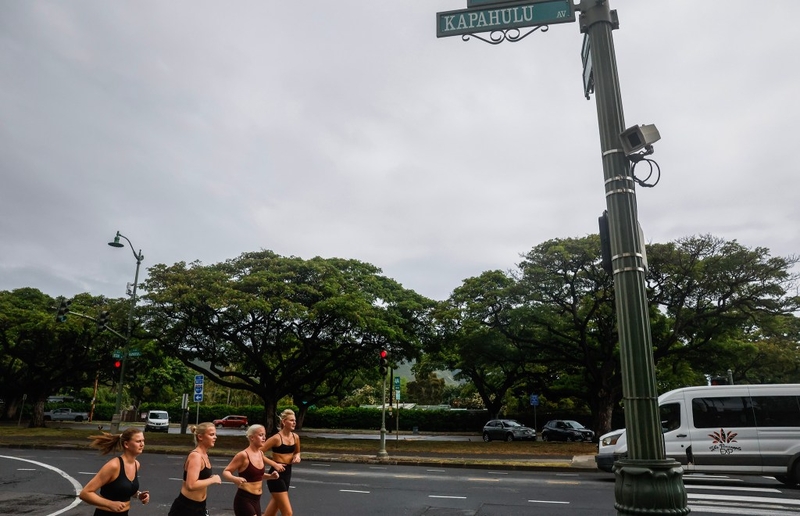
The vehicle detection reports were generated by dozens of HPD cameras that record plate numbers, images of the motor vehicle and the date, time and location when it was photographed — enabling users to precisely track the movement of the car and its driver.
The federal tax agency reviewed 2,036 files recorded between May and September on 10 fixed cameras in Waikīkī and 60 mobile HPD cameras around the island. It was able to access the HPD data through an agreement signed last September by then-interim Police Chief Rade Vanic, and co-signed by the IRS in December. But David Lazar, who took over as HPD chief on July 2, has ended the agreement.
“We’re shutting off their access and I’m making it abundantly clear that we’re not sharing data with anyone,” including federal law enforcement, Lazar told Civil Beat last week. The chief, who came to Hawaiʻi from San Francisco, said the agreement didn’t “fit his vision” for HPD.
The department is backing off data sharing as automated license plate readers, or ALPRs, have sparked controversy nationally. The technology has raised concerns about surveillance of Americans going about their daily lives; abuse by police officers using the data for personal reasons, including stalking; and use of location data by the Trump administration, which has made a point of targeting immigrants. Critics have also questioned how the private companies that collect the data might use, or abuse, the information.
Meanwhile, communities across the country are discussing what information regarding the cameras and data sharing should be public record.
Vanic signed the agreement without the knowledge of the Honolulu Police Commission or members of the Honolulu City Council.
In an emailed statement Wednesday, Vanic said IRS Criminal Investigations requested the memorandum of understanding, or MOU, with Honolulu. "As is standard procedure, all internal stakeholders had a chance to weigh in prior to the MOU being established," he said.
Lazar said he has only been aware of the memorandum for a few weeks, and it was the only data-sharing agreement HPD had regarding license plate data. He emphasized the department would no longer share the data with anyone, including other county departments or the state Department of Law Enforcement.
The IRS did not respond to emailed questions about its use of the vehicle information. Lazar said the agency’s criminal investigation division would possibly use it for cases involving tax evasion, suspected money laundering and other offenses. But in a recent instance, the IRS shared addresses with immigration authorities under another interagency agreement.
The existence of the agreement and the IRS' access to HPD data is very alarming, said Wookie Kim, legal director of the American Civil Liberties Union Hawaiʻi.
“This really underscores the importance of making sure that safeguards are in place for data storage and sharing when these technologies are deployed locally,” Kim said.
In several high-profile cases, data has ended up being used by law enforcement agencies for purposes unrelated to the reasons local agencies acquired it. In one case, Texas authorities used data from license plate readers to track a woman suspected of having an abortion. The search, part of a “death investigation of a non-viable fetus," included license plate readers located in places where abortion is legal.
Hawaiʻi departments continue to work toward integrating the technology, often before they have established firm guidelines for its use. The Hawaiʻi Department of Law Enforcement, for instance, has plans for up to 400 cameras, half of those on Oʻahu. And that’s welcome news to communities seeking a greater police presence in their neighborhoods.
“We think we have found something to keep our communities safe,” said Iwalani Laybon-McBrayer, vice-president of the Kaupeʻa Homestead Association in Kapolei, "because gun crime is very scary right now."
Networks Are Growing, But Policies Lag Behind
The federal access to HPD data comes as local law enforcement agencies look to grow the presence of automated license plate readers throughout the islands.
Honolulu police want to expand its network of cameras throughout Oʻahu. The state Department of Law Enforcement is installing more cameras on public roadways in partnership with the Department of Transportation. And departments on the neighbor islands are at various stages of adoption.
Maui County is currently using 32 Motorola cameras. The county would not release the camera locations “out of operational, security and public safety concerns,” spokeswoman Alana Pico said. The county does not sell or share the data, which is maintained on a “secure government system,” she said. A record request for more information on related contracts is pending.

Police on Kauaʻi are currently using Motorola cameras in tests at two locations, Līhuʻe and Hanalei, and the data is not shared with any outside agencies, according to spokeswoman Tiana Victorino.
The Hawaiʻi County Police Department does not have any license plate cameras in operation, spokeswoman Denise Laitinen said. Chief Reed Mahuna said that public meetings would be conducted before any cameras would be installed, she said.
But much of this expansion is happening without public discussion or awareness about the potential implications for personal information, Kim said. The DLE has general information about the license plate cameras on its website but no policy document posted as of September. The agency says it does not share the data with federal or state agencies or third parties.
The Honolulu Police Commission will be looking for assurance from the chief that the new policy to not share data with other agencies will be followed, according to chair Laurie Foster. That new policy, however, is still being written.
Meanwhile, media reports from across the country have revealed local and state law enforcement cameras have been accessed by federal agencies such as the Department of Homeland Security, sometimes without the knowledge of the department.
And the proliferation of automated technology that collects data from people not suspected of any crime is drawing concern from civil liberties groups and being challenged in the courts, Kim said.
“It's not an instance of just a single observation by a police officer of someone's whereabouts or conduct,” Kim said. “It's the kind of creation of this database that can be mined to piece together a picture of someone's life and their whereabouts.”
The ACLU and others argue that the vast data collection constitutes a web of unwarranted retrospective searches –– trawling expeditions that violate privacy protections under the Fourth Amendment. That argument is gaining some traction in the courts.
The sharing of taxpayer information held by the IRS is supposed to be subject to tight legal restrictions meant to protect privacy.
But in February it was revealed that the agency had shared the addresses of around 47,000 people with the Department of Homeland Security under a data-sharing agreement signed last year. Several lawsuits related to that agreement are still going through the courts.
Bipartisan Furor Over License Cameras
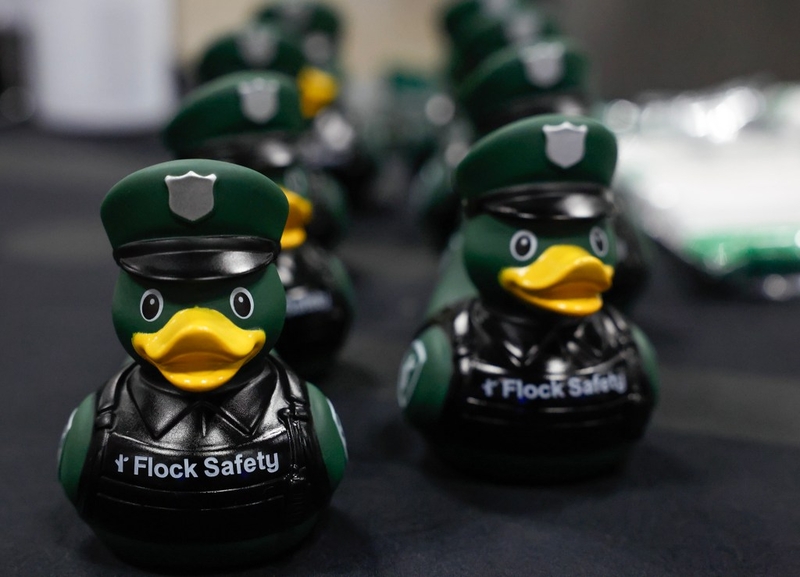
Pushback against the expansion of automated camera networks has been brewing on the mainland, particularly as it relates to the company Flock Safety. The company has cameras installed in 6,000 communities nationwide that scan 20 billion plates per month.
There could be up to 170,000 Flock cameras in use by government agencies, private companies and individuals nationwide, according to an online map and database built using the company’s own records. The company and most agencies tightly guard the exact location of cameras, and Flock is issuing takedown notices for websites that purport to track its product.
In a congressional hearing this week, the scope of Flock’s data collection was described by Republican Sen. Josh Hawley as “a surveillance network unlike any we’ve ever seen in this country.” The proliferation of the cameras has coincided with increased use of AI technology by law enforcement and other actors.
States including Florida and Texas are pulling out of agreements or freezing funding for Flock cameras over potential privacy issues.
"I'm all about having law enforcement have tools," Florida Gov. Ron DeSantis has said. "But I don't want to have this become a surveillance state."
Flock has engaged in a public relations push to counter the bipartisan backlash, saying that individual agencies have control over who has access to the data pulled by the cameras.
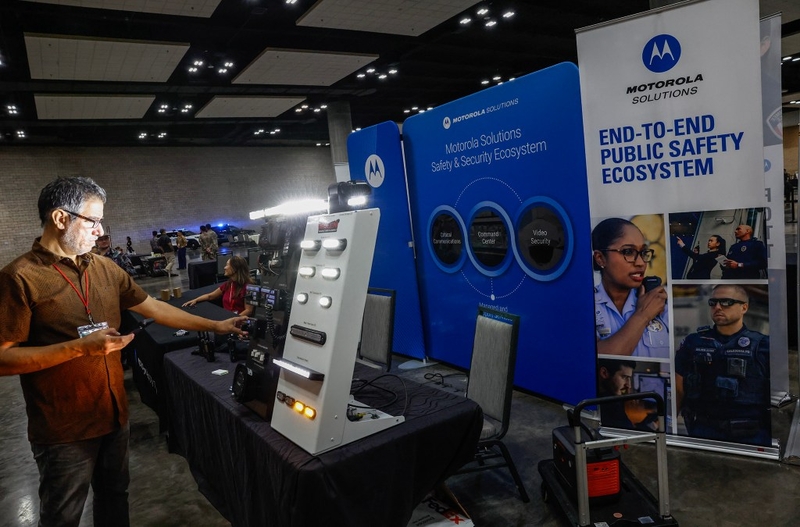
The rapid installation of automated license plate readers by companies like Flock, Motorola Solutions and Axon has also exposed flaws in internal safeguards against the abuse of the data collected. The absence of accurate logs tracking searches of the data has been exploited by some users.
The Washington Post reported that at least 100 law enforcement officers had illegally accessed license plate data to track ex-partners, relatives and members of the public. Five Indianapolis police officers were charged with fraud and misconduct this week after allegedly using the readers for unauthorized purposes. Another four are facing job termination.
The public controversy over Flock has registered with HPD, Assistant Chief Brian Lynch said.
“We’re not touching Flock,” he said. “We’re avoiding Flock like the plague.”

HPD did conduct a trial with Flock technology between September and December last year, Lynch said, but the cameras were returned and the department did not sign a contract with the company.
The trial initially consisted of three cameras. One at HPD headquarters, one at King Street and Kalakaua Avenue, and one at Kalakaua Avenue and Philip Street, according to Lance Aquino of HPD. One of the cameras was taken out of service soon after because of problems with solar charging.
As a condition of the pilot, HPD requested that all data be kept internal to HPD and not shared with any outside entities, and he said a recent review of an online portal the department used to monitor the cameras shows that none of the data remains.
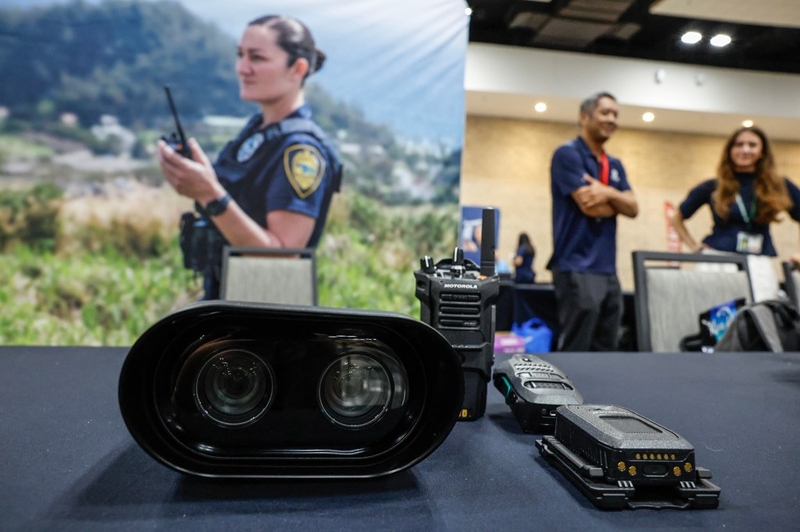
HPD currently has 70 Motorola cameras in use, and the information is kept on its own on-site encrypted data storage platform and then purged every 90 days under the department’s current data storage policy. In response to criticisms over amassing data, Flock has announced it is reducing its data retention period to seven days.
Under city ordinance, HPD is restricted to using static cameras only in Waikīkī and Chinatown, but the department is looking to work with the Honolulu City Council to expand that capability. The 10 Waikīkī cameras will be considered for overt use on public safety grounds by the council during the Honolulu marathon in December.
HPD recently published a notice that it was looking to activate the license plate capability of 20 cameras already installed in the Chinatown district. Meanwhile, there are 60 other mobile cameras mounted on police vehicles that have been in operation since 2012, Aquino said.
You Can Request Your Own Data
Council member Tyler Dos Santos-Tam, whose district includes Chinatown, said the IRS access was troubling and the data-sharing memo with the IRS was not raised with the Honolulu City Council.
“We probably should have known about this beforehand,” he said.
He said the council had been seeking clarification of any existing interagency arrangements involving HPD and that the council was exactly the forum where agreements like this should be discussed and approved.
Lynch said that the department is in the process of creating a public-facing policy that explains how the data is used.
“Given the climate, I would say we’re very apprehensive, he said. “But there will also be an audit trail to show exactly what data we were using and what we were sharing.”
Lynch said that the department will conduct quarterly audits tracking the number of data requests made, and by whom, to ensure the data is being used for legitimate investigative purposes. Lazar said those audits will be made public in a redacted form.
Additional internal privacy safeguards for HPD staff will also impact the amount of information that can be released to the public and the media under the state’s public records laws. The kind of granular data the IRS was able to access under the agreement, for instance, would not be publicly available, according to Lynch.
Individuals may be able to request their own vehicle detection reports, he said, but not those for other individuals.
“We did get a request from someone asking if his personal car had been captured,” Lynch said, “and we did look and it was and we actually sent him that.”
'Aina Intelligence': Homelands Embrace Surveillance
While the IRS access has raised alarm bells for some, HPD cameras have been behind a limited number of enforcement wins since 2020, Lynch said.
There have been 28 arrests resulting from the current network of cameras. Most of these were for car thefts. Other arrests related to domestic violence, criminal property damage, driving without a license, terroristic threatening and theft, assistant chief Lynch said.
Those wins are resonating in Hawaiian homestead areas, where there is a groundswell of support for using the cameras to address serious crimes including gun violence and property crimes, especially given police shortages on Oʻahu’s westside.
“We want responsible technology,” said Laybon-McBrayer of the Kaupeʻa Homestead Association in Kapolei. She is currently working to galvanize support from the 326 homeowners to adopt surveillance technology from the company SaferWatch in partnership with the state Department of Law Enforcement.
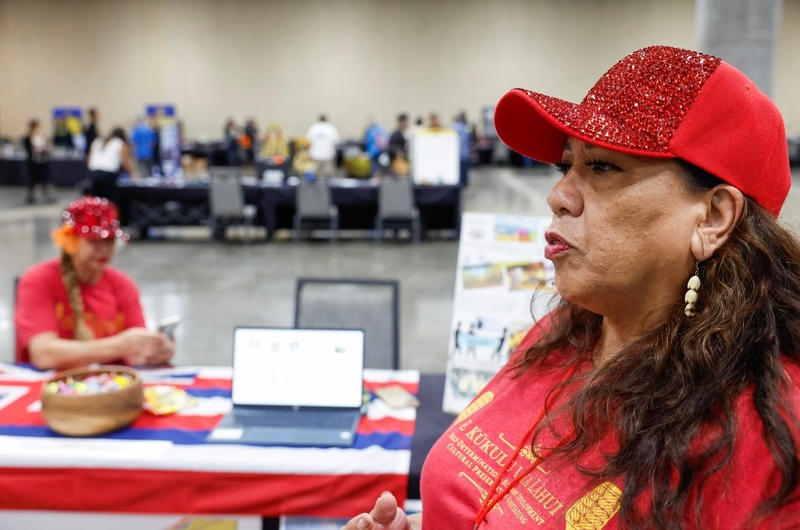
That program would include installation of license plate camera readers at the entrance to the community that could, for example, trigger an alert if a vehicle linked to a temporary restraining order was spotted.
She said the license plate technology would help address one of the major problems of enforcement on Hawaiian homelands: fear of retaliation.
“No one wants to be the one to identify perpetrators when it comes to violent crimes, because it’s a homestead,” she said.
The recent shooting death of a 30-year-old man in Kailua had given a sense of urgency to her goal of getting 60% of residents to support installing cameras that would be linked to DLE and community users of the SaferWatch app.
The DLE-sponsored program was recently adopted by residents at the Kanehili homesteads, a community with a high proportion of current and former law enforcement, she said.
The technology — along with strong messaging in the media — would send a clear signal for people to think twice about coming onto the homeland to commit crimes, Laybon-McBrayer said.
Her association had a longstanding relationship with DLE’s Mike Lambert since his time as a district major with HPD.
“None of us like Big Brother looking over our shoulder,” she said, but Lambert had assured her the technology would be tailored to address serious crimes on homelands and would not be used to go after people for expired vehicle registration or safety checks.
Laybon McBrayer said that instead of artificial intelligence, she was calling it “Aina Intelligence” that supports goals for Native Hawaiian self-governance, and the right to “quiet enjoyment” laid out in Department of Hawaiian Home Land leases.
Lambert said that DLE understood the sensitivities around the technology, and the goal isn’t total saturation.
“We’re just asking for enough to be able to make us more efficient in alerting the communities to danger,” he said.
Other DHHL communities, as well as Kalihi Valley Homes, Hālawa and Kūhiō Park Terrace, now have cameras, Lambert said.
Lambert said that in some locations, like ʻEwa Beach, the technology has been in place for over a year.
He said there have been no complaints from the communities about data from the cameras being misused. The panic around Flock, in his view, may be a public relations issue.
”My point is that nobody cared for a year," he said, "until this national fear was created.”
Ben Angarone contributed reporting.
Honolulu, HI