‘Cause for celebration’: SC opens 7th state forest
Oct 23, 2026 | 4:43 pm ET

Description
Conservationists stand under a tree at the dedication of Pocotaligo Station State Forest in Yemassee, S.C., on Friday, Oct. 23, 2026. (Photo courtesy of SC Forestry Commission)
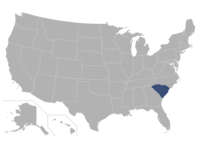
COLUMBIA — The state’s seventh publicly owned forest opened for visitors Friday amid a boom in state-owned public lands.
Pocotaligo Station State Forest, which spans parts of Beaufort, Jasper and Hampton counties, is the second new state forest to open this year. Before Old Beech Hill State Forest’s dedication in June, the last new state forest to open was Wee Tee State Forest in 2004.
The state parks department has also experienced a major uptick in properties, with three new parks opened in the past two years.

Foresters can still harvest timber from state forests, with the state Forestry Commission’s permission.
State ownership is meant to ensure the wood is harvested responsibly and sustainably, allowing the forest to stay standing for future generations, according to the commission.
It uses revenues from timber and land leases to manage the forests and pay employees’ salaries. A quarter of all earnings goes to public schools in the counties where the forests are located.
“The creation of a new state forest is cause for celebration,” said State Forester Scott Phillips in a statement. “We look forward to managing these lands for recreation, education and sustainable forestry, ensuring they continue to thrive and delight for generations to come.”
Running along Interstate 95 and major train lines, the property was considered to be at high risk of development, especially for factories and other industrial purposes, according to the Forestry Commission.
With major thoroughfares nearby, the land also “includes one of the area’s most visible remaining green spaces,” conservation nonprofit Open Space Institute said in a news release.
But development could pollute the water on the property, which runs off into nearby nature preserves.
Because of that, conservationists considered the land key in protecting the Ashepoo-Combahee-Edisto Basin, the 300,000-acre undeveloped watershed more commonly known as the ACE Basin, and Port Royal Sound, according to Open Space Institute, which bought the land before selling it to the state.
A federal Climate Pollution Reduction Grant is reimbursing the roughly $25 million various conservation nonprofits and state agencies, including the state Conservation Bank, chipped in to buy and protect the property, said forestry spokesman Doug Wood.
“By keeping the property wild and undeveloped, the land will continue meeting critical purposes: filtering and recharging water as it flows into local waterbodies and absorbing excess floodwaters, thereby protecting downstream communities from some of the devastating impacts of extreme weather,” the forest’s website reads.
The property has historical value as well.
The Yemassee Tribe, sometimes spelled Yamasee, lived in that area in the late 1500s, according to the Open Space Institute. Historians believe members of the tribe may have attacked British settlers on or near the new state forest’s land amid growing frustrations over the loss of their land and broken promises in fur trading.
That attack led to the Yemassee War in 1715, which ultimately drove many Native Americans out of South Carolina and down to Florida and Georgia.
The property also has ruins from British-built Fort Balfour, a Loyalist camp captured by Patriots in 1781 during the Revolutionary War.
“This is another major milestone for conservation in the Lowcountry,” Nate Berry, chief land protection officer for the Open Space Institute, in a statement. “With rapid development, we have to be strategic about protecting land.”
Although hiking and biking are allowed on the property, hunting is not yet permitted. The Forestry Commission is in the process of allowing hunters, with the goal of opening for the 2027-28 hunting season, according to the agency.
Columbia