The promise of a free education is fundamental to our democracy
Oct 01, 2026 | 5:55 am ET
Description
During the 2022-23 school year, West Virginia’s average per-pupil expenditure was $14,909 — a total that includes state, local and federal money. (Photo by Anne-Marie Caruso/New Jersey Monitor)
The American Civil Liberties Union of West Virginia announced a lawsuit last week over the unconstitutional underfunding of public schools. I’m not exaggerating when I say this may be the most important case we have filed in my 10 years with this organization.
The promise of a free education is fundamental to our democracy itself. It’s so vital that it was enshrined as a right in our 1863 state Constitution, and courts have interpreted that right to mean that schools must not only be adequately funded, but also fairly funded from county to county.
And yet, West Virginia sits at or near the bottom of most national rankings. Politicians have blamed schools, teachers and parents for poor educational outcomes, when the true cause is in black and white on the balance sheets.
During the 2022-23 school year, West Virginia’s average per-pupil expenditure was $14,909 — a total that includes state, local and federal money. While $14,909 was the reported average, the actual amount per student spent by counties ranged from a low of $12,158 in Barbour County to a high of $22,500 in Doddridge.
That gap gets even wider when you look at only the funding within the state’s control. Combined state and local education funding per pupil ranged from $10,542 in Barbour County to $24,924 in Tyler. In a system that requires that education funding be allocated fairly, some counties receive double the funding of others — not only presenting constitutional concerns, but driving averages up in a way that hides how significantly underfunded many West Virginia counties are.
Across the country, states spend more on education in counties with high rates of students with disabilities and students experiencing poverty because providing quality education to those students is often more expensive. In West Virginia, we do just the opposite: we spend less in counties with the greatest need, and more in counties with higher property wealth.
Chief among the many flaws in West Virginia’s school funding system is the failure to account for special education services. West Virginia’s special education funding is worse than it was decades ago. Because these services are required by law, failure to provide sufficient funding means that school districts need to dip into funding that would otherwise be used for general education services, or to cover the costs of keeping schools operational.
Looking beyond the funding formula, and including all state grants and special education funding, West Virginia provided an average of $8,057 per student. When the state doesn’t pay enough, counties are left to foot the bill. And a county like Lincoln will never be able to generate enough local wealth to operate the school system that students deserve. Counties generate local revenue for schools primarily through the general school levy, with statewide rates established by the Legislature, and optional excess levies meant to supplement basic school spending. Because these funding sources are tied to property tax, the amount of revenue available to counties — and the amount that gets spent on students — varies not based on need, but on whether students are being educated in counties with high property wealth.
The last time the courts took up this issue the case became so influential it still bears the name of the judge who decided it: the Recht Decision set the standard for school funding in West Virginia and changed the nationwide conversation about it. Despite these clear legal requirements set by our courts, the current funding system leads to outcomes that are worse than what was declared unconstitutional almost 50 years ago.
The current staffing formula provides Lincoln County with fewer staff than the formula at the time the system was declared unconstitutional. The gap between what counties receive, and what they spend, has widened instead of narrowed. School closures are increasing rapidly, as schools struggle to stay afloat with the meager funding provided by the state.
The law believes — as do I — that every West Virginia child is capable of great things that make our communities stronger, healthier and happier. A thorough and efficient system of free schools is what permits those futures to come to fruition.
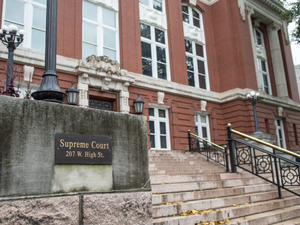
After years of neglect by the Legislature, it has become clear that children’s constitutional right to education will be left to erode if the courts don’t demand action and declare that the current system isn’t just immoral — it’s also unconstitutional.
Charleston, WV