Put the AI servers within sanctuaries
Oct 01, 2026 | 8:00 am ET
Description
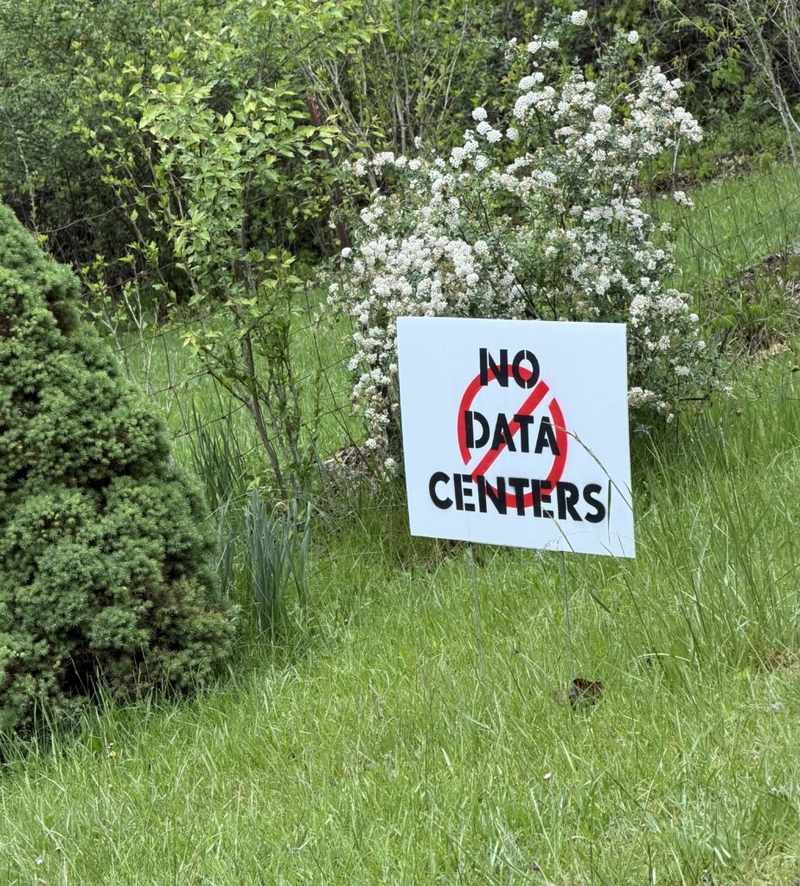
No Data Centers sign in Howell, Michigan | Photo by Jon King/Michigan Advance
This summer, while University of Michigan leadership defended a proposed data center with Los Alamos National Laboratory, my family gathered for my late sister Rachana’s birthday at a different kind of infrastructure.
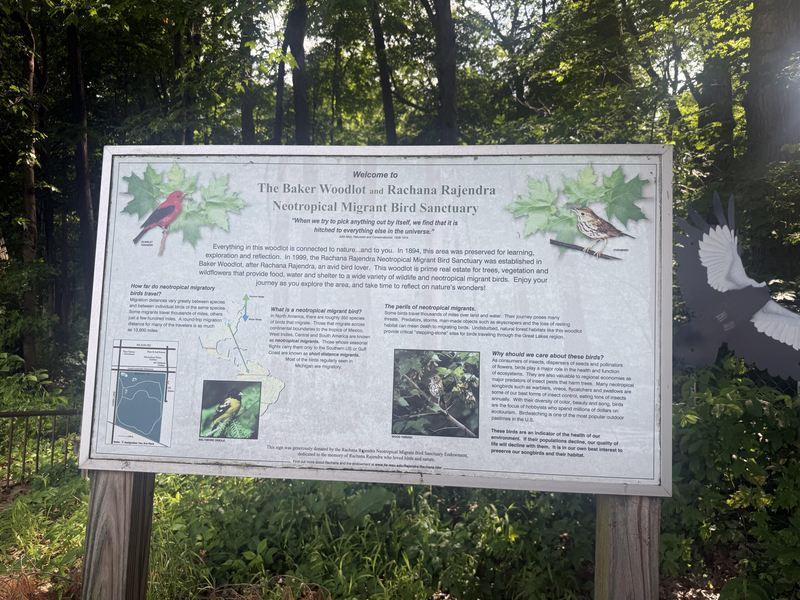
Decades ago, my parents partnered with Michigan State University to establish the Rachana Rajendra Serenity and Bird Sanctuary, a 78-acre nature preserve in East Lansing to honor their daughter’s life, which transitioned too soon. Rachana, whose name in Sanskrit means creation, was an electrical engineer who also loved nature.
For years, in anguish, I appreciated this urban refuge as a family tribute to Rachana. But it is also an example of the kind of public sanctuary that Michigan could create around AI data centers. Such an integrative space could uplift both the economy and the ecology if only public officials used imagination, leverage, and the state’s extraordinary tradition of innovation and commitment to its natural resources.
The hyperscale University of Michigan proposal is currently designed as the epicenter of an extractive site whose harms to surrounding communities will span from toxic stress to toxic chemicals.
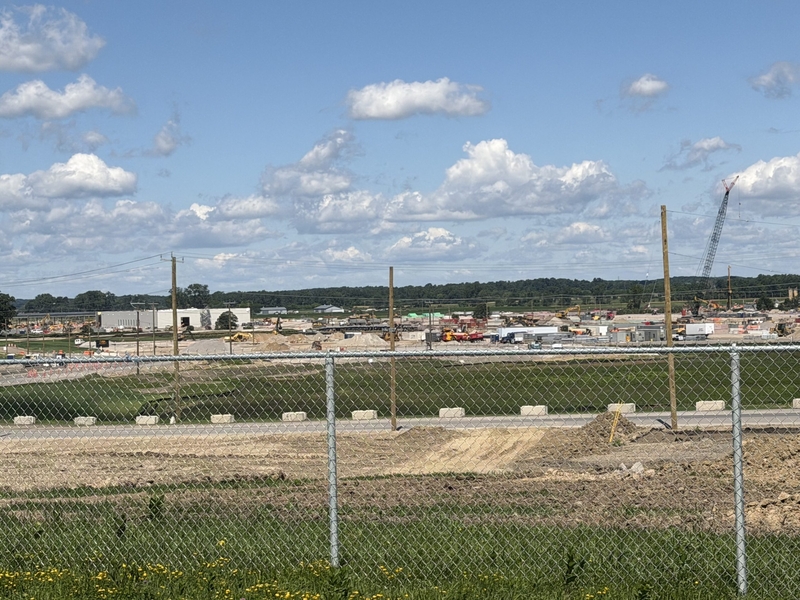
Fifteen miles from U-M/Los Alamos, another massive data center construction site is unfurling. At $56 billion and 21 million square feet, Saline’s Stargate “Barn” is Michigan’s biggest construction project. But the billionaire investors behind this project now also want to dump their wastewater into the Saline River.
Technology leaders who are publicly urging “pacing the frontier” on AI itself should prioritize creating more sustainable, life-centered value from campuses drawing a nuclear reactor’s worth of power.
Imagine how slowed and discerning development could build these campuses with safe, non-toxic materials and contain industrial waste on-site. The State of Michigan can foster pioneering collaborations between entrepreneurs and its pre-eminent educational institutions — including MSU’s ecological expertise (from the nation’s first land-grant college) with U-M engineering innovations — to transform each data center blueprint into an economically-robust-ecological sanctuary.
Imagine if, together, Michigan minds build a regenerative star within a nourishing universe: a data campus that captures and uses its own rainwater, recycles its cooling water, generates more solar, wind, and geothermal energy than it consumes, and feeds the surplus back to neighborhoods. The biodiversity-balanced buildings would be ringed by refuges of native food forests, waterfalls, ponds, parks, streams, and community gardens.
Admittedly, such technological utopias don’t yet exist and most data center acreage does not usually begin with ecological abundance. Even simpler ecosystems like Rachana’s sanctuary can take generations to flourish. But precedent exists to slow down. Minnesota offers a baseline framework. Pennsylvania has restricted new data center construction, and New York’s Executive Order 62 has paused hyperscale projects pending review.
In England, major developments are required to enhance land by 10 percent with Biodiversity Net Gain laws and be accountable for at least 30 years with independent ecological audits paid for by the investors.
Here at home, more government and university policymakers should follow the lead of Ypsilanti Township Supervisor Brenda Stumbo and Congresswoman Debbie Dingell, who blocked the U-M project’s power and water and called on U-M to pause. I ask Michigan policymakers to use their own leverage to integrate community voices to dream, drop rushed plans, and, eventually, develop better.
I love Michigan deeply, and most Michiganders do; it is one of the most beautiful places in the country, a state whose natural resources are our united pride.
As a result, standards for balancing economic development with the natural riches of the people’s peninsula must be higher here.
In Graeme Base’s children’s book “Uno’s Garden,” a village expands from a forest. Soon, nearly every creature, and wonder, disappears. The villagers must try to restore balance with the remnants.
I hope Michigan does not have to lose the wellbeing of its people or the wellspring of its wildlife to learn the lesson. The population of Kirtland’s warblers, songbirds that nest primarily here, declined 34% between 2021 and 2025. Michiganders fight for the Karner blue butterfly, celebrate the comeback of the lake sturgeon, and value the countless silent species with their own claims on this land.
Data centers are inevitable (any building with servers is one) and artificial intelligence has the potential to unlock life-saving secrets about the natural world. I’m not an anti-technology person; however, when billionaire investors offer pennies on the parcel, Michigan should ask for more and build hyperscale campuses that people will yearn to visit like forest-bathing sanctuaries.
My sister Rachana simultaneously engineered signals and appreciated soil. Her essence still emanates through the streets, streams, and yes, electrical signals, across Michigan. A metal sign at the entrance of the sanctuary reminds visitors of the interconnectedness of all things. “When we try to pick anything out by itself, we find that it is hitched to everything else in the universe,” says the quote by naturalist John Muir.
Let’s ensure our peninsula continues to be a haven where life energy flows for eons – not only through our souls but through our built environments.
Lansing, MI