Peltola’s words create a teachable moment, but an apology is required.
Sep 30, 2026 | 5:00 pm ET
Description
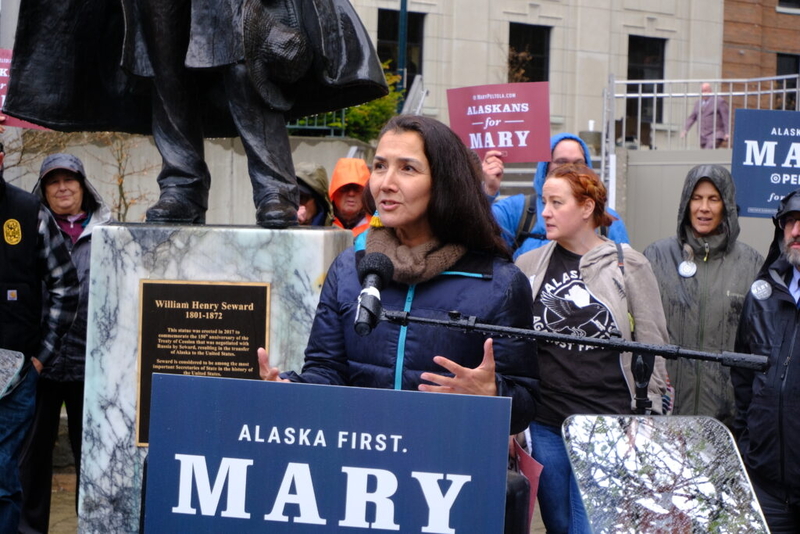
Mary Peltola speaks at a campaign event in Juneau on May 14, 2026. (Photo by Corinne Smith/Alaska Beacon)
This commentary was originally published in the Anchorage Press. Subscribe here.
Mary Peltola’s use of hateful speech, including the R-slur and the F-slur, is more than a political matter. It cuts to the core of who we choose to be: Will we be a people that allows for words like this to be wielded without consequence? Or do we decide what is acceptable for ourselves, our candidates, our party, and our nation by demanding accountability and apology?
Had anyone else used these terms, the response from the Democratic Party would be swift and unified, so there’s no need to make the case that the hate speech of slurs is abusive. And the Peltola campaign has acknowledged the veracity of many of the worst statements, so the cries of “fake news” are foolish.
The only question that remains is, since these hateful words were used: What should happen next? The way we answer defines who we are and what we choose to allow politics to be. My answer is this: It’s not enough to win an election; we have to be people who deserve to win.
That means that we have to expect and demand compassion from our leaders. Politics is getting uglier and uglier, and the way to work against that is not by following other candidates into their ways of cruelty. It’s by leading the way to something better by acknowledging and apologizing for the times when we fall short.
Mary’s campaign referred to her very real and enormous burden of grief as a factor in her making those statements. That’s fair; grief makes us do and say things we might otherwise not. That still requires a sincere apology. That’s how we can rebuild trust in our democracy, and trust that good and ethical candidates can get elected.
One of the gifts of living in Alaska is that we truly do know our elected officials. We see them at events and we build relationships with them. So this is the time for our candidates to lean in and build trust by acknowledging when harm has occurred, and naming what will be done to protect every constituent going forward. Expecting compassion and apologies for wrongdoing isn’t naive; it’s the foundation of every ethical system on earth. It defines who we are, it builds trust, and it differentiates the Democratic Party from the cruelty of MAGA. It’s how we demonstrate that we deserve to win.
Political machines will tell us to ignore these slurs and downplay the harm that they do to members of our community. But that cannot be who we become. It would be a betrayal of the people in our communities who are targeted by these slurs.
We should instead require basic human decency from all candidates, and apologies for when they fall short of it. If a candidate is unable to reach that very low bar, can we truly say that they deserve to win?
It’s absolutely appropriate to require an unequivocal apology from Mary herself, not a half-apology through a spokesperson. Responses from the Alaska Democratic Party and the candidates that they endorse should also be a bare minimum of thoughtfulness, because silence is also betrayal. I truly believe in grace and forgiveness, but they require an acknowledgment of the harm that has been done.
This is a teachable moment. We can show Alaska and the nation that apologies are a sign of wisdom and strength, that choosing words of compassion matters, and that people of good character can win elections. But if we follow the MAGA playbook of cruelty without apology, then we have forsaken our foundational ethical mandate to love our neighbor. And if we do that, we no longer deserve to win.

Juneau