Justices consider appeal in challenge to Nebraska overseas voter law
Sep 30, 2026 | 12:00 pm ET
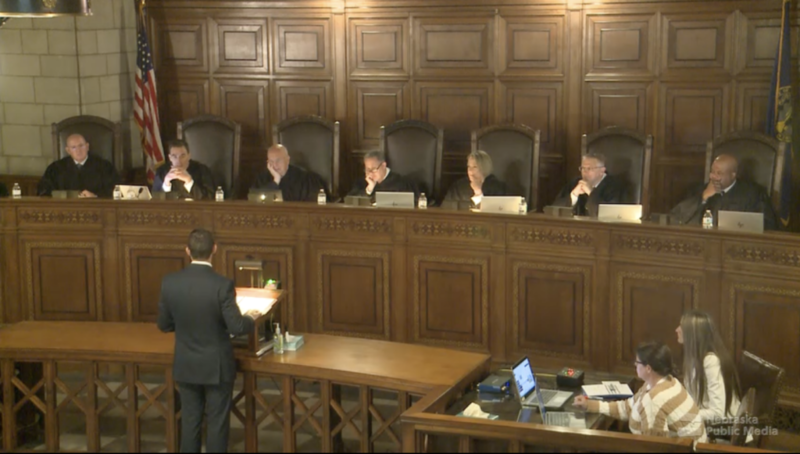
Description
The Nebraska Supreme Court hears oral arguments on Sept. 30, 2026. (Screenshot of Nebraska Public Media livestream by Zach Wendling/Nebraska Examiner)
LINCOLN — Nebraska’s highest court heard arguments Wednesday in a Republican National Committee challenge seeking to overturn a state law allowing certain overseas voters to vote.
The RNC and two Lancaster County voters, Jack Riggins and Pam Dingman, appealed a lower court’s ruling on their objection to a state law dating back to 2005 that allows U.S. citizens who have never resided in Nebraska but who have a parent registered to vote in one Nebraska county to register in that county. It would be a felony to register or vote in multiple states or counties.
The RNC argues the law “dilutes the votes of lawful Republican voters” and violates Article VI, Section 1 of the Nebraska Constitution, which defines a qualified voter as a U.S. citizen who “has resided within the state and the county and voting precinct for the terms provided by law.”
“I truly believe that my vote is precious to me. It’s significant. I’m jealous about my vote. I don’t want anybody taking my vote away from me,” attorney J.L. Spray told justices Wednesday. “I don’t want anybody adding people to dilute my vote, and that’s the attitude most voters should have.”
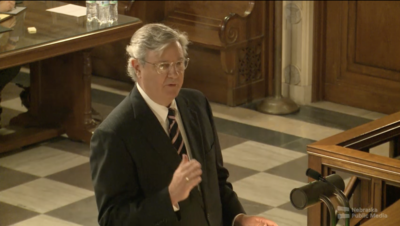
Spray said the Legislature can determine the time and method of voting, as well as the tabulation of votes, but lawmakers can’t disqualify a voter or qualify new voters. He said in this case, the state law expands rather than implements voting rights.
Attorneys for the RNC have said they do not intend to challenge the voting rights of any Nebraskans — military, diplomats or otherwise — who have lived in Nebraska first.
Lancaster County District Judge Ryan Post ruled Aug. 12 that there was at least one constitutional application for the law, so it couldn’t be challenged as unconstitutional on its face.
For a statute to be ruled unconstitutional, a supermajority of the seven-person Supreme Court — at least five justices — would need to agree. Court decisions are more than often unanimous.
Attorneys for Nebraska Secretary of State Bob Evnen, from Nebraska Attorney General Mike Hilgers’ office, offered a hypothetical scenario: a voter born in South America to Saunders County missionaries who intended to return home.
“This court long ago held that residence means domicile, and plaintiffs agree that physical presence is not required to establish a Nebraska domicile,” Deputy Solicitor General Zachary Pohlman told the high court Wednesday.

As of July, 116 overseas Nebraska voters were registered under the targeted statute, six of whom voted in the May 12 primary, according to data from Evnen’s office, including one voter in Lancaster County. In total, 30 of the 116 voters are registered in Lancaster County.
“I know we’re talking about small numbers here — potentially an albino unicorn of some kind — but even one vote can make a difference,” Spray said.
Dingman is running unopposed for reelection as Lancaster County engineer. With no opponent, she wasn’t on the May ballot.
General election ballots were sent to some targeted voters as early as Sept. 3 — noncertified ballots with space to fill in any candidates or issues not yet certified by that date. The ballot was certified Sept. 11, and finalized ballots were sent to other overseas voters by Sept. 18.
Chief Justice Jeff Funke of Nebraska City and Justices William Cassel of O’Neill and Stephanie Stacy of Lincoln each pressed Spray on how the Nebraska Supreme Court has in the past defined “resided within” under Article XI, Section 1 of the Nebraska Constitution.
Spray said it means the voter must have a “nexus” to the state, either physically or through an intention to return. He said a person above the age of majority, 19, also changes the calculus.
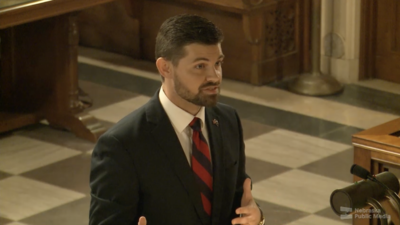
Post, however, agreed with Pohlman. He had pointed to an 1895 Supreme Court case where the justices generally accepted that “residence” was synonymous with “domicile.” If the overseas voter chose a new residence, Pohlman said, they would no longer qualify to vote in Nebraska.
Spray asked the justices Wednesday: “How can you abandon a residence you’ve never had?”
The AG’s Office argues that neither the RNC nor the local voters, including Dingman, have standing to challenge the law. Funke asked who, then, could challenge the law if they wanted to. Pohlman said the state attorney general could, if the office disagreed on constitutionality.
Post found that Dingman did have standing, which is why he ruled on the merits of the case, but Justice Jonathan Papik of Omaha and Cassel questioned Pohlman on whether Dingman did. Papik questioned whether it was speculative that Dingman could draw a write-in challenger by an Oct. 23 deadline, while Cassel questioned whether it would be speculative even if she was opposed. To both points, Pohlman said he believes the injury is speculative, and if the justices agree, he said the court should send the case back to Post with directions to dismiss the matter.
Funke asked Pohlman whether the state law increases the number of qualified voters as Spray alleges. Pohlman disagreed and described the law as a matter of implementation.
Said Pohlman: “What it ultimately does is basically like a vote-processing rule.”
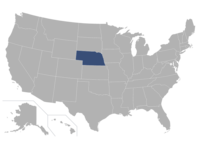
Lincoln, NE