Done being silent: Pa. legislators push package to close gaps in menopause treatments
Sep 30, 2026 | 2:36 pm ET
Description
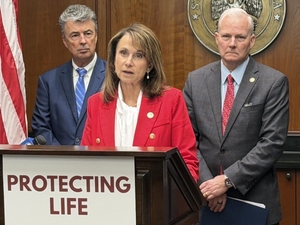
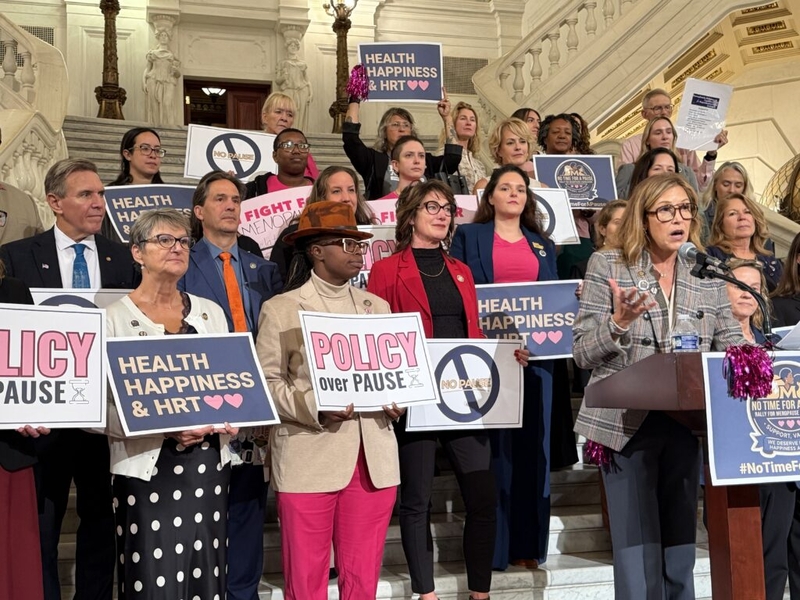
Sponsored bills include education about perimenopause and menopause as well as expanding insurance coverage for treatment options. (Photo by Whitney Downard/Pennsylvania Capital-Star)
As Rep. Liz Hanbidge started promoting her bill to educate and promote health access for women experiencing perimenopause and menopause this week, one fellow lawmaker said he’d support the measure — but wished she’d stop talking about it.
“He asked me to stop talking about it because he thinks it’s gross,” Hanbidge (D-Montgomery) said. “To my colleague, if talking about menopause makes you uncomfortable, imagine going through it without anyone talking about it all.”
“For generations, women have been expected to quietly manage these changes, figure it out themselves and keep going. We are done with that,” Hanbidge continued.
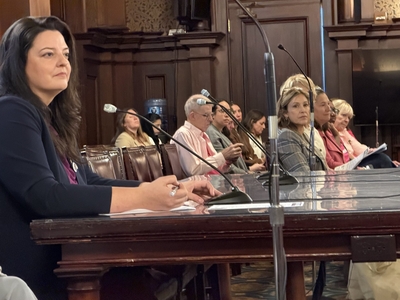
Several female legislators shared similar stories about overcoming the social aversion to discussing perimenopause or menopause, which every woman will experience in her lifetime.
As the body’s hormone production ramps down, women experience fatigue, hot flashes, mental fogs, anxiety, insomnia, headaches, sweating, mood swings and more — but “for decades, it has been under-discussed, under-researched and under-reported,” Hanbidge said.
She pointed to a Gallup study released last week, in which just over one-third of women said they had “a good understanding of the symptoms of menopause.” Even fewer, 25%, said the same about treatment options.
Rep. Maureen Madden (D-Monroe) said that when she experienced menopause, she was advised to buy cooling pillowcases and nightgowns, but wasn’t warned about how it impacted her bone density.
“I didn’t know I had a bone density problem until I fell and broke my shoulder at 65 years old,” said the 66-year-old. “We should be doing screenings. We should be taking care of women’s health at every turn.”
Women can live one-third of their lives post-menopause, with most starting the process in their 50s — though perimenopause symptoms can start a decade earlier.
“We don’t just have babies and then we go through menopauses, and then we’re done. We’re women who want to have lives, who want to have careers, who want to be healthy,” said Madden. “These treatments will help and women deserve it.”
Madden, who chairs the House Aging & Older Adult Services Committee, spoke in favor of four bills to expand insurance coverage for menopause treatment options. All of those, including two authored by Hanbidge, are part of a multi-bill package advancing through the House this week.
Support wasn’t unanimous, however. A handful of Republicans opposed the measures in various committees, with some voicing concerns about increased Medicaid costs.
“I have a very large percentage of my constituents that are seniors … but I have never had one senior come into my office asking for policy on menopause,” said Rep Barbara Gleim (R-Cumberland), who voted no on four bills in Madden’s committee. “What I do hear from my seniors (is) scamming, which we have worked on in this committee, and abuse. I would really like to focus on those main issues.”
The individual bills
As of Tuesday, seven proposals have advanced through various House committees, including three from Hanbidge. Her efforts include an education partnership between the Department of Health and medical providers; required insurance coverage for pelvic floor therapy; and required private insurance coverage for hormonal and non-hormonal therapy.
“Your ability to get care and support through this transition shouldn’t depend on what insurance carrier you have or how much money you make,” Hanbidge said.
At a rally, Rep. Morgan Cephas (D-Philadelphia) spoke on her two bills, one of which expands Medicaid coverage for hormonal and non-hormonal therapy to treat menopausal symptoms and another which provides workplace protections and accommodations.
“These are not just health issues, these are issues that are happening at the height of women’s careers when they’re earning the most money, when they’re leading teams and when they’re contributing decades of knowledge and experience to their workplaces,” said Cephas. “Access to fans … flexible breaks, modified uniforms or temporary seating. These are common sense adjustments that cost very little, yet can make the difference between a woman staying in the workforce or being pushed out.”
Cephas told the Capital-Star that the Pennsylvania Human Relations Commission, which handles complaints about workplace discrimination, confirmed it had received submissions related to menopause, but was working on tallying the number.
The final two measures are from Rep. Melissa Shusterman (D-Chester), specifically addressing osteoporosis and urinary tract infections — the severity of both conditions increases with decreased estrogen production.
“Broken bones are the leading cause of nursing home admissions for those of us over the age of 50,” said Shusterman. “All of this is preventable as women age.”
Shusterman shared that the symptoms of UTIs, in particular, change as women age and delayed treatments can lead to sepsis and death. Though vaginal estrogen can help, few know about the option and insurers might not cover it.
And though upfront costs can be a concern, Shusterman said that the commonwealth already loses out when menopausal women leave the workforce or need more expensive treatment because of missed preventative care.
“We’re not going to rest until we get this package passed,” Shusterman concluded. “This is important work for women and one-third of their life. We can’t stop caring for women.”
Harrisburg, PA