New center aims to train Alabamians on parole or probation for manufacturing jobs
Sep 29, 2026 | 6:01 am ET
Description
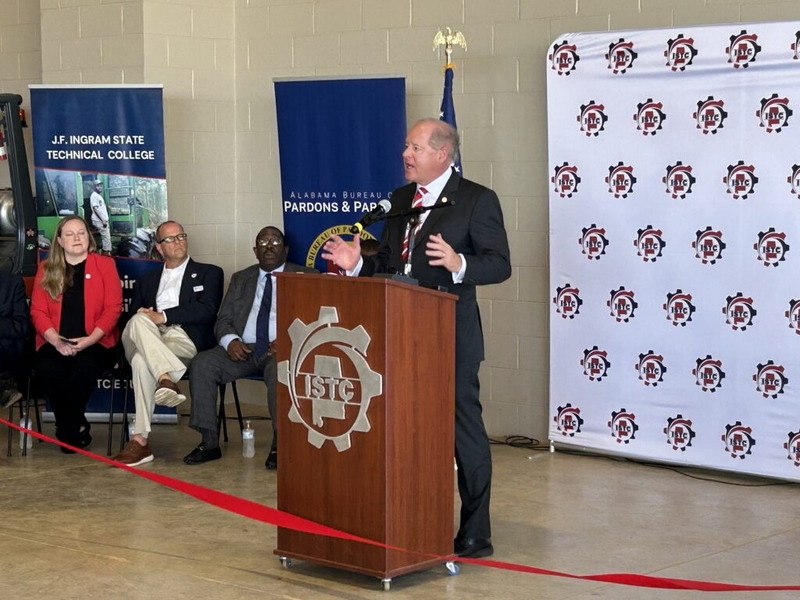
Cam Ward, director of the Alabama Bureau of Pardons and Paroles speaks at the opening of a new facility last week at Perry County PREP Center. He said the facility will allow staff to have more opportunities to train people in welding and in operating heavy equipment during bad weather. (Courtesy of Alabama Bureau of Pardons and Paroles)
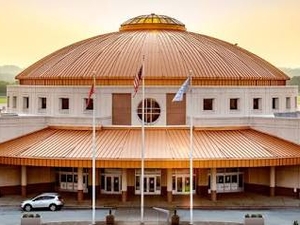
A new facility at a Perry County education center for people on parole and probation aims to train more people for manufacturing jobs and help them understand the situations they will find with employers.
The facility at the Perry County Probation and Parole Re-Entry Program Center, which opened last week, will expand welding and heavy machinery training, part of a broader program to provide training to those on parole or probation in fields where the state sees labor shortages.
“We want to make sure that before they leave us and go back out into society, that we really fine-tune their skills, getting them ready for what will be expected in the world of work,” said David Walters, president of J.F. Ingram State Technical College, which is operating the facility in partnership with the Alabama Bureau of Pardons and Paroles.
Job training is a part of Re-Entry 2030, a rehabilitation program that aims to reduce recidivism in the state.
“The odds of them going back to prison or jail after they get that employment drop dramatically,” said Cam Ward, the director of ABPP, who established Re-Entry 2030.
Walters also said that the facility is meant to increase capacity. Ingram State offers welding, but most of the training is done in a welding box that does not mimic what they will encounter on the job.
“I talked to someone recently who is a welder, and he said he was on his back for eight hours welding, and another gentleman talked about how he welds up on beams 50 or 60 feet or more above the ground,” Walters said. “And he has got people welding above him and people welding below him. So, we try to make sure we emulate that, so we will have scaffolding that will give them different looks of how to weld and do that properly to meet the requirements for the employer on the job site.”
Ingram State also offers a program to train people to work with heavy machinery, but only when the environment is ideal for it. The facility will allow staff to expand the training opportunities.
Staff had been working with people on heavy equipment outside in the elements and had to suspend the training when during bad weather. The facility will address that barrier.
“This facility, we will be able to keep the training going, it doesn’t matter what is going on outside,” Walters said. “Rain, cold or hot weather, whatever it is, we are still able to do the training.”
Most of the area of the building will be barren, dirt floor, for students to practice using heavy machinery such as skid steers, backhoes and even a small bulldozer.
The goal is to train people to operate such equipment so they can be placed on construction sites to help build the infrastructure in the state.
Walters said that businesses throughout the state continue to face a shortage of workers with specific sets of vocational skills. Alabama’s workforce participation rate has lagged the national average for decades.
Alabama had a seasonally adjusted workforce participation rate of 56.8% in August of this year, according to data from the St. Louis Federal Reserve . That is the fourth-lowest among states in the country, with only Mississippi at 54.7%, New Mexico at 56.7% and West Virginia at 53.8% ranked lower.
Walters and Ward said these skills will be sought as the number of jobs that require welding will continue to expand.
Walters said ABPP, as well as Ingram State are partners in a grant received by the Alabama Department of Workforce that totaled $4 million to provide job training for people with a criminal history and recruit them to skilled labor jobs, including shipbuilding.
According to a news release from earlier this month, the grant will enroll 550 adults who are at least 25 years old in Mobile and Baldwin counties in job training for the next 42 months.
One company, Austal USA, received a contract worth $450 million from General Dynamics Electric Boat to expand its facilities to build the components that will be part of a nuclear submarine for the U.S. Navy. It is recruiting people to help with that.
“Those components are very important, so we need to make sure we have got people who can do that,” Walters said. “So, I felt like the justice-involved population is already a population with some barriers, and they are sometimes overlooked for job opportunities, so we wanted to reach out and show them what we do here at Ingram.”
Montgomery