Suicide prevention means supporting children long before a crisis
Sep 28, 2026 | 4:46 pm ET
Description
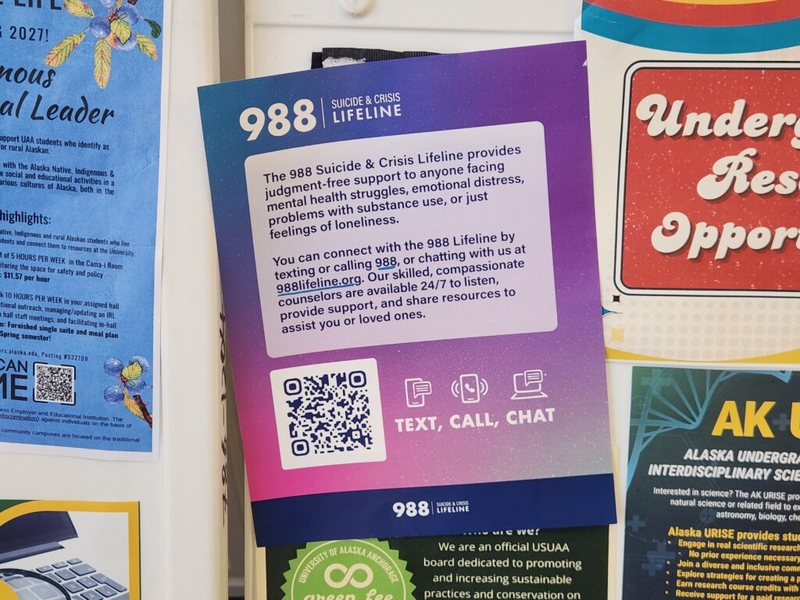
A flier seen Sept. 2, 2026, on a bulletin board at the University of Alaska Anchorage campus gives information about the 988 suicide-prevention hotline established in 2022. (Photo by Yereth Rosen/Alaska Beacon)
I remember the feeling of panic that set in years ago when my daughter told me and my husband she had been feeling incredibly sad for an extended period of time and that a friend of hers had been self-harming recently. Even with years of EMS training and experience working directly with young people with mental health needs, I felt temporarily paralyzed when it came to my own teen and her close friend.
It’s never easy to acknowledge that a child needs help. But the fact that she felt comfortable opening up to us was the first step. It gave us an opportunity to listen, take her concerns seriously, connect her with support and keep checking in. It reminded me that suicide prevention isn’t only about knowing what to do when a crisis happens. It’s also about creating the relationships and trust that allows young people to speak up when something is wrong.
For families across Alaska, moments like these can carry enormous weight. And the data show just how many young people may be struggling.
In late August, the Alaska Department of Health released new data on youth suicide. Between 2016 and 2025, we lost 174 Alaska children and teens ages 10 to 18 to suicide. Suicides in 2025 were the highest on record over the previous ten years. Alaska’s youth suicide rate runs nearly six times the national average.
The struggle reaches much further than even these losses. In the most recent Youth Risk Behavior Survey data compiled in KIDS COUNT Alaska, nearly 1 in 4 high school students said they had seriously considered attempting suicide in the past year.
Many of Alaska’s kids are struggling, and it’s critical we help before a child or teen reaches the tipping point. Preventing suicide takes work throughout the year, but there’s never been a better time to start helping than during Suicide Prevention Month, which is September.
The science says that young people who feel connected to their school and family report suicidal thoughts at far lower rates. An additional caring adult in a child’s life like an afterschool provider, coach or educator can be an important source of support. So can a welcoming school, strong friendships and access to mental health care.
So, what does prevention look like in everyday life?
It looks like showing up. Eat dinner together. Learn the name of your child’s new friend. Make it to the game, the recital, the fish camp. And, you don’t have to be a parent. Teachers, coaches, neighbors and afterschool professionals send the same message when they take a vested interest in a child: you matter and belong.
It looks like asking. If you’re worried about a young person, ask directly: “Are you thinking about suicide?” Asking does not increase suicidal thoughts or behavior. Listen without judgment, help them connect with support and keep checking in.
It looks like taking a training and finding community. Alaska-based organizations like National Alliance on Mental Illness Alaska and the American Foundation for Suicide Prevention’s Alaska chapters host trainings and family support groups to help Alaskan families and educators.
It looks like knowing where to turn. Call or text 988 anytime, whether you’re struggling or worried about someone else. Support is free, confidential, and available 24 hours a day. Save the number in your phone and in your kid’s phone. Talk to your child about how asking for help is a sign of strength — and live that message by showing them that you know how to ask for help from others, too.
Preventing child abuse and neglect means supporting families before problems become crises. That’s the focus of Alaska Children’s Trust’s work, and it matters for suicide prevention, too. The supports that keep families strong also protect a young person’s mental health: welcoming afterschool programs, time with caring adults, connection to culture and mental health care families can reach.
For our family, it meant spending more time together, enrolling in therapy and participation in a Mental Health Advocacy Through Storytelling program. Those interventions helped us — but it’s important that each child’s needs are addressed in a way that works for them.
Suicide Prevention Month is a good time to take a first step and check in with a young person in your life. Make time to listen and keep checking in after September ends.
If you or someone you know is struggling, call or text 988. Help is free, confidential and available 24 hours a day.
Juneau