Indiana expungement filings rose 52% over a decade. But getting relief still takes time, money.
Sep 28, 2026 | 5:00 am ET
Description
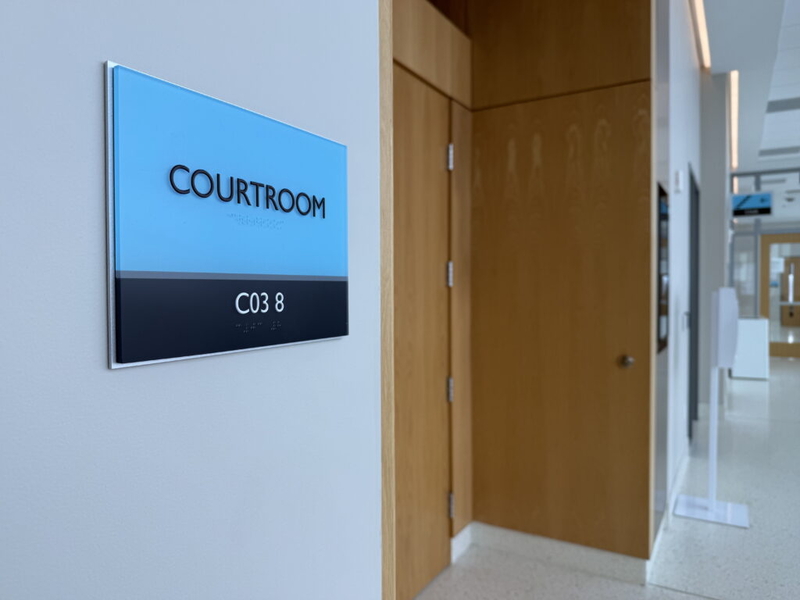
Indiana courts opened 10,156 expungement cases in 2025, a 52% increase from 2016. An expungement can restrict public access to qualifying arrest or conviction records. (Photo by Casey Smith/Indiana Capital Chronicle)
More than 10,000 expungement cases were filed in Indiana courts last year, continuing a decade-long rise in the number of people asking judges to restrict access to old arrests and convictions.
Courts opened 10,156 expungement cases in 2025, up 52% from 6,660 in 2016, according to state court data obtained by the Indiana Capital Chronicle.
A pardon offers another path to relief, but few Hoosiers apply for one.
Carrie Hagan, who directs the Civil Practice Clinic at Indiana University’s McKinney School of Law, said some prospective clients must wait years before they can apply. Others learn that unpaid fines, fees or restitution stand in their way.

“People owe hundreds to thousands of dollars — and that’s one of the biggest hurdles for a lot of our clients seeking expungements,” Hagan said. “Time is a really close second. We have folks that hear, ‘Well, you’re not eligible until 2031,’ and then for them, it’s like, ‘Well, what’s the point?’”
The clinic has helped people seek expungements for nearly a decade, including through a partnership with Goodwill of Central and Southern Indiana. Hagan said clients often want a better job or housing, or the chance to volunteer at their children’s schools. Some simply want to put an old case behind them.
“This ability to move on and this ability to kind of free yourself from the shame of making a mistake or a couple, that’s huge for our clients,” she said. “The big thing is that they’re really able to get better jobs.”
In Lake County, attorney Amanda Hires said greater awareness may be one reason more people are filing. Hires, an attorney who works alongside County Clerk Michael Brown, has helped community groups with expungement fairs over the years. Clerk’s office employees are also proactively helping attendees obtain case information and documents.
For convictions, Indiana generally requires a five-year wait before seeking to expunge a misdemeanor. Eligible felonies can require eight or 10 years, depending on the offense and other conditions.
Bringing help directly into the community “can make the process less intimidating,” Hires said.
“I think people become more familiar with the government and not so nervous that way,” she continued. “And that really helps with this (expungement) process.”
A clearer look at outcomes
Data from the Indiana Office of Judicial Administration show that of 27,202 expungement cases disposed of statewide since Jan. 1, 2024, 25,408 were granted. Another 288 were denied, while courts did not record an outcome for 1,506, according to OJA. The cases took an average of 141 days from filing to disposition.
A filing represents an expungement case, not necessarily one person or one conviction. One case can involve multiple convictions, and a person with records in several counties may need to file a case in each county. The outcome figures also cover cases disposed of during the period, including some that may have been filed earlier.
This ability to move on and this ability to kind of free yourself from the shame of making a mistake or a couple, that’s huge for our clients.
Whether a judge must grant an eligible request depends on the kind of record involved. Indiana law generally requires courts to grant expungement of qualifying arrests without convictions, misdemeanors and certain lower-level felonies when the legal conditions are met. Judges have discretion over more serious eligible felonies.
Filings reached a high of 11,309 in 2023, then fell to 10,077 in 2024. They rose by just 79 cases, or less than 1%, in 2025. From January through August of this year, courts recorded 6,336 new filings, down about 11% from the same eight months of 2025.
County figures from the courts’ preliminary annual reports show differences across Indiana.
Marion County had the largest numerical increase between 2016 and 2025, rising from 1,804 filings to 2,472. Lake County rose from 232 to 516, while Clark County went from 71 to 199. Monroe County fell from 565 to 303.
Hires said Lake County’s increase could reflect both outreach and the passage of time. People convicted years ago may now have reached the waiting period required to seek expungement. Her law office has partnered on events with Indiana Legal Services and local groups, while clerk’s office staff have volunteered outside regular hours to help residents find the records they need.
“I think anytime there’s a job fair, there’s really a lot of people talking about expungement,” Hires said.
In her practice, Hires said she most often sees people seeking to expunge alcohol-related driving offenses, thefts and drug convictions.
Marion County Clerk Kate Sweeney Bell said her office has promoted expungement through social media and partnerships with legal aid organizations. She believes more eligible residents are filing as they learn the process is available.
“It’s no guarantee, but it’s not something to fear,” Bell said. “It’s something that can profoundly alter an individual’s life.”
Bell said the additional cases have not created an administrative burden for her office. Dan Goldblatt, director of policy and communications for the Marion County Clerk’s Office, said expungements account for less than 5% of its criminal filings. He noted that people with midlevel felony convictions often don’t realize they could be eligible after the required waiting period.
“It’s not a burden at all,” Bell said of the increased expungement filings. “This is a good thing.”
What an expungement does — and does not do
Hagan said the process can become complicated when someone has records in multiple counties or convictions that require a judge to weigh their circumstances. Her clinic prepares separate filings for each county and, in discretionary cases, asks clients to explain how their lives have changed and what an expungement would allow them to do.
She said driving offenses and minor drug cases are common among the people her clinic assists. For some, a suspended license makes it harder to work and pay obligations such as child support. Driving anyway can lead to another charge.

Even a successful expungement does not always remove a case from public view. Indiana generally seals qualifying arrests and lower-level convictions from public access, but records of some more serious felonies remain publicly available with an expungement notation.
Hagan said many clients still seek that relief because it matters to them personally, even when the record remains visible. But she questions whether marking a case “expunged” gives people the second chance they expect.
“If we’re going to expunge it, then let’s just expunge it,” she said. “Let’s then move on.”
Hires raised the same concern. In some higher-level felony cases, she said, an employer searching the public court docket can still see the conviction, even though it is marked expunged.
“It’s really a misnomer,” she said, for people hoping the record will no longer affect a job search.
A court order also does not ensure that every criminal history database has been updated.
Hires said a case may move quickly through the Lake County court and clerk’s office, but processing by outside agencies can take longer. In her experience, it could take as long as six months for the relief a person expects to show up in those records.
But even an expungement cannot erase everything someone might find online.
“Sure, you can expunge it legally through the courts,” Hires said, “But unfortunately, Google’s there forever.”
Hagan also said some courts require hearings in cases she believes meet the requirements for mandatory relief. Such hearings can mean taking time off work or traveling back to the county where the case was filed. She described one pending case in which a client who lives four hours from the court was ordered to appear in person, though the prosecutor had not objected.
A narrow change in state law
Lawmakers changed Indiana’s expungement law in 2025, but the amendments did not broadly open the process to people previously unable to apply.
Senate Enrolled Act 281 created a limited path to expunge certain official misconduct convictions with a prosecutor’s consent. It also addressed access to juvenile records, restricted expungement for some firearm and commercial driving offenses, and required an electronic method for sending case information to Indiana State Police after an expungement.
Hagan said the provision on transmitting information to state police could help with the repeated paperwork her clinic prepares for an expungement.
“You are literally retyping everything one more time in a different way,” she said of the paperwork required for state police. Hagan said she hopes the electronic transmission provision will ease that work, though she had not yet seen whether it has changed the process in practice.
Still, Hires said delays can arise after a court grants an expungement as other agencies process the order.
“It gets through the court incredibly quickly. It gets through the clerk’s office very quickly,” she said. “I find that the issue tends to lie within the ancillary entities. … That’s something that could be improved.”
The much rarer pardon route
Expungement is also the first option the Indiana Parole Board asks prospective pardon applicants to consider. The board says the court process is often quicker and provides many of the same benefits.
Pardons, which require a recommendation from the board and a decision by the governor, are uncommon. The board received 53 applications from Jan. 1, 2017, through Aug. 25, 2026, according to parole board figures.
Governors granted eight and denied 15. Ten applications were closed, 11 were found ineligible, seven remained under board review and two are still awaiting a governor’s decision.
One denial went to William Hutson, who sought a pardon for a Marion County conspiracy to commit robbery conviction stemming from a 1990 offense. Court documents show he received a two-year sentence in 1991.
Hutson, now living in North Carolina, said he and his wife later founded a charity that repaired 505 Indiana homes for elderly, disabled and low-income residents. He said he now oversees construction projects for a nonprofit serving veterans.
Gov. Mike Braun denied his application July 27. The Governor’s Office said the Parole Board had unanimously recommended denial, citing several factors that included the circumstances of the offense and Hutson’s presentation to the board. A denial letter Hutson provided to the Capital Chronicle did not explain what information counted against him.
Hutson said the letter left him unsure what more he could show the state.
“I just don’t know what standards they have to get a pardon for a crime committed 36 years ago and it’s the only crime ever committed,” he wrote to the Capital Chronicle, “then turning around and helping so many people while paying for it from my own pocket.”

Indianapolis, IN