Mayes, Fontes say the Trump administration may be breaking the law to scour Arizona voter data
Sep 25, 2026 | 7:11 pm ET
Description
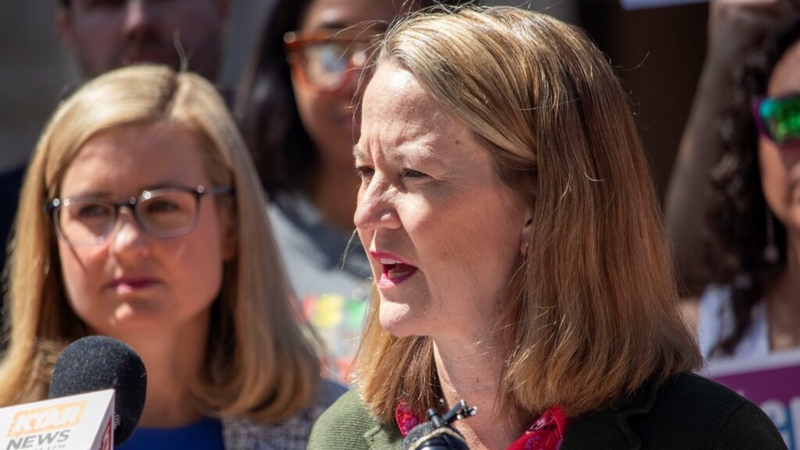
Arizona Attorney General Kris Mayes joined Democrats and abortion rights advocates for a press briefing at the Arizona Capitol on April 9, 2024, shortly after the Arizona Supreme Court ruled that an 1864 near-total abortion ban is enforceable. (Photo by Jerod MacDonald-Evoy/Arizona Mirror)
A federal effort to identify noncitizen voters using voter registration information might be violating state privacy laws, according to Attorney General Kris Mayes.
In a letter sent earlier this week to Timothy Courchaine, the U.S. Attorney for Arizona, Mayes and Arizona Secretary of State Adrian Fontes requested confirmation that the personal information of Arizona voters isn’t being used to search for noncitizens. Mayes warned that she would consider taking the federal government to court if it is.
“The State of Arizona stands ready to pursue all legal avenues, up to and including criminal prosecution, to safeguard the privacy of our voters and hold the federal government accountable to its obligations under the law,” the two Democratic officials wrote.
In March, the Federal Bureau of Investigations subpoenaed records from the Arizona Senate related to its audit of the 2020 election. Among those records were copies of Maricopa County’s voter registration database. Fontes and Mayes said they are concerned that information is being used by federal officials in a new initiative to identify noncitizen voters.
On Monday, Democratic U.S. Senate Minority Leader Chuck Schumer and California U.S. Sen. Alex Padilla published a 30-page whistleblower account detailing how U.S. Citizenship and Immigration Services employees have been using state voter registration databases to look for so-called “unlawful” voters. The Trump administration has long advanced the specter of noncitizen voting to cast doubt on election security, particularly as the November midterm elections draw closer.
But the reality is that noncitizen voting is vanishingly rare, and when it does occur, it is most often the result of administrative errors. And despite the federal focus on rooting out voter fraud by noncitizens, a nationwide review of voter registrations has so far yielded just 160 arrests — out of 211 million registered voters in the country — far short of the hundreds of thousands of noncitizen voters that Trump and the U.S. Department of Homeland Security have previously suggested were on the rolls.
The news of the federal search alarmed Mayes and Fontes, who noted in their letter that multiple laws strictly limit the use of a voter’s personal information. The Privacy Act of 1974 forbids federal agencies from compiling or using sensitive, personally identifying information without first publicizing what that information will be used for and allowing a public comment period.
At the state level, Arizona law makes it a felony to share the private information of voters, including birthdates, Social Security numbers and drivers license numbers, unless it’s for specific and authorized purposes, such as to verify a voter’s signature. A caveat in that law, however, allows for the information to be used by an “authorized government official in the scope of the official’s duties.”
Mayes pointed out that it would be impossible to use Arizona’s voter registration systems to verify a voter’s identity without misusing the private information of voters. Looking up a person on Arizona’s statewide voter database or on Maricopa or Pima County’s databases requires inputting their full name, date of birth and driver’s license number or the last four digits of their Social Security number.
To bolster her argument that federal officials are violating the law, Mayes referenced a recent court ruling which determined that the U.S. Department of Homeland Security may not compile personal voter information to identify noncitizen voters. The lists provided to USCIS staffers verifying the identities of voters across the country under the new initiative were put together by DHS officials, according to the whistleblower report.
“The Court determined that personal identifying information may only be used for the intended purpose for which it was lawfully compiled,” Mayes wrote. “If DHS is in fact engaged in the conduct as alleged, it is at least circumventing and at worst directly violating that order.”
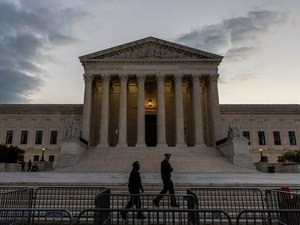
But that reasoning was upended on Friday, when the U.S. Supreme Court ruled that the federal government does have the right to create and publicize an online system compiling the personal information of voters, including citizenship status and Social Security numbers.
That system, a modified version of the Systematic Alien Verification for Entitlements database, was originally used to verify the legal status of immigrants or naturalized citizens and determine their eligibility for public benefits. The Trump administration expanded it to allow state officials to look for noncitizens on their voter rolls. Multiple states have since used the revamped database to audit their voter rolls and remove voters flagged as ineligible to vote, but the database is notorious for returning erroneous results.
It’s unclear whether the new court ruling would also greenlight USCIS’s work looking up individual voters through state databases. Richie Taylor, a spokesman for Mayes, said her office is currently reviewing the ruling and its impact.
Phoenix, AZ