During Save a Life Day, naloxone access is personal for women in recovery
Sep 25, 2026 | 6:00 am ET
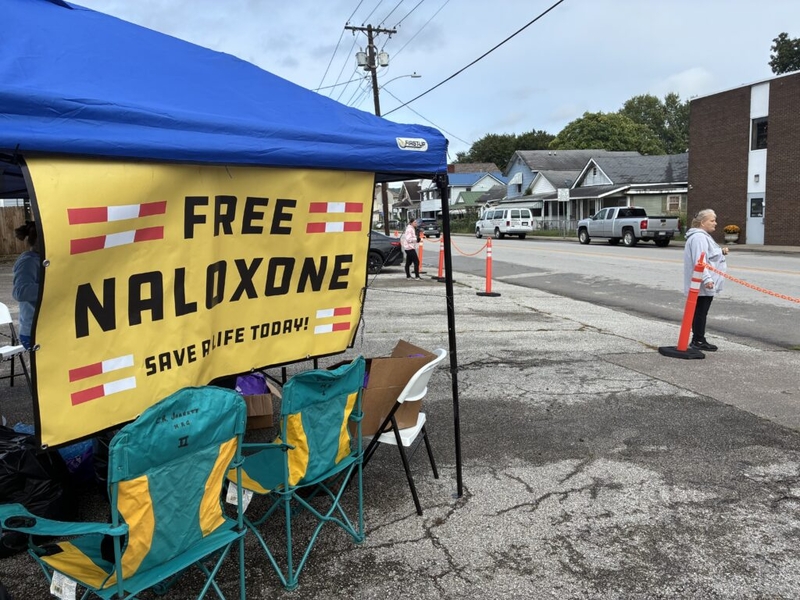
Description
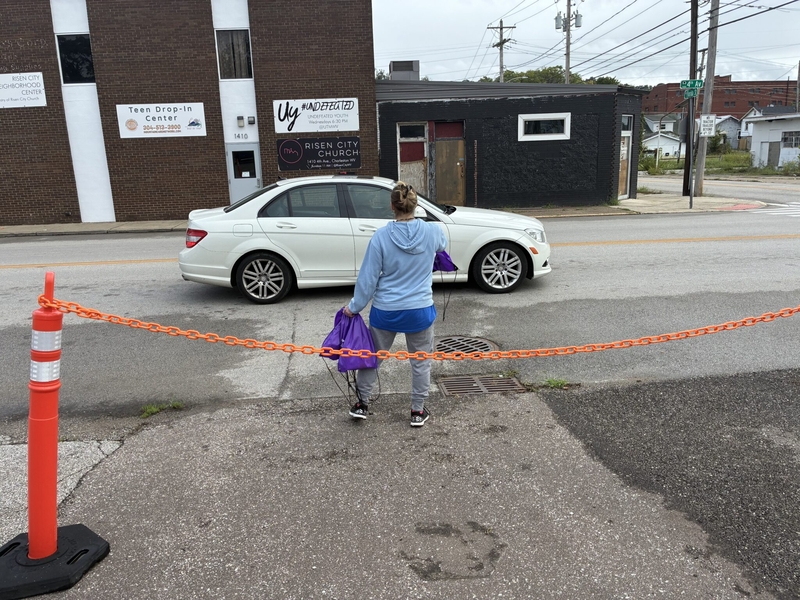
Lee Ann Elkins (right), who’s part of Recovery Point Charleston, waits for an opportunity to pass out Narcan from a sidewalk on Charleston West Virginia’s West Side Thursday morning. Volunteers hoped to pass out hundreds of doses of the opioid overdose reversal drug during the 2026 Save a Life Day. (Photo by Lori Kersey/West Virginia Watch)
“Free Narcan!” Abby Jewell called to drivers from the sidewalk at an intersection on Charleston, West Virginia’s West Side Thursday morning.
When a bus operator waiting at a red light opened his door, Jewell walked onto the vehicle and handed a box of the medication to a passenger.
Jewell was one of a handful of women from Recovery Point Charleston who helped distribute naloxone during Save a Life Day, an annual event that aims to lessen the stigma surrounding the drug, which blocks the effects of opioids, and get the medication into the hands of as many people as possible.
The event started in 2020 with two counties in West Virginia, a state with the highest drug overdose death rate in the country. Last year, 133,000 doses of naloxone were distributed during Save a Life Day 2025. This year, the event included more than 1,200 naloxone distribution sites — at least one in every state in the country, organizers say.
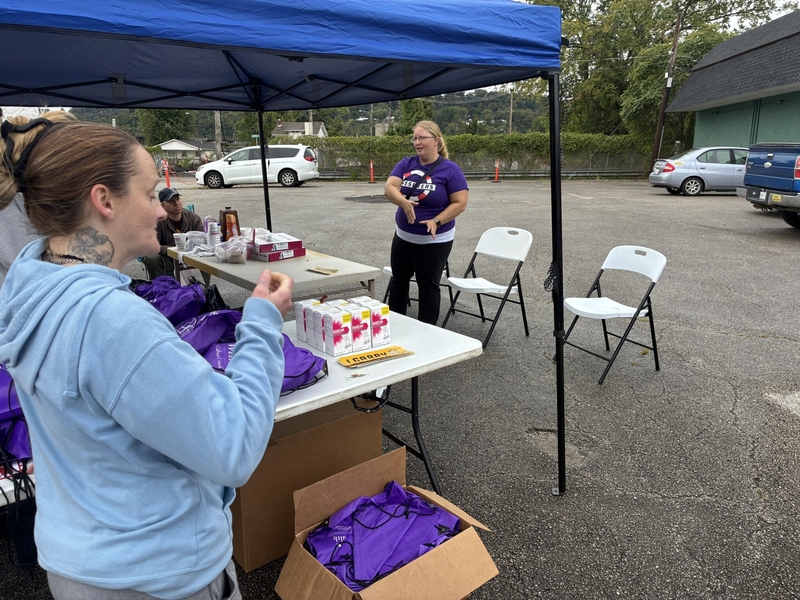
Risen Center Church on Charleston’s West Side was expected to be one of the busiest naloxone distribution sites in Kanawha County this year. Volunteers there hoped to give out 800 naloxone kits with 1,600 doses of the medication.
Volunteering is a requirement for women at Recovery Point, an addiction recovery program, but naloxone access is also a personal issue for many of the women, some of whom have survived opioid overdoses and seen others survive with the help of the medication.
Fayette County native Lee Ann Elkins spent more than 30 years in addiction. She stopped using drugs 20 months ago when a court ordered her into drug rehabilitation. She resisted Recovery Point at first, but now says it’s rewarding to be on the other side, helping others.
“I’ve been out there. I know what it feels like, and I’ve lost numerous friends,” Elkins said. “And if I can save one more person, I’m gonna do it. I don’t care if it is stopping cars on the street. If I can save one person, it was worth my whole day.”
Elkins added that there’s help for people who want to stop using drugs.
“There’s always help available if people need it,” she said. “There is help out here, and I know like a lot of addicts don’t know, but most of us in recovery are their biggest fan to get clean. We really are.”
Ashley Bragg, who came to Recovery Point from Webster County, said she volunteered Thursday to help save lives. During her time in addiction, naloxone helped save her from an overdose “numerous times,” she said.
“You never know if someone might need it,” Bragg said. “You know, it’s nice to have it handy. Even somebody that takes so much medication, or you know, street drugs, anything like that. It’s just handy to have.”
Jennie Hill, who’s in long-term recovery and teaches yoga at Recovery Point, brought along her dog, Snickers, to Save a Life Day. She just took in the dog, an older chihuahua mix, two weeks ago after its owner, her best friend, died. The woman’s cause of death has not been yet determined, but Hill suspects an overdose.
The woman had naloxone in her house, but a family member who found her unresponsive wasn’t trained to use it and didn’t know where to find it in the house, she said. The man called 911 and EMTs used three doses of the drug — all they had in their ambulance, she said.
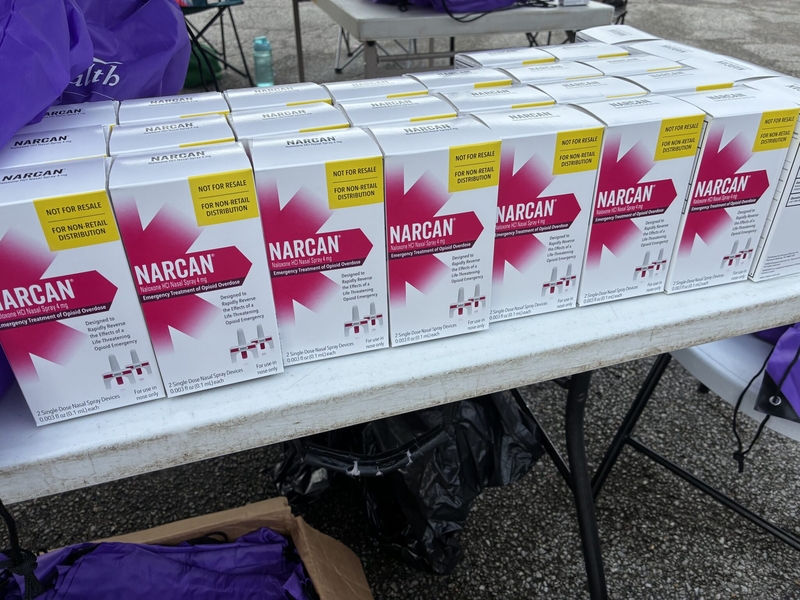
Overdoses due to stronger opioids like fentanyl can require more than one dose of naloxone, according to the U.S. Centers for Disease Control and Prevention.
“If it was what we think is a bad batch of meth that was laced with fentanyl, she needed eight doses (of naloxone), and they just didn’t have it in the ambulance in Wood County,” Hill said.
Hill said her friend’s death has reinforced her need to rely on the Serenity Prayer she learned in recovery. It teaches her to accept what she can’t change and change what she can.
“I can’t change that she’s gone. But what I can change is the fact that, you know, EMTs think three doses of naloxone is enough, when it’s not,” Hill said. “Getting the information out there that if it’s a fentanyl overdose, they might need seven or eight doses, and they should be carrying intermuscular and not nasal, because nasal, even if it’s a four milligram nasal shot, very little of that is getting into the bloodstream.”
Charleston, WV