CDC’s latest youth behavior report offers a narrower look at teen health
Sep 24, 2026 | 3:34 pm ET
Description
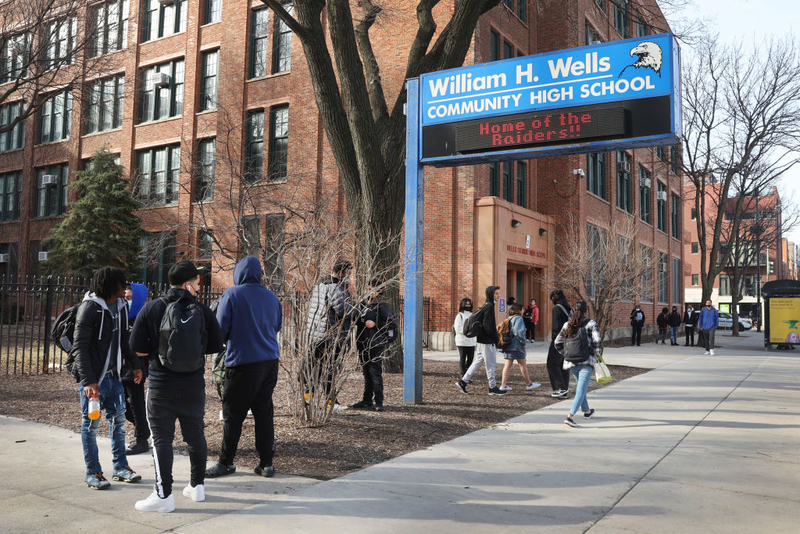
Students leave William H. Wells Community High School at the end of the school day in Chicago. The federal Centers for Disease Control and Prevention’s latest national survey of high school students focuses on diet, physical activity, sleep, digital behavior and mental health. (Photo by Scott Olson/Getty Images)
For more than 35 years, the U.S. Centers for Disease Control and Prevention has surveyed American high school students every two years about their health and behavior.
The Youth Risk Behavior Survey, established in 1991, draws a nationally representative sample of students in grades 9 through 12 at public and private schools. Over the years, it has tracked a broad range of issues affecting teenagers, from substance use and sexual behavior to violence, mental health and other health risks.
But the CDC’s latest national report, a full-color publication with photos, graphics and high school success stories, offers a markedly different portrait of adolescent health than the one it published two years ago.
The 2025 Youth Risk Behavior Survey report focuses on five areas — diet, physical activity, sleep, digital behavior, and mental health and suicide risk — while largely leaving out national findings on substance use, sexual behavior, violence and disparities among student groups that were prominent in previous reports.
Meta to pay 47 states up to $17.1B in landmark child safety settlement
The underlying survey data on the CDC’s website still contains many of those measures, including trends in alcohol and drug use, and sexual activity, but they are not part of the national report’s key findings.
The shift comes as Health and Human Services Secretary Robert F. Kennedy Jr. and the Trump administration have made preventing childhood chronic disease and promoting nutrition, physical activity and other health behaviors central to their “Make America Healthy Again,” or MAHA, agenda. Kennedy also chairs the presidential MAHA Commission, which has focused on the root causes of childhood chronic disease.
The 2025 report is also substantially shorter than the CDC’s previous national Youth Risk Behavior Survey report. It runs 36 pages, including the title page, table of contents and references, compared with 88 pages for the 2023 report, which also included some technical notes, references and appendices.
Dr. Jennifer Shuford, CDC’s deputy director and chief medical officer, touted changes in student attitudes toward nutrition, physical activity and mental health.
“These are meaningful improvements, and they show that progress is possible when schools, families, and communities work together to support young people,” she said in a news release.
“At the same time, too many students are still struggling with daily health behaviors that can negatively affect their long-term health,” Shuford said.
A focus on health and wellness
The 2025 report provides a snapshot of high school students’ health in 2025 and compares changes over the previous two and 10 years. Its five focus areas reflect behaviors and experiences the CDC says affect adolescent health now and into adulthood.
Some of the findings are encouraging. Thirty-nine percent of high school students said they ate fruit daily in 2025, up from 33% in 2023 and 34% in 2015. Sixty-three percent ate vegetables daily, compared with 58% in 2023 and 61% in 2015.
The share who said they drank plain water at least three times a day rose to 58% in 2025, up from 56% in 2021 and 49% in 2015, while daily soda consumption fell to 17% from 20% in 2015.
The share of students who played on a sports team also increased, reaching 58% in 2025 compared with 52% in 2023 and 49% in 2021.
Several measures of mental health and suicide risk improved as well. The share of students who reported persistent feelings of sadness or hopelessness fell to 33% in 2025, from 40% in 2023 and 42% in 2021. It was 30% in 2015.
The share who seriously considered attempting suicide fell from 22% in 2021 to 14% in 2025, while the share who made a suicide plan fell from a high of 18% in 2021 to 12% in 2025.
Female students continued to report higher rates of mental health and suicide risk than male students. In 2025, 43% of female students reported persistent feelings of sadness or hopelessness, compared with 24% of male students.
But the report also shows that several measures of youth health have worsened over the longer term.
Just 25% of high school students were physically active for at least 60 minutes a day in 2025, unchanged from 2023 and down from 27% in 2015. Twenty-four percent got at least eight hours of sleep on an average school night, compared with 27% in 2015.
Daily breakfast consumption fell from 36% in 2015 to 27% in 2025. The report also found long-term declines in daily physical activity, muscle-strengthening activity and daily physical education.
About 36% of students said they used social media every hour or more in 2025, little changed from 37% in 2023.
A different look at adolescent health
The latest report’s focus marks a significant change from the CDC’s 2023 national Youth Risk Behavior Survey report.
That report, published during the Biden administration and as the country was recovering from the COVID-19 pandemic, was organized around sexual behavior, substance use, experiences of violence, mental health and suicidal thoughts and behaviors. It also examined emerging issues including parental monitoring, social media use, racism in schools, unfair school discipline, school connectedness and unstable housing.
Cities, towns nationwide revive teen curfews amid summer crowds
The 2023 report included more student demographic data broken down by sex, race and ethnicity, and sexual and gender identity. For the first time, the national survey asked students whether they identified as transgender, and the report highlighted disparities affecting LGBTQ+ students and marginalized racial and ethnic groups.
The 2025 report does not mention LGBTQ+ students or sexual and gender identity. It also provides fewer detailed demographic comparisons. The CDC says the new report includes only selected statistically significant demographic differences, while the underlying survey data remain available through the agency’s data system.
The new public-facing report does not mean the CDC stopped collecting underlying information about many of the issues featured in previous youth risk behavior reports. The agency continues to make the national dataset available publicly, including demographic information, through its online data tools.
Instead, the change is in how the CDC presents the findings nationally. That produces a different portrait of the nation’s high school students — one that captures some notable improvements while giving considerably less attention to several categories of health and risk that have been prominent in the CDC’s national youth surveillance reports for years.
Declines in substance use
For example, the decline in teen substance use that has unfolded over decades is absent from this year’s report, despite the 2025 data showing alcohol and marijuana use at or near historic lows.
About 20% of high school students reported current alcohol use in 2025, down from 22% in 2023 and nearly 52% in 1995. Current marijuana use also fell to about 13% in 2025, from 17% in 2023, while the share who had ever used marijuana dropped to about 25% in 2025 from 42% in 1995.
The share of students who had ever used other illicit drugs, including cocaine, inhalants, heroin, methamphetamines, ecstasy or hallucinogens, was 9.7% in 2025, essentially unchanged from 9.9% in 2023 and about 13% in 2015.
Vaping also continued its long-term decline. Current e-cigarette or vape use fell to 16% in 2025 from a high of nearly 33% in 2019. The share of students who had ever used these products also fell to 30% in 2025 from about 34% in 2023 and about 45% in 2015.
Sexual activity and school violence
The new report also gives little attention to several measures that have long been part of the CDC’s youth survey, including sexual activity and violence at school.
The share of high school students who reported being currently sexually active fell to about 19% in 2025, down from nearly 21% in 2023 and nearly 40% in 1995.
Other measures show longer-term declines but less consistent changes. The share of students who reported carrying a weapon on school property fell to about 3% in 2025, from more than 4% in 2023 and almost 10% in 1995.
The share who said they had been threatened or injured with a weapon, such as a gun or knife, at school was about 8% in 2025, compared with 9% in 2023 and about 8% in 1995. Bullying on school property was reported by 19.7% of students in 2025, roughly unchanged from 19.2% in 2023 and about 20% in 2015. Reported bullying hit a low of 15% in 2021.
Stateline reporter Amanda Watford can be reached at [email protected].