Doctors and hospitals to see lower Medicaid payments in three dozen states
Sep 24, 2026 | 11:49 am ET
Description
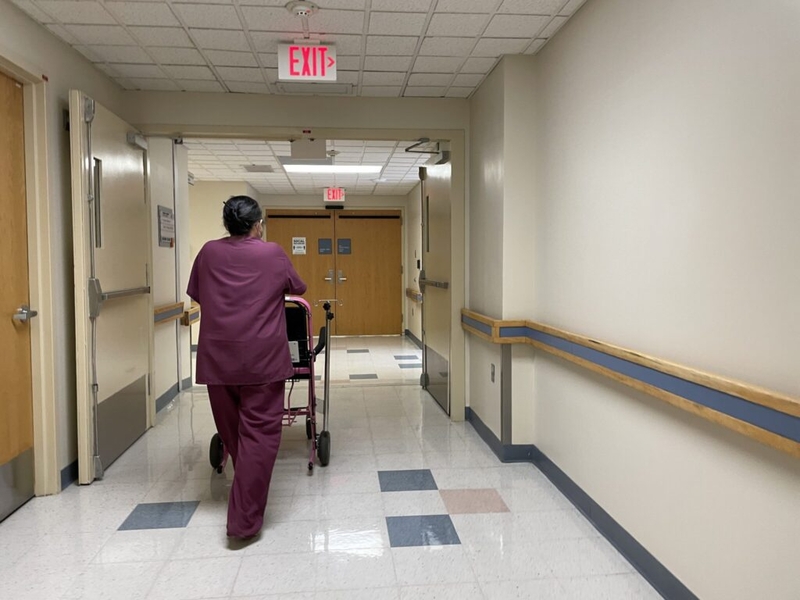
New federal rules likely will force three dozen states to reduce their annual Medicaid payments to healthcare providers by a total of more than $50 billion. (Photo by Dana DiFilippo / New Jersey Monitor)
New federal rules likely will force three dozen states to reduce their annual Medicaid payments to doctors and hospitals by a total of more than $50 billion — potentially shrinking the number of providers willing to see Medicaid patients, according to a new analysis.
The analysis in the peer-reviewed Health Affairs estimates that the 17 states with the highest provider reimbursement rates will have to cut their spending by between 10% and 25% of their overall Medicaid budgets. Medicaid is the joint state-federal health insurance program for people with low incomes.
“It means that more of these hospitals, (and) a few nursing homes that are wrapped up in our academic medical centers, are going to start limiting the numbers of Medicaid patients that they see,” said Debra Lipson, the independent health policy researcher who authored the report. “It’s going to make it more difficult for people who are on Medicaid to get essential care.”
Medicaid generally pays doctors and hospitals less money than private insurers and Medicare do for the same services. As a result, many providers refuse to care for Medicaid patients.
To address this problem, the federal government in 2016 began allowing the 40 states that contract with Medicaid managed care organizations to require those organizations to pay doctors and hospitals more for certain types of care.
But in the years since, federal and state spending on these so-called state-directed payments has exploded, growing from about $27 billion in 2020 (4% of total Medicaid spending) to an estimated $97.8 billion in 2024 (12% of total spending). The federal Centers for Medicare and Medicaid Services estimates that 2025 spending topped $143 billion (14% of total Medicaid spending).
The broad tax and spending measure that President Donald Trump signed in July 2025 places new limits on state-directed payments. Beginning in 2028, the law requires state Medicaid programs to reduce reimbursement rates by 10 percentage points each year until they reach either 100% or 110% of what Medicare pays. States that expanded Medicaid under the Affordable Care Act would be capped at the lower rate.
Supporters of the change say state-directed payments have produced an unreasonable windfall for doctors and hospitals.
But Lipson writes that the new limits are likely to increase the gap between Medicaid payments and the cost of caring for Medicaid patients. As a result, providers are likely to limit the number of Medicaid patients they see. Another possibility, she suggests, is that providers will try to offset the losses by negotiating higher prices with commercial insurers, raising costs for non-Medicaid patients.
The 15 states that spent more than 20% of their fiscal 2024 Medicaid budgets on state-directed payments that were at or near the average commercial rate will have to make the most significant cuts, according to the Health Affairs analysis. Those states are Nebraska, Louisiana, South Carolina, Iowa, Nevada, Arizona, Kentucky, New Mexico, Illinois, Tennessee, Florida, Georgia, North Carolina, Michigan and Mississippi.
This story was updated to clarify the description of the 15 states that will have to make the most significant cuts. Stateline reporter Shalina Chatlani can be reached at [email protected].