Oregon students’ grasp of key subjects slowly grows, but still below pre-pandemic levels
Sep 24, 2026 | 9:00 am ET
Description
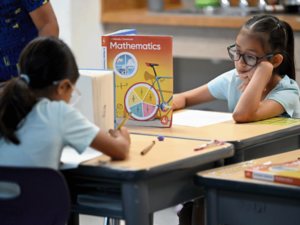
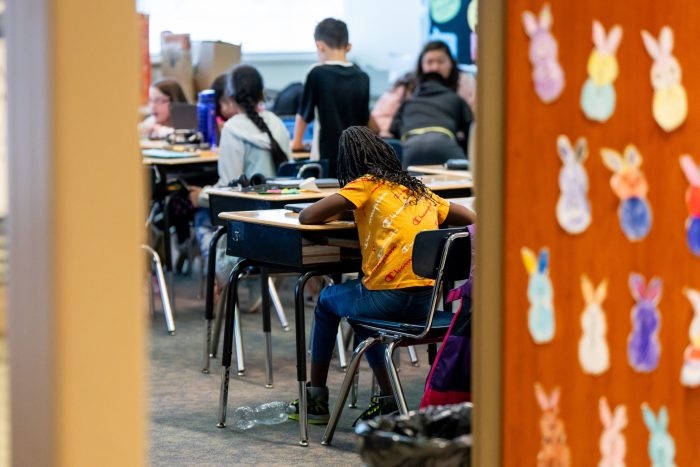
Students at work in a math class. Oregon students' overall proficiency in key subjects grew by less than 1 percentage point on average from the previous school year, according to the state's most recent data. (Photo by Spenser Heaps for Utah News Dispatch)
Oregon students continued to make small gains in key subjects over the last year but still haven’t returned to pre-pandemic levels.
They’re also not keeping pace with many of their peers nationwide when it comes to reading and writing.
The latest results from statewide assessment tests in English language arts, math and science show that across subjects, grades and districts, students tested at the end of the last school year were still about 8 percentage points behind pre-pandemic achievement levels. Overall proficiency in key subjects grew by less than 1 percentage point on average from the previous school year.
Less than half of all Oregon students tested are proficient readers, about one-third are proficient in math and less than one-third are proficient in science according to the state tests, a stubborn trend that has persisted in math and science since before the pandemic and worsened in English language arts since the pandemic. Proficiency for elementary students means they are reading and doing math at or above grade-level standards. For 11th graders, proficiency also indicates college-readiness.
But ongoing declines in the five years since students returned to schools following pandemic closures have begun to turn into small rebounds in the last two years.
In the state’s 10 largest districts — responsible for educating about 40% of Oregon’s 540,000 students — students have made small gains in most subjects, but most are still on average looking at double-digit percentage point gaps from pre-pandemic proficiency levels.
“We are focused on steady, sustained gains that build over time. And while this year’s results may not feel transformational on their own, sustained improvement year after year can fundamentally change outcomes and the trajectory for our scholars,” said Charlene Williams, director of the Oregon Department of Education, at a news conference Tuesday.
Small gains at big districts
The small gains made in Oregon’s largest districts mean those students are, on average, testing at proficiency levels above the state’s overall averages, which inched up by less than a percentage point since last year across all subjects.
The biggest success among the large districts is Portland Public Schools, where students have on average come within a few percentage points of pre-pandemic levels in English language arts, math and science.
Other big districts, such as Salem-Keizer, have seen gains from literacy investments in certain grades.
Salem-Keizer’s third-graders had their second year of improvements in reading and the largest since the pandemic, outpacing the statewide average.
“Last year, we said we had bent the curve, reversing a pattern of loss to one of gain. This year, we are expanding on that pattern with districtwide gains and state-leading gains in third-grade ELA,” said Salem-Keizer Superintendent Andrea Castañeda in a news release. “Third-grade reading accelerated, math improved in every tested grade, and every school posted a gain in ELA or math. I can’t imagine more affirming news for our hardworking students and staff.”
Angelica Cruz, director of literacy at the Oregon Department of Education, said there are clear signs of improvement in reading across most grade levels. Third graders who took the assessment tests last year were in first grade when the first round of more than $90 million Early Literacy Success Initiative dollars were released to schools.
Those students have benefited from at least two solid years of literacy-focused support and investments, according to Cruz.
“While long-term impacts will take time to fully emerge, these results represent encouraging early signs that the state’s literacy initiatives are moving achievement in the right direction,” she said.
The annual assessment tests, called Smarter Balanced tests, are given in the spring to grades three through eight and 11th grade students.
The tests are required by state and federal law, though Oregon allows parents to opt their children out of testing, according to the state education department. Prior to the pandemic, participation in the tests was closer to 95% while this year it was about 88% on average across all grades and subjects. Students were not required to take the tests in 2020 and the state education department scaled back testing in 2021.
This year saw marginally higher numbers of students participating in the tests, but the percentage of high schoolers taking the tests is still below 80%, making their assessment data difficult to interpret effectively, according to state education officials.
Oregon’s slow marginal growth in recent years reflects a nationwide trend showing student learning was negatively affected by the pandemic, which included more than a year of online classes. Students nationwide are, however, making “sizable improvements” in reading according to recent data assessed by NWEA, the Portland-based nonprofit that administers assessments similar to the Smarter Balanced tests called MAP tests.
Salem, OR