State To Decide Fate Of West O‘ahu Charter School After Board Quits
Sep 24, 2026 | 6:01 am ET
Description
Photo courtesy of Honolulu Civil Beat
One of Hawaiʻi's largest public charter schools faces the possibility of closure or significant leadership changes after members of its governing board abruptly resigned earlier this month.
DreamHouse ʻEwa Beach is currently without a governing board, the team of volunteers responsible for hiring a principal, approving budgets and overseeing the school's academic progress. Under state law, all charter schools must have a governing board.
"I don't recall anything ever quite like that happening," said Catherine Payne, a former chair of the charter school commission and state education board.
DreamHouse had been struggling to recruit and retain volunteers for what is supposed to be a seven-member board. It had only five board members in the lead-up to this school year, and two of them were expected to leave toward the end of the summer. Then the board’s remaining three members — including the board chair — submitted their resignations earlier this month to the Hawaiʻi State Public Charter School Commission, the agency responsible for opening and closing charter schools.
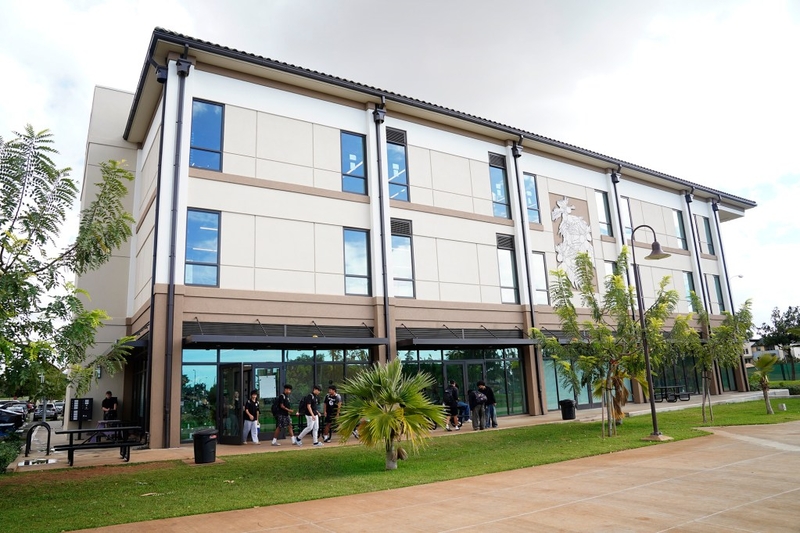
The leadership challenges stand in contrast to the school's recent successes, including the graduation of its first senior class last spring and the opening of a $26 million high school building two years ago. The school enrolled 473 students this fall in grades six through 12.
The future of the school now lies in the hands of the Charter School Commission, which will meet Thursday to take up the matter. The commission already issued a warning to the school earlier this month, requesting a formal action plan for how the school would address its lack of board members.
Public documents don't specify why the three final members of the board resigned, and chair Shaylan Arneho did not respond to requests for comment. But a former consultant for DreamHouse said tensions among the board, school leadership and outside partners had grown in recent months.
In an emailed statement, the charter school commission said it is working with DreamHouse's leadership to determine next steps and provide oversight.
Limited Options For Commission And School
The commission now has three options: escalate its warning from earlier this month, re-establish DreamHouse's governing board with members it selects, or inform the school it is at risk of closure. If the commission chooses the final option, it would still need to hold a public hearing to decide whether to shut down the school.
If the commission issues another warning to the school, on the other hand, it may have limited impact because DreamHouse has no governing board to respond to the notice and take action.
Closing a school or reconstituting its governing board are often considered last-resort options by the commission, used only a handful of times in the past decade. In DreamHouse's case, there's no obvious solution, said former charter school principal and longtime charter advocate John Thatcher.
When the charter school commission votes to close a school, its governing board has the opportunity to appeal the decision to the state education board. But in DreamHouse's case, Thatcher said, it's unclear who could lead the appeal if the school has no board.
The commission may also face difficulties recruiting enough volunteers if it chooses to reconstitute DreamHouse's board, Thatcher said. If the commission pursued this route, it would open applications for DreamHouse's governing board this fall and review applications at its November meeting.
Reconstituted boards have produced mixed results in the past, with the commission hand-picking a governing board only to later close the school in at least two cases.
"Usually we have an idea of what they're going to do, but in this case, they don't have any good options," Thatcher said.
Through the spring and summer, DreamHouse was still seeking new members to fill its board, said Richard Seder, who served on the board until January and then worked as a consultant for the school through June. But Seder said he stopped his recruitment efforts amid tensions between school leadership, its governing board and outside partners helping finance DreamHouse's high school building.
Unlike traditional public schools, charters are responsible for finding and paying for their own campuses. Since DreamHouse is a state entity that can't take on debt, the school has an associated nonprofit that financed the $26 million high school campus through municipal bonds.
But a provision in the bond agreement requires the nonprofit to hire an independent consultant to evaluate DreamHouse's academics, finances and operations. The agreement, which is between the nonprofit and bondholders, says the school must adopt the consultant's recommendations.
The requirement seems unusual because a nonprofit typically can't force a charter school to do anything, even if it is responsible for the campus' facilities, Payne said. Improvements and evaluations of academics or school operations are usually the responsibility of the governing board.
Roger Kiyomura, a board member for DreamHouse's nonprofit arm, said in an emailed statement that the nonprofit board is determining its next steps and will ensure students' education and campus facilities remain fully supported.
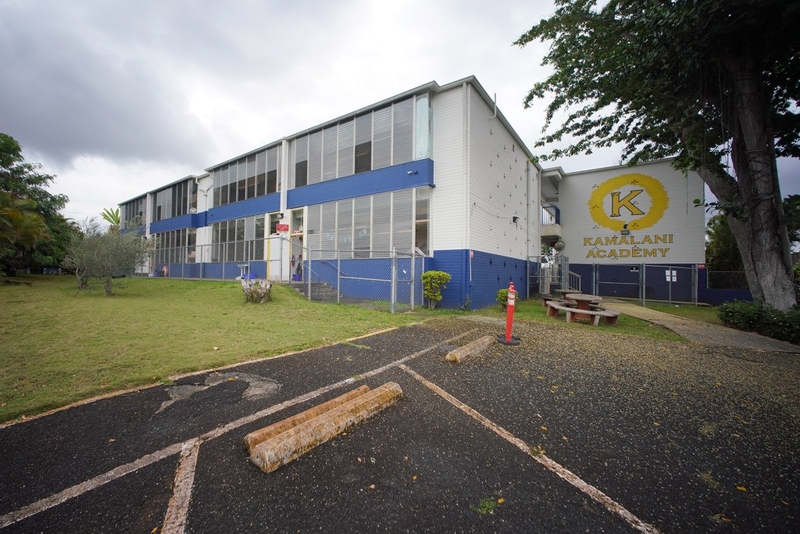
In a few cases, contentious relationships between charters and their nonprofits have threatened the stability of the school. This summer, a Kauaʻi charter school was threatened with eviction after its nonprofit landlord unexpectedly jacked up its rent. Kamalani Academy in Wahiawā was forced to close last year after its nonprofit raised its monthly payments with little explanation.
Honolulu, HI