Alabama’s attorney general can intervene in power rate hearings. Will AG candidates do so?
Sep 24, 2026 | 5:59 am ET
Description
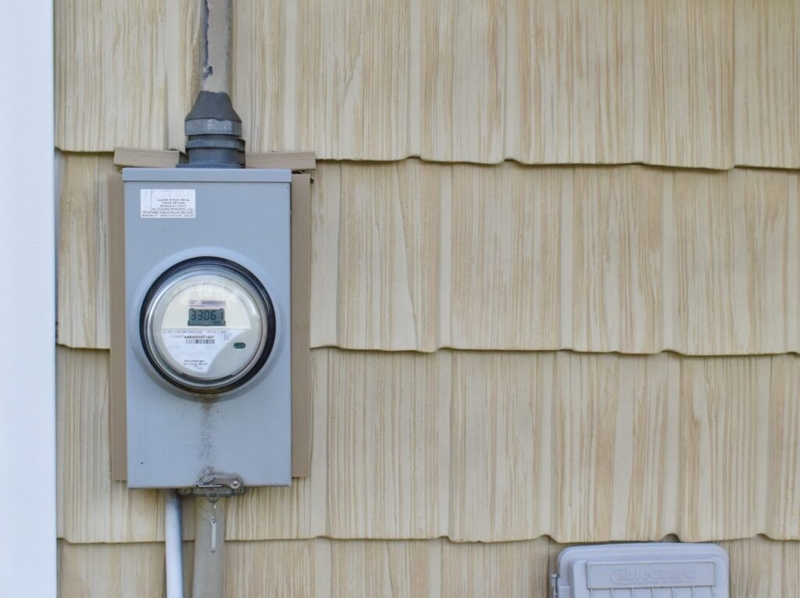
An electric meter. Democratic nominee for Attorney General, Jeff McLaughlin, said he wants to exercise more oversight over investor-owned utilities with the Public Service Commission, the agency that regulates utilities in the state. (Dave Cummings/New Hampshire Bulletin)
With Alabamians paying some of the highest residential power prices in the South, the question of intervention is weighing on the Alabama attorney general’s race.
Under Alabama law, the attorney general can intervene in rate cases before the Alabama Public Service Commission on behalf of the public. However, with the PSC using a process that effectively guarantees a profit for utilities since 1982, the power was rarely used before this summer, when the AG’s office stepped into a case involving a natural gas company.
Alabama pays some of the highest rates for power in the region. According to the Energy Information Commission, residents paid 16.04 cents per kilowatt-hour for electricity in June, higher than the 14.89 cents on average that customers paid in the region.
Jeff McLaughlin, the Democratic nominee for Alabama attorney general, said in an interview Monday that he would take the obligation to represent power customers “very seriously.” He said he would work to ensure they pay fair prices for electricity and other services and reduce the impact of data centers as residents become increasingly concerned about their footprint within the community.
“The AG’s Office needs to be the champion of rate payers in our state where energy bills are at least as high or higher than in the rest of the country,” he said.
Messages were sent to the campaign of Katherine Robertson, the Republican nominee for Attorney General, on Tuesday and Wednesday seeking comment. Robertson’s campaign website, which emphasizes support for President Donald Trump and law enforcement, does not include a section on utilities. Robertson currently serves as chief counsel for Alabama Attorney General Steve Marshall.
McLaughlin said he will use the office to be an advocate for rate payers as they pertain to the cost of electricity with the PSC to ensure they are paying the appropriate price.
“I think it has been some 40 years since there was a rate case pertaining to some of the rates of Alabama Power,” McLaughlin said. “That has been a long time. My view is the AG’s Office ought to be more proactive in representing the rate payers and whatever falls in line with that.”
McLaughlin also said he wants to slow the proliferation of data centers, which consume large amounts of energy and could put pressure on electric bills.
“To the extent that the AG’s Office can put its weight behind a moratorium or the establishment of some kind of regulation, particularly procedural regulation, on how communities can protect themselves if a data center is not wanted, I would put the weight of the office behind slowing down these data centers and making sure of what we are getting ourselves into,” McLaughlin said.
Power issues have also surfaced in the governor’s race. The Republican nominee for Governor, Tommy Tuberville, said he wants to extend a existing rate freeze that Alabama Power voluntarily proposed past a 2029 expiration date.
The Democratic nominee for governor, Doug Jones, said he would push instead for the PSC to hold formal hearings on any rate increases proposed by Alabama Power, saying the existing, frozen rates are too high.
Jones has also called for a one-year moratorium on the construction of new data centers. Tuberville, who was initially dismissive of criticisms of data centers, opposes a moratorium but said he would work to ensure data centers pay for impacts on communities.
In the last few months, the AG’s office has used its oversight powers. Earlier this year, the AG’s Office challenged the rate of return that Spire Energy, based in St. Louis, requested with the PSC. The PSC Board ultimately sided with the AG’s recommendation that the company be allowed to earn a 9.4% return on equity instead of the 10.5% return that the company had requested.
The AG’s Office also submitted a comment to the PSC in August that said board members must vote on whether to approve contracts made between energy companies and data centers instead of allowing staff to decide.
Daniel Tait, executive director of Energy Alabama, an organization that advocates for more renewable energy in the state, said that the AG’s Office plays an important role in advocating rate payers with the PSC on their behalf considering the profit motive of utility companies. The AG’s Office has the same authority as the public to weigh in on requests from utility companies about the rates they want to charge customers.
“The Attorney General’s Office gets access to a lot more information that is not made public,” Tait said.
He added that, “if anyone knows what should be happening beyond the power company, it would be the AG because the office gets unredacted filings and a lot more data than the rest of us do.”
Montgomery