Wolf delisting in Wisconsin: Why Tom Tiffany has been a hindrance and not helpful.
Sep 24, 2026 | 4:00 am ET
Description
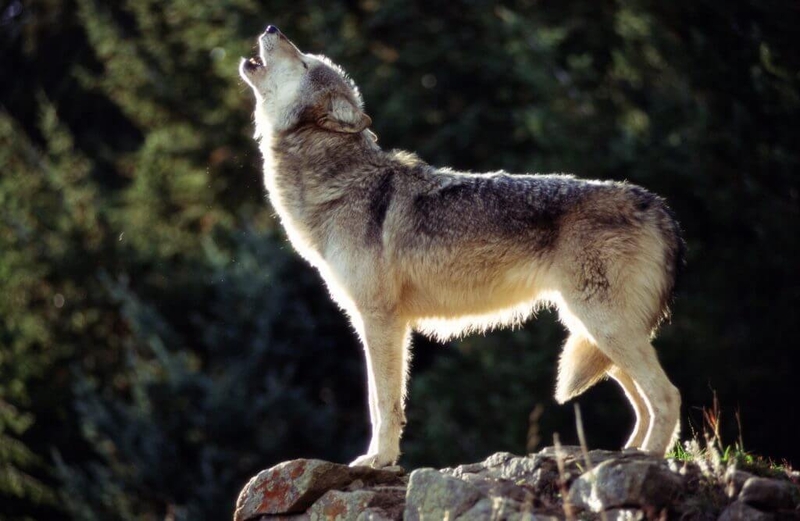
A gray wolf (Getty Images).
While gray wolves in Wisconsin and the Great Lakes region have been considered recovered by the federal government since the early 2000s, wolves currently continue to be listed as endangered in Wisconsin and Michigan, and threatened in Minnesota. Delisting was intended to give states and tribes flexibility to manage wolf populations when wolves are no longer at risk of extinction. There has been a complicated history of delisting and relisting in the Great Lakes region, between 2007 –2022. Each time the federal government attempted to delist wolves in the region, some group opposing delisting has filed lawsuits and managed to get wolves relisted as endangered (or threatened in Minnesota).
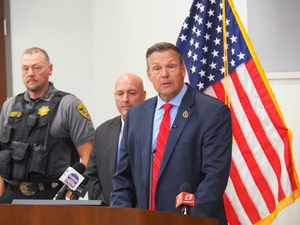
Tom Tiffany, as a member of the Wisconsin Assembly, the state Senate, , and as a member of Congress, has been an especially vocal supporter of intense management of the state wolf population, and has attempted to delist wolves through congressional action. But Tiffany’s own rhetoric, exaggerations and misleading comments have not been useful at attaining delisting, and may have emboldened efforts to challenge such delistings through the courts.
As an Assembly member, Tiffany helped co-author a wolf hunting bill in 2012 that forced DNR to hold a wolf hunting and trapping season whenever wolves were not listed as threatened or endangered. Unlike most hunting seasons that allowed DNR broad authority to regulate the harvest, the legislated wolf hunting season represented a major political overreach, which may have been a factor that resulted in wolves being relisted at the end of 2014.
In 2018, as a state senator, Tiffany attempted to defund wolf conservation in Wisconsin until federal delisting occurred. Such defunding would have made it difficult to determine wolf abundance and the sound scientific management of the wolf population to allow delisting to occur. Luckily the bill to defund wolf conservation did not pass.
Tiffany has frequently made false claims about wolf attacks on people, exploding wolf population, and exploding rates of depredations on pets and livestock. No wolf attack on humans has been documented in Wisconsin, and Tiffany’s references to attacks are cases of wolves losing fear of people and displaying bold behavior, but none have resulted in physical attacks on people. Depredations on pets and livestock peaked in Wisconsin in 2010, and have declined since then. Most years less than 10% of state wolf packs attack pets or livestock, and wolf depredation represents much less than 1% of all the things that kill cattle in Wisconsin. The wolf population in Wisconsin has mostly stabilized at 1,000-1,200 wolves since 2018, and is not increasing exponentially as often suggested by Tiffany
In the U.S. Congress, Tiffany has tried in two bills to attempt nationwide gray wolf delisting. The bills included “Trust the Science Act” and “Pet and Livestock Protection Act.” Neither bill has succeeded thus far. In support of these bills, Tiffany has insisted the Wisconsin DNR is very capable of managing the state wolf population. But at an open house event in Wisconsin, after running for governor, he called the state wolf plan passed by the Wisconsin DNR “not a wolf management plan” and an “impediment to management of the wolf.” Tiffany totally rejects the carefully crafted and science-informed wolf plan developed by the Wisconsin DNR over a three-year period and approved in 2023. Tiffany has implied that major reductions are needed to reduce wolves to 350 or 500 wolves. This would require very intense controls and eliminating wolves from 60-70 % of their range in Wisconsin. Such intense controls would look more like the extermination programs that caused wolves to become endangered, and not like the proper management of a recovered wolf population. While Tiffany adds his name to the “Trust the Science Act”, he certainly shows no trust for scientific estimates of the state wolf population, or the science-based state wolf management plan.
Wolves in the Great Lakes states should be delisted, and state and tribal wildlife agencies should be authorized to manage local wolf populations. Some farmers have had extensive problems with wolves and more flexible management including removal of problem wolves by government agents and landowners will help reduce conflicts. The Wisconsin DNR has a well-designed wolf management plan, which allows some level of hunting and trapping as is required by law, but the plan also focuses on ecological and cultural benefits of wolves, while still helping reduce conflicts.
Yes, Wisconsin DNR can manage wolves, and delisting and sound management can best be achieved if politicians such as Tom Tiffany stay out of the way.
Madison, WI