Oregon narrows LGBTQ+ foster youth protections after losing federal appeals case
Sep 23, 2026 | 3:52 pm ET
Description
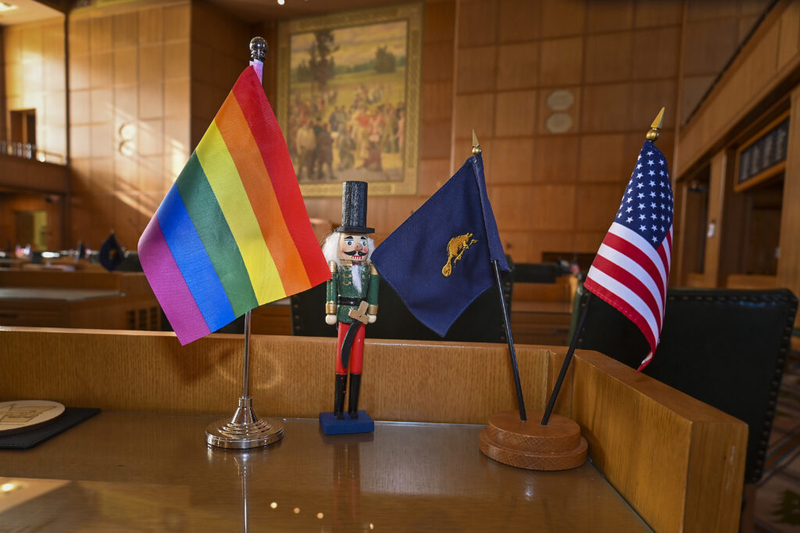
A Pride flag, Oregon flag and U.S. flag rest on a desk in the Oregon Capitol. The Oregon Department of Human Services has narrowed protections under Oregon rules for ensuring LGBTQ+ foster youth have for ensuring inclusive placements. (Photo by Ron Cooper/Oregon Capital Chronicle)
Oregon’s prospective foster and adoptive parents do not need to commit to affirming a child’s potential LGBTQ+ identity to serve as caregivers in the wake of a recent federal court ruling that has narrowed child welfare officials’ ability to determine inclusive placements.
Officials with the Oregon Department of Human Services and the Arizona-based conservative legal advocacy group Alliance Defending Freedom reached an agreement in federal court earlier this month to allow Jessica Bates, a widowed mother of five from Vale, to apply to be an adoptive parent for Oregon youth in the state’s custody. Bates has said she wanted her current children to have more siblings but would not take a child to a Pride parade or to receive hormone injections from a doctor.
In response to her lawsuit, the 9th Circuit Court of Appeals last year struck down on free speech grounds an Oregon rule that required parents like Bates to respect, accept and support their child’s sexual orientation, gender identity, gender expression and spiritual beliefs, next to a list of other protected categories. Appellate judges sent the case back to district court for further review, resulting in the agreement.
The Alliance Defending Freedom celebrated the development, calling it “a win-win that protects constitutional rights and puts children’s interests first.”
“Every child deserves a loving home, and children suffer when the government excludes people of faith from foster care because of the state’s own ideological crusade,” Johannes Widmalm-Delphonse, senior counsel for the alliance, said in a statement. “Oregon officials turned Jessica away just because of her common-sense belief that parents should help children become comfortable with who they are instead of pushing them down a path of confusion and medicalization.”
In a statement, the state’s leading LGBTQ+ rights advocacy organization blasted the decision and said it was “disappointing in that it allows a foster parent to discriminate against an already vulnerable member of our community.”
“LGBTQ+ youth in foster care deserve safe and affirming homes. Putting children’s interests first means respecting who they are,” Kyndall Mason, executive director of Basic Rights Oregon. “Basic Rights Oregon will continue working to make Oregon a safe place for young queer and trans people, and that includes those in foster care.”
Human Services maintains there are other ways to ensure placement
The state’s human services department maintained that it has other methods to ensure foster youth are placed in homes that provide safe environments for their identities.
In an administrative rules filing last month, the human services department removed language requiring potential parents to respect LGBTQ+ foster youth’s identities. But agency spokesperson Jake Sunderland said that the department will ensure that LGBTQ+ children are placed “with foster and adoptive parents who are able and willing to support and affirm them.”
“This judgment does not prevent ODHS from deciding a child’s placement based on their specific needs and a foster or adoptive parent’s ability or willingness to meet them, including the child’s sexual orientation, gender identity and gender expression,” he said. “ODHS has updated its rules and policies to comply with this judgment, and we continue to prioritize child-specific safety needs so that all children and young people in foster care have access to a safe and supportive environment.”
Concern over Oregon’s LGBTQ+ foster policy also reached the federal level, with the Trump administration announcing an investigation into Oregon over it last year, though it has yet to take legal action or withhold funding in response. In a statement, Alex Adams, assistant secretary for the Administration of Children and Families under the U.S. Department of Health and Human Services, noted that the new policy from Oregon comes after his agency’s action.
“Children in foster care need loving families, not government tests for ideological alignment,” Adams said. “Oregon’s decision to no longer require foster parents to affirm beliefs that are inconsistent with their sincerely held beliefs is aligned with ACF’s position and federal law.”

Salem, OR