Alabama task force finalizes recidivism definition for future vote
Sep 23, 2026 | 6:01 am ET

Description
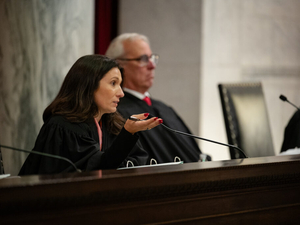
Alabama Bureau of Pardons and Paroles Director Cam Ward speaks during Reentry 2030 event at the Perry County Correctional Facility in Uniontown, Ala., on Friday, Oct. 6, 2023. Alabama’s Joint Re-Entry Task Force plans to formally adopt a definition for recidivism that other agencies have already adopted. (Will McLelland for Alabama Reflector)
A group seeking a formal definition for recidivism told the Alabama’s Joint Re-Entry Task Force Tuesday that they would stick with the same recommendation they made to the task force in June.
That defines recidivism as returning to the custody of the Alabama Department of Corrections “for commission of a new crime” within three years of being released for an earlier conviction.
“Every state uses that same definition,” said Cam Ward, director of the Alabama Bureau of Pardons and Paroles and chair of the Reentry Task Force, in an interview following the meeting. “The Bureau of Justice, which is a branch of the Department of Justice, has always used that definition. If we were to go out and use a separate definition altogether, you could not compare us to other states. It would be apples and oranges.”
Ward and others want to adopt a formal definition for recidivism to gauge the success of intervention programs that Alabama has applied. Ward said Alabama has a recidivism rate of 27%. That would place it 15th in the nation for that metric, which improved from 34% in recent years, according to The Council of State Governments Justice Center.
“I think the investment in more resources on job training, mental health and substance abuse, that is what is moving the needle,” Ward said.
Adopting that definition also allows state officials to compare its metric against other states and learn about their re-entry programs that Alabama can then adopt.
“There is nothing wrong with copying best practices from other states,” Ward said.
Members of the subcommittee seeking to define the word received feedback from several committee members.
Some had concerns about how to define “a new crime” within the context of the definition. Ward suggested at the meeting in June that a Class A misdemeanor be the threshold for committing a new crime. Others, like Bennet Wright, executive director of the Alabama Sentencing Commission, said it would be hard to even determine whether a person had committed a new misdemeanor because of gaps in the existing system that tracks offenses in the state.
“You have different data structures that you may or may not have access to,” Wright said in an interview following the meeting. “There is no statewide repository of municipal data information.”
Despite that, Wright said the subcommittee recommended the same definition of recidivism because it is the same one that the ADOC uses.
Ward made cutting Alabama’s recidivism rate in half one of the central goals for ABPP. The board has partnered with the Council of State Governments Justice Center on an initiative called Reentry 2030 to improve outcomes for people who were released from ADOC custody.
The task force will vote on the new language at the next quarterly meeting, although the date has not been announced.
Montgomery