Once again: Revenue growth through tax cuts is a mirage
Sep 23, 2026 | 5:31 am ET
Description
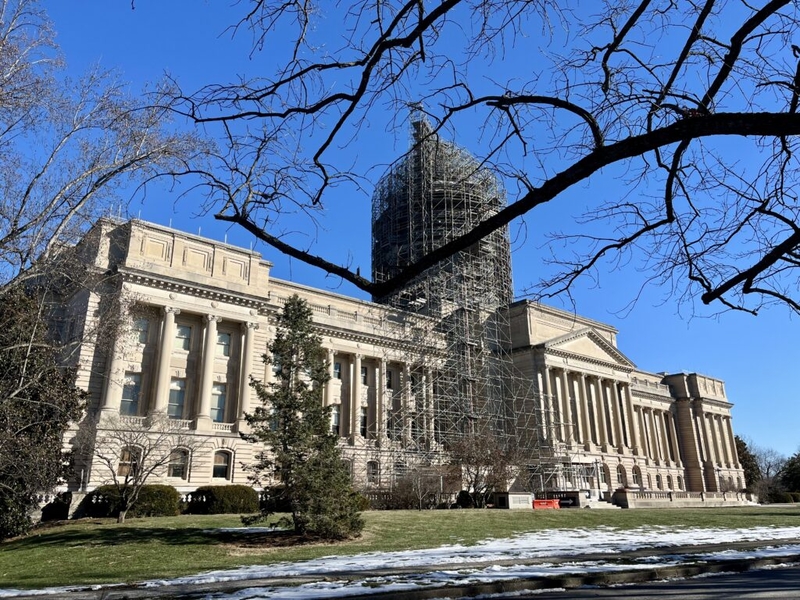
Kentucky has missed another trigger point in further lowering the state income tax. (Kentucky Lantern photo by Sarah Ladd)
Nearly two years ago, I wrote in this publication that the Kentucky General Assembly’s faith in income tax rate cuts as a vehicle for generating revenue was a mirage. At the time, the state was preparing to cut the individual income-tax rate from 4% to 3.5% even as revenue was expected to decline. I argued that Kentucky was making a dangerous bet that reducing one of the state’s most productive and reliable sources of revenue would somehow generate enough economic growth to replace what the tax cut surrendered.
Nearly two years later, members of the General Assembly have given us another opportunity to test that proposition. I’d truly like to say the results are encouraging; they unfortunately are not.
What the letter actually says
On Sept. 4, State Budget Director John Hicks sent a letter, the kind of letter that arrives at the office and immediately makes the rest of the day worse. Under KRS 141.020, General Fund receipts fell $1.19 billion short of what was required to trigger another cut in the individual income-tax rate. That’s not a rounding error, and that’s not a bad quarter. That’s over a billion dollars short of a target the General Assembly set.
And in case anyone was tempted to argue the bar was set too high, recall that floor was lowered further in 2025, building in a second, more forgiving trigger. As a professor, we have a term for this, and it’s the fiscal equivalent of “grading on a curve.” Unfortunately, Kentucky missed that one too by slightly over $453 million. So, when you fail both the hard test and the easy test and get the same letter grade, it’s probably not the test that’s the problem.
This is no longer a theoretical debate anymore about the Laffer Curve or tax rate “sweet spot” as discussed in my original article. It’s an accounting problem, and accounting problems have an answer.
Here is what the Budget Director Hick’s letter does not say, but what its numbers make clear: this isn’t a state teetering on the edge of insolvency, unable to fund a tax cut because the cupboard is bare. The Budget Reserve Trust Fund commonly known as “Kentucky’s Rainy-Day Fund” sits at 26.1% of the General Fund, well over the 10% threshold the statute treats as healthy. The guardrails built are working exactly as designed. It’s just that what the revenue numbers are telling you isn’t what some folks were hoping to hear.
Arithmetic, not ideology
The General Assembly already reduced Kentucky’s individual income-tax rate from 5% to 3.5%, with the most recent cut taking effect Jan. 1 of this year. State revenue officials have acknowledged, in the same breath, that the reduction is itself contributing to declining individual income-tax receipts. That is not evidence that tax cuts are paying for themselves. It is evidence that tax cuts reduce tax revenue, which, respectfully, is not a controversial economic claim. It’s just plain arithmetic.
I suspect the response from some quarters of the General Assembly will be that the strategy isn’t the problem; it’s just we simply haven’t cut enough, or fast enough, and that the next cut is always the one that finally unleashes the growth the last several didn’t. Members of the General Assembly, that is precisely the trap you should decline to walk into a third time. At some point, chasing a mirage across the same stretch of desert stops being persistence and starts being a delusion you should probably examine.
Asking the right question
There is nothing wrong with wanting a competitive tax structure, and nothing wrong with wanting Kentuckians to keep more of what they earn. But you cannot separate that goal from the other side of the ledger: what happens to the public investments the surrendered revenue would otherwise finance? The question in front of you was never “how quickly can we eliminate the income tax?” It should be “what tax structure gives Kentucky the resources it needs to become more prosperous?” Those are very different questions, and only one of them has an honest answer sitting in Director Hicks’s letter.
Economic growth doesn’t occur simply because government collects less money; it occurs when people and businesses have education, infrastructure, health care, public safety, and transportation systems that let them produce, invest, and innovate. A tax cut can put money in someone’s pocket. But if paying for it means underfunding the very investments that make growth possible, you haven’t created growth; you’ve just moved money from one pocket to another and charged Kentucky’s future for the privilege.
Guardrails, not gimmicks
So here is a recommendation, offered in the same spirit as nearly two years ago, only with better evidence behind it this time: keep the guardrails intact. Stop treating the income tax as though it were an economic development program with its own annual plan. Evaluate every tax expenditure and incentive on measurable results, not on how good it sounds in a press release. And if you really want to set Kentucky’s economy in the right direction, direct the state’s fiscal resources toward the things that actually expand Kentucky’s productive capacity like educational attainment, infrastructure, health care, workforce development, and strategic investment in Kentucky businesses, rather than a smaller tax code as an end in itself.
Nearly two years ago, I ended my column by warning that cutting the income tax from 4% to 3.5% amid declining revenue could prove reckless. Today, Kentucky’s own budget numbers, signed by the Commonwealth’s own budget director, provide the answer. The promised revenue growth has not materialized. The fiscal trigger has failed by more than a billion dollars under the first, more difficult test, and by nearly half a billion even under the test you relaxed to make it easier to pass.
Once again, you were forewarned nearly two years ago about the mirage, and it’s now high time to stop walking toward it.

Frankfort