Clean Virginia: NextEra’s utility takeover attempts, alleged political moves relevant to merger case
Sep 23, 2026 | 5:27 am ET
Description
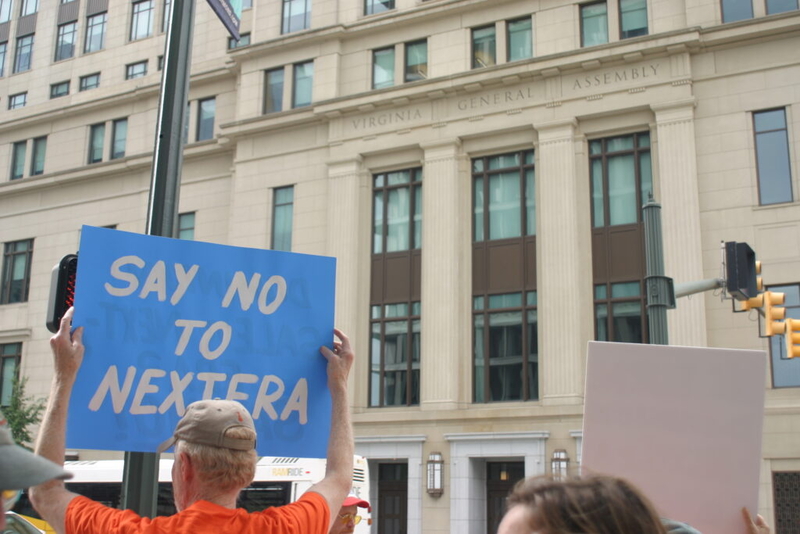
A protester displays a sign opposing the Dominion-NextEra merger outside the Virginia General Assembly on Aug. 18, 2026. (Photo by Shannon Heckt/Virginia Mercury)
Clean Virginia, a clean energy policy advocacy group and an intervenor in the Dominion Energy-NextEra Energy merger case, told the State Corporation Commission in a Tuesday hearing that NextEra’s past political ties and attempts to acquire utilities deserve scrutiny in regulators’ review of the proposed $67 billion merger.
Ahead of the evidentiary hearings beginning later this year, involved parties are working through the discovery portion of the merger case, as legal teams develop their strategy and dig up relevant information to support arguments for or against the approval of the merger.
Clean Virginia insisted that the Florida-based NextEra’s past political dealings should be considered as part of that process.
The group cited the$150 million settlement NextEra agreed to pay in June to resolve a dispute over whether the company lied about its involvement in political interference schemes in Florida, including allegedly funding “ghost candidates” to run against state lawmakers.
In other states such as Hawaii and Texas, NextEra has not been successful in its pursuit of utility mergers.
In 2016, Hawaii regulators determined that NextEra’s effort to acquire Hawaiian Electric Cooperative was not in the public interest. In Texas in 2017, regulators determined that NextEra’s attempted acquisition of the utility Oncor did not have tangible benefits and would put ratepayers at risk of being responsible for NextEra’s $110 billion debt.
NextEra has also faced public criticism for its political lobbying and donations.
Clean Virginia also pointed to NextEra’s legal actions during former efforts to acquire other utilities across the country, saying it was relevant information that regulators should be privy to during case deliberations.
“Things they have represented to other entities and parties that they have used to advance their interests, things that those individuals have said or done, all of that gets to the nature of this entity seeking to acquire the largest electric utility in Virginia,” said Greg Habeeb, an attorney representing Clean Virginia in the case.
In Virginia, the SCC must consider whether a merger would “pose risk or jeopardy or impairment to the ratepayers,” according to state law.
Clean Virginia said that these past dealings, whether the deals were completed or not, are important details that paint a comprehensive picture of NextEra.
The group also argues that by joining with NextEra, Dominion would essentially be taking ownership of the company’s history and track record, aspects that should be part of the joint filer’s arguments.
“If you’re gonna say, one of the reasons you should approve this merger is because of their track record, their core values, their corporate governance, all these sorts of things, then we have to be able to do discovery on those issues,” Habeeb said.
In the Tuesday hearing, Dominion attorney Joe Reid argued that those aspects are not relevant because NextEra has experienced employee turnover in the ensuing years.
Reid added that it is not within the SCC’s purview to wade into political discourse.
“Clean Virginia wants to have a trial around allegations of misconduct by employees, many of them former employees of NextEra or its subsidiary Florida Power and Light, down in Florida several years ago,” Reid said.
“They want to have a trial about actions that NextEra took, also years ago, in the political space with respect to two potential utility acquisitions in Florida and South Carolina that were never consummated.”
The SCC “does not regulate political conduct, and it is not the proper venue for an attempt, with all due respect, at political spectacle,” he continued.
‘A different deal on the table’: AG Jay Jones asks SCC to reset the clock on Dominion-NextEra merger
The commission will now have to determine if the information raised by Clean Virginia can be included in the discovery portion of the case.
The SCC also received a recent request from Attorney General Jay Jones to reset the clock on the trial to reflect the start date of the latest supplemental filing by the two companies.
The Sept. 14 filing expanded the merger deal offerings by extending customer bill credits to four years instead of two and pledging to build an office building in downtown Richmond.
If Jones’ request is granted, the review timeline would be pushed back and the commission would need to approve or deny the merger sometime in March.
Richmond, VA