Arizona spends millions on the death penalty. Victims’ families want it spent on cold cases.
Sep 22, 2026 | 5:46 pm ET
Description
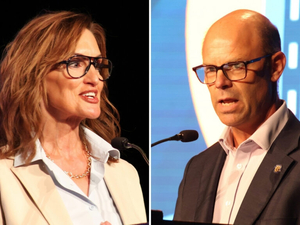
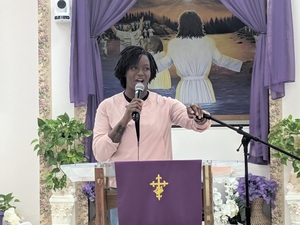
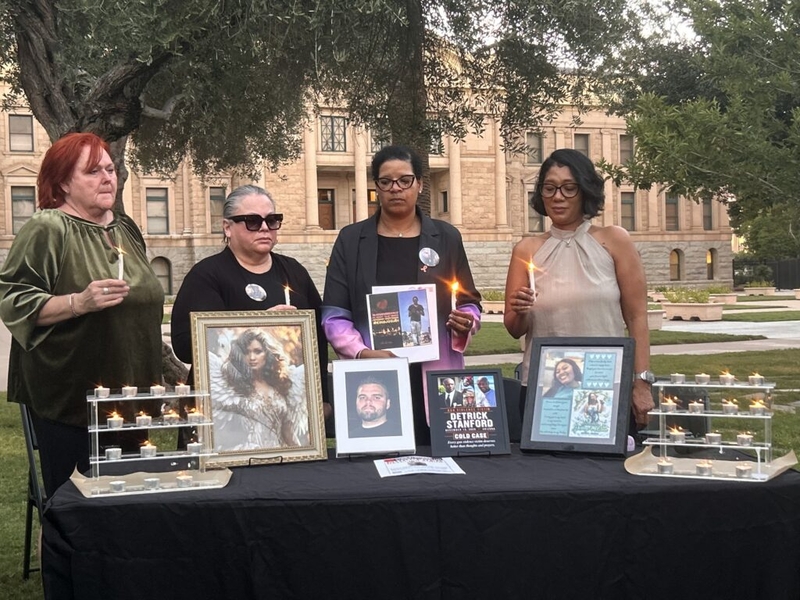
Brenda Gilliam-Miller, Dawn Jackson, Kristy Standford and Karen Dana hold vigil to remember loved ones whose homicide cases have gone cold. The four spoke at the Arizona Capitol on Sept. 21. 2026, in support of Arizonans for Effective Public Safety, an effort calling for investment in cold case units. (Photo by Kiera Riley for Arizona Mirror)
Family members of homicide victims called on lawmakers and law enforcement to shift funding away from heavy sentences and capital punishment to cold-case investigations, violence prevention and survivor support.
At a news conference Monday, members of Arizonans for Effective Public Safety recounted the still unsolved murders of their daughter, son, husband and cousin, crimes that date as far back as 1988.
Each survivor made the call for dedicated cold-case units and detectives, citing the need for sustained attention to unsolved homicides.
“After my husband was murdered, the detective would call me regularly, like every week… after a month I would have to call him,” Kristy Stanford, wife of homicide victim Detrick Stanford, said. “Sometimes I would get a quick response. It just kept getting slower.”
Stanford’s voice choked as she spoke of her husband, who was shot and killed in Tempe in 2020.
Brenda Gilliam-Miller remembered her daughter, Destiny McClain, who was shot and killed while standing in line at a food truck in Phoenix in 2021. Dawn Jackson spoke of her 18-year-old son, Josiah Briscoe, who was shot outside their Phoenix home in June 2020. Karen Dana shared the life of her cousin, Loretta Lynn, who was stabbed in her home in Mesa in 1988.
From 1965 to 2025, there were 18,826 homicides in Arizona, according to the Murder Accountability Project. Law enforcement “cleared,” or solved, 12,039 cases, leaving 6,787 unresolved, or cold. As of July 2026, the state reported 1,099 missing-persons cases, as well as 153 unidentified and 183 unclaimed people.
“Every case number is a person, behind every unresolved investigation is a family, and no matter how much time has passed, justice should not have an expiration date,” Kat Jutras, executive director of Arizonans for Effective Public Safety, said.
Arizonans for Effective Public Safety, a project of Death Penalty Alternatives for Arizona, went public this year with a policy push to see the state and law enforcement agencies move away from funding capital cases and felony murder prosecutions.
Instead, advocates want to see more money invested into cold-case and missing-persons investigations, modernized crime labs, and violence-prevention and survivor-support programs.
“We’re all looking at the best deal we can get for our dollar,” Jutras said. “We’ve invested so much money into really ineffective policy that doesn’t prevent crime and doesn’t necessarily solve crime.”
For one, survivors called for more dedicated cold-case units and detectives.
Some police agencies, like Phoenix Police Department and the Coconino County Sheriff’s Office, have dedicated cold-case units, while others house cold cases in homicide units and assign detectives to certain cases or rely on volunteers.
Family members of homicide victims reported varied response rates and relationships with the detectives assigned to their case.
Jackson said the detective on her son’s case “never stayed in communication.” Stanford described a slow fade-out of communication. Dana and Gilliam-Miller, on the other hand, described a positive, responsive relationship with detectives, but noted their situations are not common.
“We need cold-case detectives. It gets harder every year. Time makes it harder. It doesn’t get easier,” Dana said. “That’s one thing I really want to really scream from the rooftops.”

Jutras said Arizonans for Effective Public Safety identified at least an anecdotal trend of under-resourced cold-case investigations in surveys of retired and active detectives.
“The detectives that were being appointed to these cases lacked enthusiasm because they had been designated cold or had been unsolved for a really long time. Those aren’t necessarily the most motivating factors,” Jutras said. “What would change that dynamic is investing in those agencies, in those departments that are specifically focused on providing answers.”
The state has taken some steps to support cold-case investigations across the state. In January 2025, Attorney General Kris Mayes launched a cold-case unit to assist local and rural law enforcement agencies with investigation and forensic technologies. Detectives have found some success so far.
On Sept. 15, Mayes announced that her office, in partnership with the Glendale Police Department, had identified a break in a four-decade-old case, naming Gary Wayne Billups as the prime suspect in the 1987 murder of Orison James “Jim” Chafin.
The attorney general’s office used DNA collected from Billups and matched it to DNA recovered from the murder scene decades earlier. Billups died by suicide days after giving his DNA, but Mayes marked it as an important answer.
“We created this unit last year because families across Arizona have been waiting years, sometimes decades for answers that they deserve,” Mayes said. “This case is exactly what that looks like.”
Jutras said the success in Chafin’s case demonstrates the need for dedicated cold-case resources.
“A statewide resource that can supplement local departments — especially smaller or under-resourced agencies — is an important part of addressing that gap,” Jutras said. “At the same time, the unit only has the capacity to work on a handful of cases, so its success also raises the question of what could be accomplished if Arizona invested at a scale that matched the number of families still waiting for answers.”
Richie Taylor, a spokesperson for Mayes, said the Legislature has not dedicated any funding specifically for cold cases and noted it cut the attorney general’s budget by 2.5% in the last fiscal year.
Arizonans for Effective Public Safety argues the state does have the money, but it’s just not going to the right place.
Jutras pointed to capital punishment as the chief concern, given high price tags on litigating a capital case.
A 2025 investigation by ProPublica and ABC15 found Maricopa County has spent $289 million on defense for capital cases since 2007, with $26 million spent in 2024 alone.
“People don’t have to be against the death penalty to recognize a dollar is poorly invested,” Jutras said. “Things that keep our community safer cost a lot less, and it might mean that we don’t have to deal with this issue. It doesn’t mean all crime is going to be resolved, but it does mean that it can be contained and that it can prevent some victimization from happening.”
Arizonans for Effective Public Safety is also taking aim at Arizona’s felony murder law, which allows a person to be charged with first-degree murder if a death occurs during the act of another felony, even if the death was unintended or accidental. The group claims the cost of prosecution and litigation could be better spent.
At bottom, though, Jutras said the group first hopes to bring attention to the “public safety crisis that too often remains invisible.”
“The work has to continue, and it has to grow until we’re able to get to that point of statewide recognition that this is a crisis,” Jutras said. “I don’t know any other public safety issue where thousands of people are affected on a regular basis, and for decades, that doesn’t warrant some kind of response and awareness.”
- 3:28 pmCORRECTION: An earlier version of this story incorrectly identified Kristy Stanford as Kristen Stanford.
Phoenix, AZ