Nevada got a mining tax revenue windfall in 2025, but 2026 isn’t looking as shiny
Sep 22, 2026 | 8:50 am ET
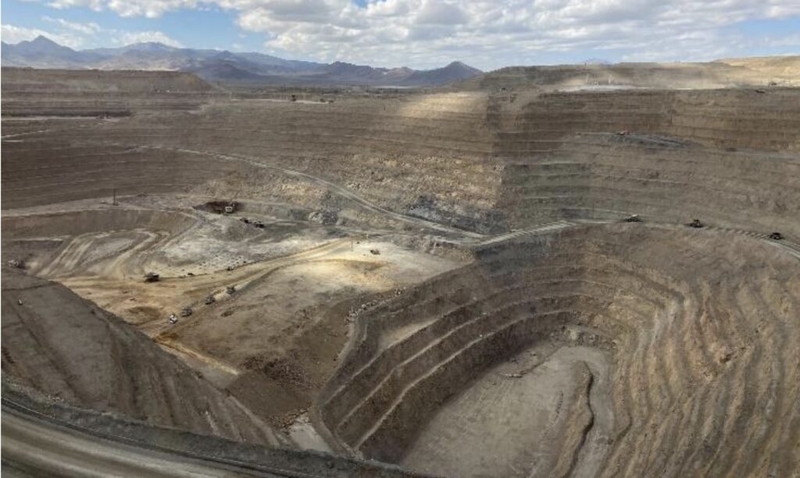
Description
(Photo: Nevada Gold Mines 2025 presentation to investors)
In 2025, the price of gold skyrocketed. Accordingly, a record-smashing $12.2 billion worth of gold mined in Nevada — the nation’s largest gold producer — was 26% higher than the $9.7 billion mined in 2024.
One by-product of those higher gold prices: As a percentage of the much larger gross revenue, the industry’s expenses were smaller. Accordingly, so was the effective rate of the industry’s allowable tax deductions.
Instead of deducting about two-thirds or three-quarters of the gross value of the gold from its tax bill, as it has multiple times this century, last year the industry only got to deduct half of it.
Combine that smaller tax deduction rate with last year’s spiking gold prices, and Nevada’s mining industry collectively paid nearly $313 million under the state’s primary mining tax, the one on net proceeds, in 2025 — a whopping 64% increase over $190.8 million in 2024, according to the Nevada Tax Department’s Net Proceeds of Minerals Bulletin.
An additional $135 million in revenue was collected last year under a separate tax on gross proceeds, which is roughly double what that tax has generated annually since it was enacted in 2021.
The price of gold in 2026 has bounced around, especially since the start of the Iran war. As the third quarter of 2026 draws to a close, the price of gold is about the same as it was when the year started.
If the price and the level of production in 2026 were to match 2025, revenue from the tax on gross proceeds might be expected to match last year’s performance. But revenue from the state’s largest mining tax, the one on net proceeds, would fall short of the mark set in 2025.
Nevada’s mining industry relies heavily on diesel, which is selling at record highs of nearly $7 a gallon or more, an increase of more than 80 percent since the start of the year. That alone guarantees the mining industry’s expenses — and its tax deductions — will be larger than in 2025. And the bigger the deductions, the less the tax revenue from the net proceeds tax.
Gold (and its byproduct silver) accounts for more than 90% of the value of minerals mined in the state. Even if the price of gold took a dive over the next three months, Nevada mining tax revenue this year should still be at least higher than it was in 2024 — or any other year prior to that, because the size of the metal’s market rally in 2025 set a new, higher floor price.
But whatever the amount of mining tax revenue is available when Nevada’s governor and legislators convene and wrestle with the state budget after the first of the year, mining taxes are unlikely to play a decisive role. Taxes on mining historically have been something of a budgetary afterthought compared to larger state revenue streams such as the sales tax, the gaming tax, the insurance premium tax, the commerce tax, the modified business tax, or even the live entertainment tax.

Las Vegas, NV