A surge of ICE arrests and the shooting of a Venezuelan man strike fear into Austin neighborhoods
Sep 21, 2026 | 9:42 pm ET
Description
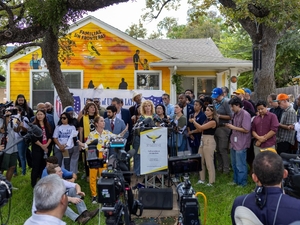
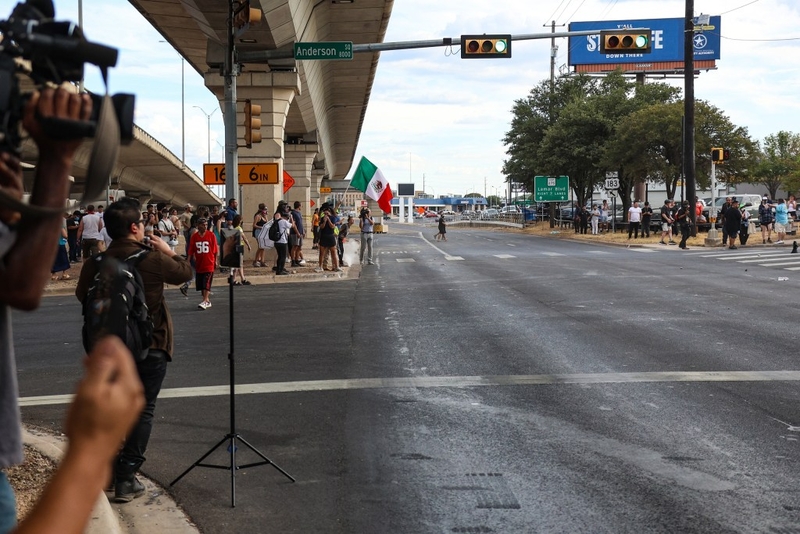
Protestors fill the intersection of West Anderson Lane and Research Boulevard in north Austin after an immigration enforcement agent shot and injured Wilber Rafael Garces Perez on Sept. 20, 2026. (Jacob Lujan/The Texas Tribune)
From the Mexican restaurant where he works in North Austin, Juan Perez has seen U.S. Immigration and Customs Enforcement officers detain more and more people in the area.
That includes construction workers, stopping at the gas station or the Dollar Tree for ice before their work day begins. And lone drivers, whose cars are left unattended after they’re hauled away. On Saturday, Perez saw one guy taken away. On Thursday, another man, trying to flee, ran through the restaurant’s parking lot. Perez did not see if ICE caught him.
“It’s been going on for a month here and they’ve just been — respectfully — terrorizing the whole area,” Perez, 28, said as he looked past a mostly empty restaurant and onto the street on Monday. “I just guess they’re easy targets because a lot of people, a lot of construction people gotta put gas or whatever in the mornings.”
The restaurant sits among a group of small businesses near the intersection where an ICE officer on Sunday shot and wounded Wilber Rafael Garces Perez, a 28-year-old immigrant from Venezuela. To some in the area, a violent encounter was all but inevitable as they have seen federal agents — often in unmarked cars, sometimes accompanied by Texas Department of Public Safety troopers — pick up the pace of their hunting for immigrants.
“It’s just sad,” Perez said, shaking his head. “If you were just going after rapists … I understand that. But I mean, you’re going after hardworking people.”
The shooting occurred amid a surge of ICE activity in Austin that is injecting fear into Latino residents, citizens and undocumented alike, according to others who work in the area, local activists and elected officials from Austin City Hall to Congress.
Garces Perez’s violent arrest has placed a spotlight on the soaring number of ICE arrests, and renewed scrutiny on the willingness of Texas’ GOP leaders to help President Donald Trump pursue his mass deportation campaign.
ICE has divided Texas into five jurisdictions, and street arrests in the San Antonio jurisdiction, which includes Austin, have skyrocketed since the beginning of the year, according to a Texas Tribune analysis.
Since 2022, when the practice of apprehending undocumented people in the interior of the country was far less common under the Biden administration, the San Antonio jurisdiction has seen a 32.2-point increase in field-based arrests — one of the largest jumps in the country, the data review shows.
“It’s ‘Hey, Mexican, come here,’ type of enforcement,” Austin City Council member Chito Vela, whose district includes the site of Garces Perez’s shooting, said of the increased ICE presence. “We’re talking about gas stations and, you know, parking lots of grocery stores — that kind of like really random enforcement of immigration laws that we have seen over the last 30 days.”
Mario Tapia launched a magazine 12 years ago for Latinos in Central Texas. Since Trump returned to the White House, he has been publishing videos of ICE arrests on Instagram. He said the earliest videos he received from followers in April 2025 were difficult to initially confirm as ICE arrests because the officers drove unmarked cars and wore vests that simply said “police.”
But soon it became clear that the authorities were from ICE, he said, as more videos emerged, followed by accounts from relatives of those detained. He said he has documented two types of arrests during Trump’s second term: some are initiated by DPS traffic stops, with troopers calling ICE if they confirm the person they pulled over is undocumented, while others are solo ICE pursuits, like the one that led to Garces Perez’s shooting.
Tapia said most of the reports he receives are from North Austin, including the site of the shooting.
“I understand this subject polarizes a lot of people,” he said Monday. “But I wish people would notice what this all means not just for the undocumented immigrant community, but in general for the entire Hispanic community. There’s fear.”
Texas has played a starring role in the president’s immigration crackdown. Shortly after Trump’s return to Washington, Gov. Greg Abbott directed DPS — and other state agencies — to help the federal government. After years of patrolling the U.S.-Mexico border as part of Abbott’s Operation Lone Star initiative, the state agency has redirected some resources from the border to assist ICE in the interior of the state.
As of Monday evening, top Texas GOP officials — including the governor and the lieutenant governor — had yet to weigh in publicly on Garces Perez’s shooting.
The increased ICE presence has put people on edge across the state capital.
Austin City Council member Zohaib “Zo” Qadri, whose district covers central Austin, said his office has received reports from University of Texas at Austin students when they see something that makes them suspicious.
“The governor has weaponized DPS to kinda go around and terrorize folks in Austin,” Qadri said. “The president has, you know, weaponized ICE to go around and terrorize folks in Austin.”
Sulma Franco, the director of immigration campaigns at the Austin nonprofit Grassroots Leadership, said her group has also seen an uptick in immigration arrests on Austin’s streets since Trump’s return to office.
“It’s terrible that Texas is turning into a laboratory for these racist laws,” she said. “It’s frustrating to see our community in constant fright.”
Maria Elizabeth has witnessed the fear. The 30-year-old works at a restaurant behind a convenience store that serves Latin American cuisine, down the street from where ICE shot Garces Perez.
“People don’t want to stop by,” Elizabeth said. “They’re scared of the police, they’re scared of ICE.”
On Monday afternoon, the picnic tables near the counter were empty. Down the street, people began leaving candles and other objects to mark where Garces Perez was shot.
Sam Stark of the Austin Current contributed to this report.
Disclosure: The University of Texas at Austin has been a major financial supporter of The Texas Tribune. The Texas Tribune is a nonprofit, nonpartisan news organization that is funded in part by donations from members, foundations and corporate sponsors. Financial supporters play no role in our journalism. Find a complete list of them and more information about our financial and disclosure policies here.
Austin, TX