Gov. Cox signs executive order aligning Utah with Trump’s addiction recovery initiative
Sep 21, 2026 | 7:05 pm ET
Description
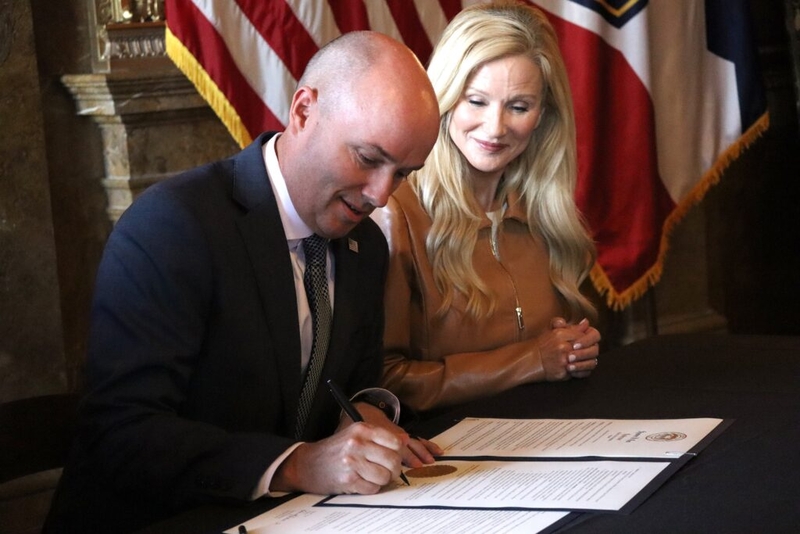
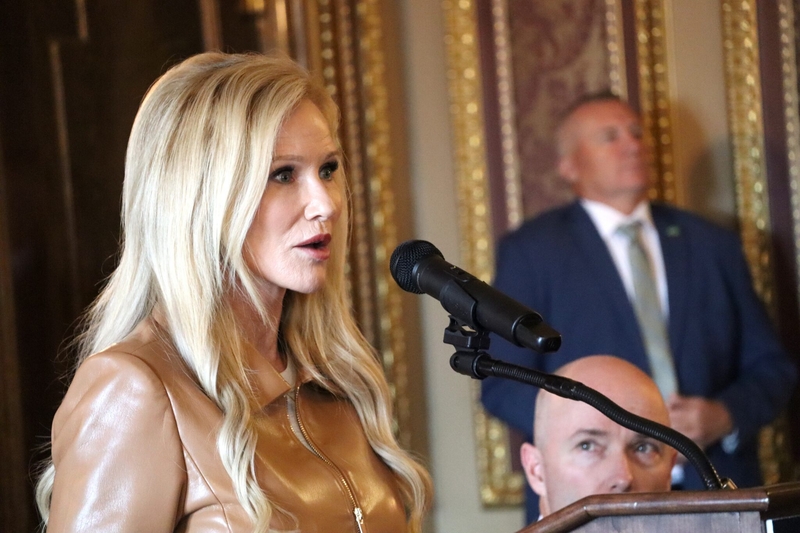
Utah Gov. Spencer Cox, joined by White House Senior Adviser for Addiction Recovery Kathryn Burgum, signs an executive order establishing the Recovery Utah Initiative during a news conference at the Utah Capitol in Salt Lake City on Sept. 21, 2026. (Katie McKellar/Utah News Dispatch)
Shoulder to shoulder with leaders in the Trump administration, Utah Gov. Spencer Cox on Monday made Utah the first state to officially take action to join the White House’s national effort meant to reduce addiction, homelessness and serious mental illness.
Kathryn Burgum, White House senior adviser for addiction and recovery who is married to Interior Secretary Doug Burgum, sat next to Cox as he signed an executive order creating the Recovery Utah Initiative.
Trump admin aims to shift homelessness grants toward addiction treatment, enforcement
The order directs state agencies, local governments, healthcare, faith-based organizations and private businesses to better coordinate with each other to improve homelessness and addiction services on multiple fronts.
Cox’s state executive order aligns Utah with President Donald Trump’s Great American Recovery Initiative, which the president created through a national executive order in January to “prioritize addiction treatment and recovery” across the nation.
Addiction, Trump’s order says, “contributes to declining workforce participation, increased healthcare costs, homelessness, family instability, and lost productivity that together cost the United States hundreds of billions of dollars each year.”
Cox’s executive order creates the Recovery Utah Initiative Council — including State Homeless Coordinator Tyler Clancy and two people who have experienced addiction that will serve as vice chairs — to steer the effort.
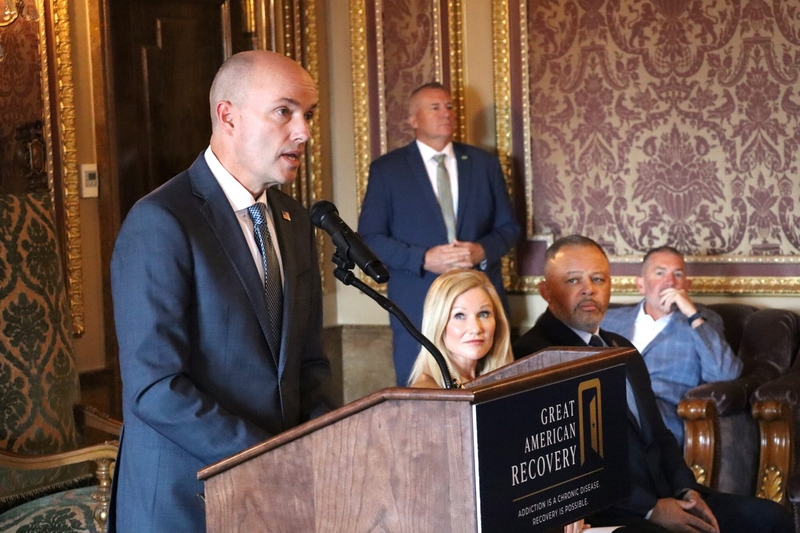
It also incorporates Cox’s “three pillars” that have been driving his administration’s strategy to improve the state’s homeless system over the past year. Those pillars include accountability for “high utilizers” in the criminal justice system, emergency shelter and affordable housing, and mental and behavioral health infrastructure.
Earlier this year, the Utah Legislature approved about $45 million (including ongoing and one-time money) to carry out Cox’s three-pillar strategy, which state officials developed while in talks with the Trump administration.
Utah homeless board proposes ‘initial framework’ to respond to Trump’s executive order
The governor’s executive order comes as the Trump administration has proposed funneling more money to localities that prioritize “treatment-first” policies like sober living, more cooperation with law enforcement and more temporary and transitional housing. It’s a reversal from a decade-long federal approach known as Housing First that houses people experiencing homelessness without requiring sobriety or participation in treatment programs as a condition to keep their housing.
National housing advocates have railed against the move away from Housing First, arguing it’s a proven strategy that can reduce taxpayer spending on emergency services and the criminal legal system.
Leaders of Republican-controlled Utah, including Cox, have criticized Housing First as lacking “accountability” measures, though the state once led out on the strategy, while calling for more emphasis on addiction and behavioral health treatment before or alongside housing services.
Cox said he views the Recovery Utah Initiative as an extension of the Trump administration’s moves away from Housing First and toward a more holistic strategy that places more focus on “recovery.”
But when asked if the Utah initiative will shift any resources away from homelessness and toward addiction recovery, Cox told reporters, “I don’t know if it shifts any directly, but they’re part and parcel. They’ll be working closely together.”
“Look, housing is important. We want people to have shelter, but that can’t be the first and only goal,” Cox said. “It hasn’t proven effective in alleviating the suffering that we’re talking about today. Recovery has to be a part of that, and making sure that we have the resources in place to hold people accountable absolutely matters. … We think we’re being compassionate by just giving people whatever they want whenever they want it. And there’s nothing compassionate about it.”
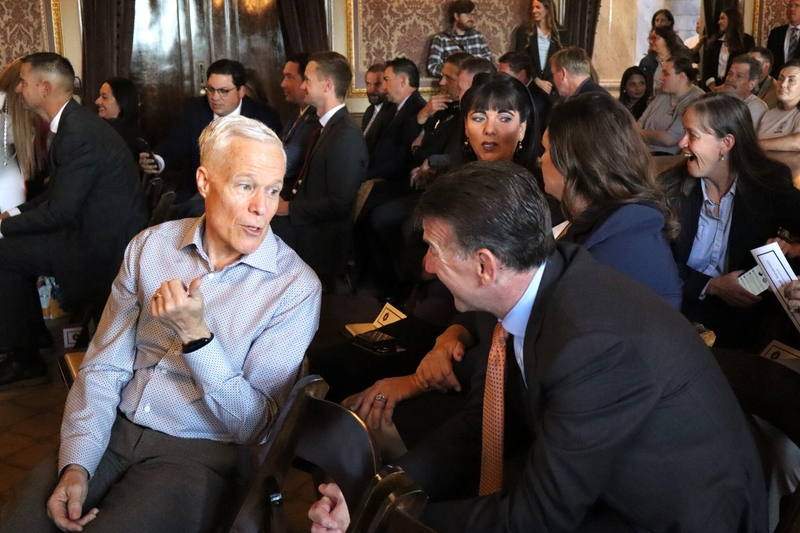
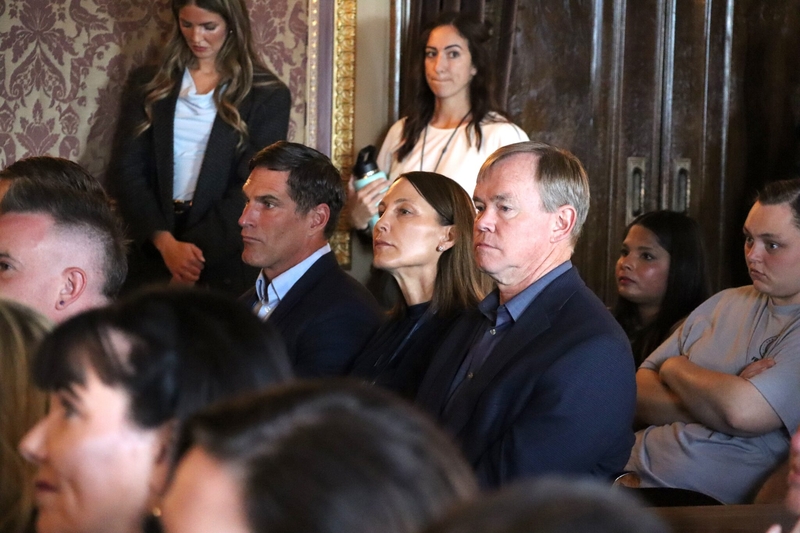
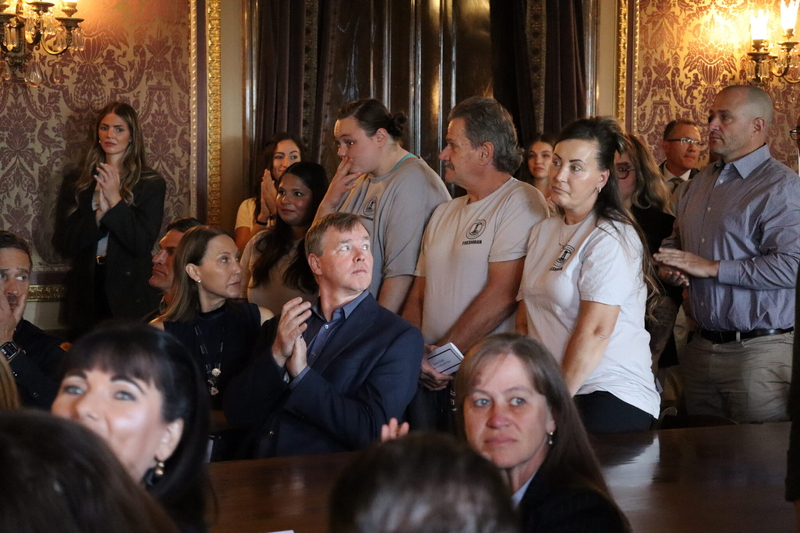
That prompted applause from the audience in the Gold Room of the Utah Capitol where the governor signed the executive order. The room was filled with state officials, along with about a dozen people who have experienced homelessness, addiction or other life challenges.
Many of them have participated in The Other Side Academy, a Utah-based training program that state leaders in recent years have applauded as an accountability and recovery-focused provider. In recent news coverage, some past participants have criticized the program’s aggressive approach to treatment.
“When you talk to people who have actually been there and made it out the other side, every single one of them will tell you that they needed accountability,” Cox said. “It doesn’t mean we abandon them when they fall. It means we’re there to pick them up again, and that recovery often takes many, many attempts at sobriety.”
In an interview after Monday’s news conference, Clancy told reporters “Housing First means a lot of different things to a lot of different people,” but he doesn’t expect Utah programs that use Housing First strategies to take a negative hit. Instead, he said Cox’s administration is working on “expanding our toolkit.”
“Utah’s approach has always been very straightforward, which is whatever your needs are, we want to serve those needs,” Clancy said. “I think Housing First on a federal level lost its way when it became housing only, when it prohibited people from doing treatment, when it prohibited programs that did have success. So for us, we don’t take a one-size-fits-all approach. So some programs that do a Housing First model, that’s fantastic, we want to continue that work. But we’re expanding our toolkit, rather than limiting it.”
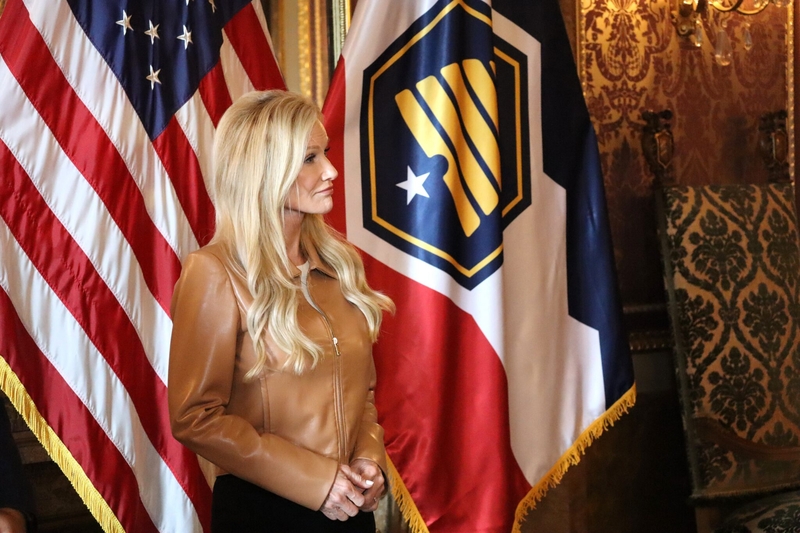
Burgum, the former first lady of North Dakota, has been open about her own challenges with addiction. During her husband’s time as governor, she was the face of North Dakota’s Office of Recovery Reinvented, focused on ending the stigma around the disease of addiction. Earlier this year, she was appointed as a White House adviser to co-chair the Great American Recovery Initiative.
“My connection to this work is personal,” she said. “I took my first drink in high school, and spent the next 20 years living in blackouts, shame, and repeated attempts to stop.”
Burgum said she thought she was “broken, and after years of relapsing, I was hopeless and suicidal.” One day, she said aloud to herself “‘I need help,’ and I have been sober since I said those words.”
Burgum said addiction needs to be treated as the chronic disease that it is, and that means “building a genuine continuum of care” and “changing how we define and pay for success.”
“The sooner we build the system, the sooner those benefits can compound across generations,” Burgum said.
She said Trump’s executive order set the “federal framework for this work,” while Cox’s order translates that “into state action.”
“The federal government cannot accomplish this transformation by itself,” she said. “State cannot accomplish it alone. And healthcare systems cannot accomplish that alone. We need recovery organizations working with healthcare systems and everyone working together to accomplish this.”
Asked if the partnership with the White House means more federal funding will be heading Utah’s way, Burgum told reporters, “We’ll be looking at how states can use funding.”
“A lot of that funding is already set up in a lot of different departments, but that’s something that would be in the works,” she said.
Cox said in his administration’s conversations with U.S. Department of Health and Human Services Secretary Robert Kennedy about homelessness, “they’re very excited about what they’re seeing here in Utah, and as those resources become available, we know we’ll be applying for those.”
It’s also possible that governor will ask for more funding from the Utah Legislature in the upcoming general session that starts in January, Cox said, “but we want to make sure that we’re using the resources we’ve been given in the appropriate way, that it’s getting where it needs to go and providing the most help before we come and ask for anything more.”
Monty Burks, executive director of the Great American Recovery Initiative who also serves as director of the Center for Faith in the U.S. Department of Health and Human Services, also spoke during Monday’s news conference.
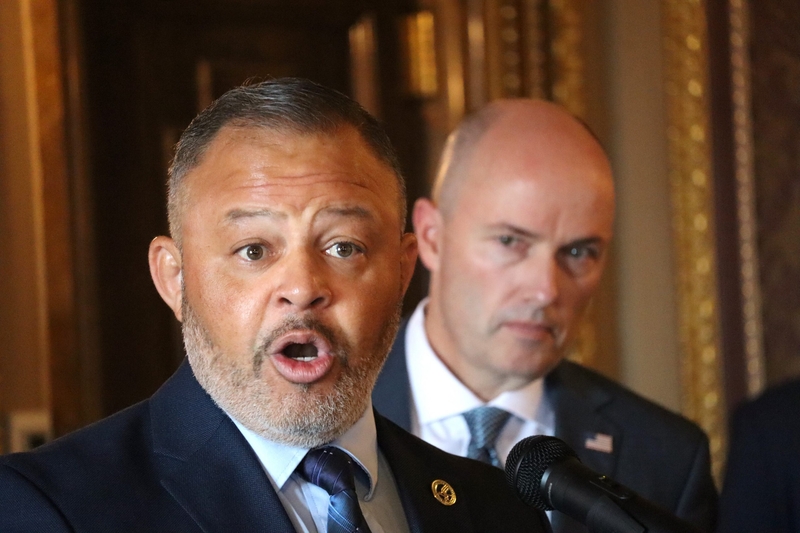
He said Trump and Cox’s executive orders create a “visibility campaign” with “leadership in executive-level government that advocates for people that are in long-term recovery.”
“This empowers people with lived experience who’ve lived in shame and guilt to share the true story of how broken people that have had opportunity to heal can help other people find the tools to heal themselves,” Burk said.
Destiny Garcia, director of Clean Slate Utah, which helps people clear their criminal records to access jobs, told reporters she was happy to see that people who have experienced addiction will serve on the Recovery Utah Initiative Council. Garcia has also been outspoken about her own experience with addiction to heroin. After she was arrested on the streets of Salt Lake City in 2017, she said her life changed for the better.
“We know that people that were closest to the problem are also very close to the solution,” she said. “Centering people with lived experience at the table is what is needed in order to solve a problem like this.”
Will it work? Garcia said “even if it doesn’t work, at least we’re trying another avenue. I think trying and failing is better than not trying at all.”
Salt Lake City, UT