Democrats face uphill battle in winning any Tennessee US House race
Sep 21, 2026 | 6:01 am ET

Description
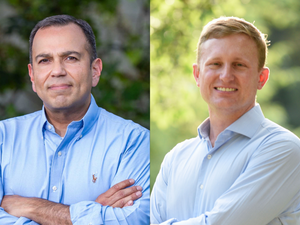
State Rep. Justin J. Pearson, a Memphis Democrat, is running in Tennessee's 9th U.S. Congressional District in 2026. (Photo: John Partipilo/Tennessee Lookout)
Tennessee Democrats seem unlikely to be part of any national congressional blue wave during the midterm elections, election experts say.
During the 2018 midterm election, during President Donald Trump’s first term, his low approval rating led to a nationwide backlash that elected 41 new Democrats to the U.S. House.
In that blue-wave election eight years ago, the Democratic Party’s best flip was a seat Trump won in upstate New York by around 15.5 percentage points in the previous election. But this year in Tennessee, Trump would have won in all nine of the state’s newly drawn U.S. House districts by at least 20 percentage points if they had been reshaped two years ago, according to Dave’s Redistricting, an online tool allowing users to create and adjust election district boundaries.
At Trump’s urging, Tennessee lawmakers redrew all nine of the state’s U.S. House seats in May after the U.S. Supreme Court ruled that states no longer have to draw districts that favor minority voters, as had long been required under the Voting Rights Act.
Tennessee Republicans pass US House map carving up Memphis days after SCOTUS guts Voting Rights Act
“It’s a really effective gerrymander,” said Erin Covey, the head of the Cook Political Report’s U.S. House ratings. Cook is a nonpartisan election-rating organization that analyzes federal and gubernatorial races, classifying them by partisan leaning and likelihood of being competitive.
The 2026 midcycle redistricting allowed Tennessee Republicans to crack a Democratic-held seat in Memphis by splitting the predominantly Black city among three congressional districts. The drawing pattern was similar to what Republicans did to Nashville during the 2022 redistricting cycle.
As a result, Republicans are now heavily favored to win every congressional race in Tennessee, and even in a “great year for Democrats,” the map might be “tough to overcome,” Covey said.
In Tennessee, the six U.S. House districts stretching from Middle to West Tennessee are all rated in the same cluster of “Solid” Republican seats, with a Cook rating of a Republican advantage of 9 to 11 percentage points. The other three congressional seats in East Tennessee have an even stronger Republican rating.
Covey said the Democratic Party’s best shot is in Tennessee’s new 9th District, followed by the 5th.
“Those two races follow the same pattern,” Covey said. “Democrats are running serious campaigns that have raised a lot of money and have enthusiasm.”
Dynamics in the 9th and 5th
U.S. Rep. Steve Cohen, a Memphis Democrat, held the 9th District seat for nearly two decades but decided not to run after the redistricting.
State Sen. Brent Taylor, a Memphis Republican, faces state Rep. Justin J. Pearson, a Memphis Democrat, in the 9th District race. Pearson’s campaign released an internal poll in September showing him trailing Taylor 48% to 44% in a head-to-head matchup.
Pearson entered the race in 2025 and raised a large amount of his nearly $2.3 million for a primary challenge to Cohen that never happened. Pearson had $845,000 in the bank, and Taylor $420,000 as of July 17, according to Federal Election Commission, FEC, filings. Taylor entered the fray after state lawmakers redrew the maps.
U.S. Rep. Andy Ogles, a Columbia Republican, has represented the 5th District since 2023. But Ogles lost the Republican primary this year to former Tennessee Agriculture Commissioner Charlie Hatcher.
Ogles’ primary defeat hurts the Democratic Party’s chances of winning the seat, since the two-term congressman raised little money and faced several ethics investigations over allegedly fabricated campaign finance reports.
Hatcher faces Chaz Molder, Columbia’s Democratic mayor, in the general election. When Molder entered the race more than a year ago, the 5th District looked markedly different. The previous version was centered in West Nashville and Molder’s hometown of Columbia.
The new 5th includes only a sliver of Columbia, covers the northwest rural part of Tennessee, and runs down the state’s border with Missouri and Arkansas to incorporate a third of Memphis.
Hatcher had $105,000 and Molder $1.5 million in the bank as of July 17, FEC filings show.
Molder also released an internal poll showing he trailed Hatcher 48% to 40%.
Both Pearson’s and Molder’s campaigns are betting on boosted Democratic turnout in Memphis triggered by a backlash to the gerrymandering and the Trump-created Memphis Safe Task Force as a path to overcoming the partisan leaning of the districts.
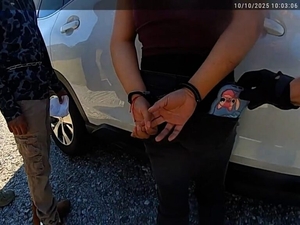
The Memphis Safe Task Force has been trumpeted by Republicans, but criticized locally for its heavy-handed, outdated and harrassing approach to law enforcement.
Memphis typically has low voter turnout but also hasn’t had a competitive U.S. House midterm election since Cohen’s first run in 2006.
“It’s going to be very difficult to pull off,” Covey said.
Nashville, TN