Three Georgia counties flagged by Trump administration for using non-English election materials
Sep 18, 2026 | 5:52 pm ET
Description
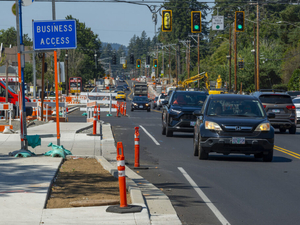
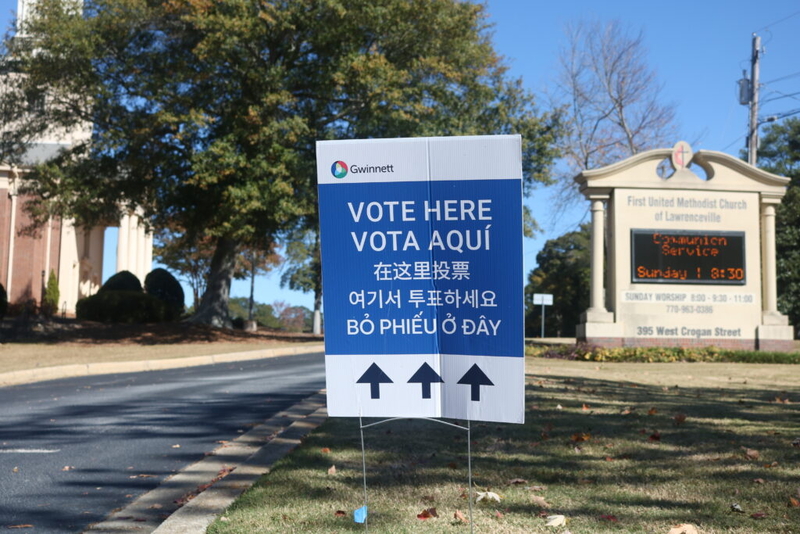
A sign directs Gwinnett County voters to the polling station ahead of the 2025 general election. Gwinnett County has been required to distribute ballots in Spanish and English since 2016, and it voluntarily translated sample ballots into languages like Korean, Mandarin and Vietnamese. Maya Homan/Georgia Recorder
At least three Georgia counties were listed on an internal memo of jurisdictions across the country that offer election materials in languages other than English, according to internal records from the U.S. Department of Homeland Security.
Gwinnett, Cobb and DeKalb counties were all listed in the report, which was emailed to a number of top officials at the department in December, though the memo noted there could be other jurisdictions in the state that translate election materials. The email said the list was “outlining requirements for prosecution of voter related charges,” and was signed by the department’s acting director of border policy, though the official’s name is redacted.
The documents were first reported Friday by NPR and obtained independently by the Georgia Recorder.
Recipients of the memo include undersecretary for the office of strategy, policy and plans Rob Law, assistant secretary for border security and immigration Eric Ruark and former election activist Heather Honey, who now serves as deputy assistant secretary for election integrity for the Trump administration. The list was obtained as part of a public records request filed by the Democratic National Committee.
Lawmakers consider how to protect voting access for people with disabilities, non-English speakers
Only U.S. citizens are allowed to vote in American elections, but advocates for immigrant communities in Georgia say some naturalized citizens may struggle to understand ballots written in English. Section 203 of the federal Voting Rights Act requires local jurisdictions to offer ballot access in languages besides English whenever there are either 10,000 residents or more than 5% of the population who speak a given language and lack English proficiency.
Gwinnett County, where U.S. Census data shows more than 38% of residents speak a language other than English at home, has been required to distribute ballots in Spanish and English since 2016, and it has voluntarily translated sample ballots into languages like Korean, Mandarin and Vietnamese. Athens-Clarke, Cobb and DeKalb counties also voluntarily translate certain elections materials.
The list from the DHS raises new questions about whether President Donald Trump’s administration may be planning to deploy federal agents at polling places during the upcoming midterm elections, though voting rights advocates say efforts to do so would be illegal. Trump has repeatedly attempted to change election rules ahead of the midterms, citing unfounded claims of widespread noncitizen voting to attempt to restrict the use of mail ballots and urge Congress to pass the SAVE America Act.
Trump’s Justice Department revives lawsuit seeking sensitive voter data in Georgia
Department of Justice officials also filed a lawsuit earlier this year seeking Georgia’s unredacted voter data after Secretary of State Brad Raffensperger, a Republican, refused to hand the information over voluntarily. The case is currently pending in federal court.
State election officials say that noncitizen voting is incredibly rare, with a 2024 audit from the secretary of state’s office finding only 20 noncitizens on Georgia’s voter rolls out of 8.2 million registered voters. Only nine had ever cast a ballot. Still a Department of Homeland Security spokesperson said federal officials would work to find and arrest any noncitizen voters.
“Aliens who illegally vote in U.S. elections should not be able to use a purported lack of knowledge of the English language as an excuse to avoid prosecution,” an unnamed DHS spokesperson said in a statement. “DHS and DOJ are laser focused on prosecuting and removing aliens who vote and preventing the dilution of the votes of U.S. citizens.”
But advocates for naturalized citizen voters say language accessibility requirements are a core part of voting rights laws and necessary to ensure that all U.S. citizens have access to the ballot box.
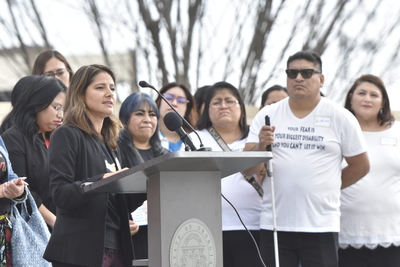
“The role of the government is to make sure that all its citizens are protected and able to exercise the right to vote,” said Gigi Pedraza, executive director of the nonpartisan Latino Community Fund, adding that counties should be encouraged to increase language access to their ballots.
“It’s just unfortunate that instead of encouraging people to participate in democracy, we make it look like it’s something that can put them in harm’s way,” she said.
Anar Parik, the policy manager at the nonprofit Asian Americans Advancing Justice-Atlanta, said that fears of immigration enforcement activity near polling places could have a chilling effect in the midterm elections. She added that naturalized citizens are already required to provide extra documents to verify their citizenship and residency in Georgia.
“The threat of immigration enforcement at polling sites exacerbates all of those barriers to voting that already exist,” she said.
Atlanta, GA