State lawmakers expected to face massive budget shortfall again next year
Sep 18, 2026 | 4:48 pm ET
Description
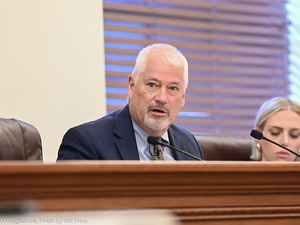
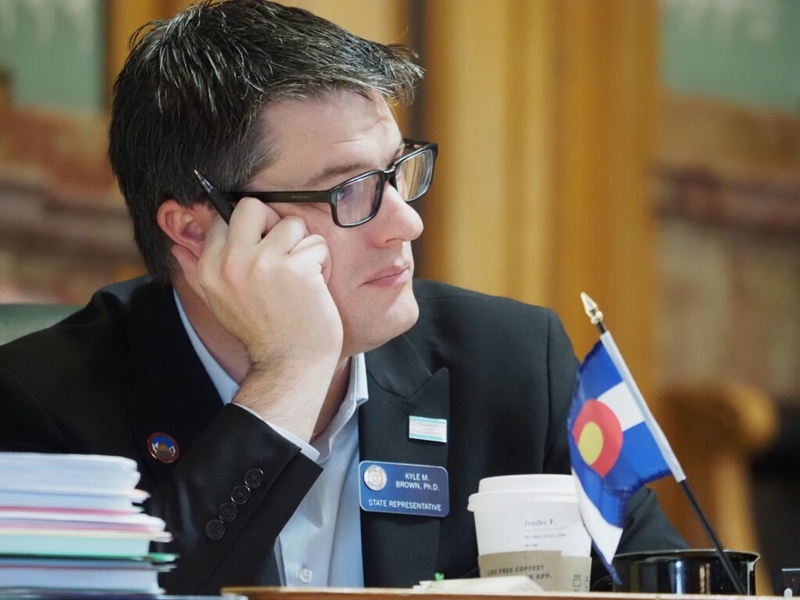
Colorado state Rep. Kyle Brown, a Louisville Democrat, is pictured on the floor of the Colorado House of Representatives on the final day of the 2026 legislative session on May 13, 2026, at the Colorado Capitol in Denver. (Photo by Lindsey Toomer/Colorado Newsline)
The Colorado Legislature will face a third straight year of intense budget woes when it convenes in January. State economists told lawmakers on Friday that there could be a nearly $1.6 billion budget deficit.
“Medicaid alone is causing the vast majority of the issue,” Mark Ferrandino, the head of the Governor’s Office of State Planning and Budgeting, told the Joint Budget Committee during a routine economic forecast.
It comes one day after Ferrandino and others told a legislative commission on Medicaid that the program, which provides health insurance for low-income Coloradans, ran nearly $158 million over budget in the last fiscal year and could go $443 million over budget by the end of the current fiscal year, which runs until next July.
Medicaid spending has long been the source of state budget issues, because it is increasing much faster than the state’s spending is allowed to grow under the Taxpayer’s Bill of Rights. The volume and type of Medicaid health care services, rather than enrollment numbers, are generally driving up program costs.
If lawmakers restricted Medicaid growth to the same level as TABOR spending limit increases, around 4%, they could save around $915 million, Ferrandino said. That could mean cuts to Medicaid services. Then, if they allowed a 13% level for the state’s reserve fund instead of 15%, as they did last session, the total budget hole would be closer to $330 million.
“I would characterize that as a typical, constrained Colorado budget that is manageable — not fun, but manageable — to where we sit today with the growth in Medicaid,” he said. “As we talked yesterday, in the administration’s opinion, (the issue) needs to be tackled within Medicaid and not impacted on the remainder of the budget.”
The Legislature had to close similar billion-dollar budget gaps during its last two sessions by making an array of one-time spending and program cuts. There is very little fat left to cut.
“Medicaid cost growth, largely driven by long-term care and prescription drugs, is higher than previously forecasted,” Rep. Kyle Brown, a Louisville Democrat, said in a statement. “Every state is dealing with rising Medicaid costs, and in Colorado we are working to reduce strain on our state budget by creating a more sustainable path for the program so that it doesn’t crowd out K-12 education or other core services funding. Medicaid spending must be reined in while protecting core services for the most vulnerable Coloradans.”
TABOR surpluses
Sen. Jeff Bridges, an Arapahoe County Democrat, brought up a model that some states employ, where a legislature allocates a certain amount to Medicaid with a hard cap.
“You just have Medicaid as a department choosing what they do and don’t provide, and how they manage that,” he said. “While I don’t like that the Legislature is removed from that, it does seem like that is a potential path forward on this.”
Legislative Council Staff, the Legislature’s nonpartisan research office, estimates that state revenue will be about $827 million over the TABOR spending cap in the current fiscal year and $580 the next fiscal year. The governor’s office predicts surpluses of around $607 million and $287 million. Surpluses need to be refunded to taxpayers, and those predicted levels will likely trigger a temporary income tax rate reduction.
Both sets of economists predict that the Family Affordability Tax Credit, a state tax credit for low-income families that’s available when revenues are high enough, will not be triggered in the 2027 tax year, but Council Staff thinks it may be partially available in the 2028 tax year.
Gov. Jared Polis will present his final budget proposal as governor in November. The six-member JBC will begin its work hearing from state agencies and making budget decisions in the coming months.
Denver, CO