Teachers’ unusual classroom supplies expose another ClassWallet snag
Sep 18, 2026 | 10:01 am ET
Description
Photo courtesy of Mississippi Today
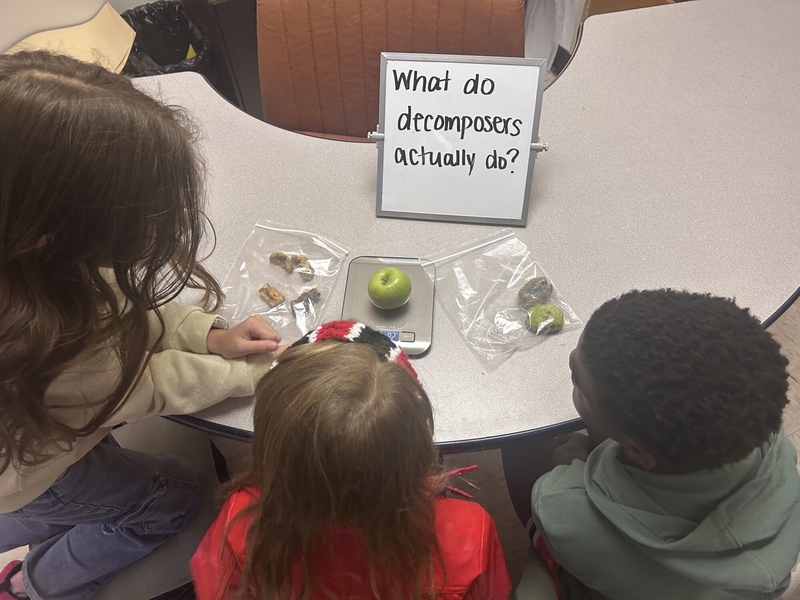
Every morning for a week, the fifth-graders in Hannah Bagwell’s science class at Florence Elementary School check on the apples.
Under their watchful eyes, three apples — one whole, one halved, one sliced — will decay. The students will take notes, predict what will happen and analyze the success of their guesses the next day. Bagwell uses the lesson to introduce the students to the scientific method. It’s a unique way to teach the idea, and she’s found it’s the most successful.
“Science is so real-world, so having hands-on experiences really helps the students see that science is everywhere,” she said. “It’s hard for them to think about in theory, but when they see it in practice, it makes it more relatable to students.”
Teachers across subjects use all kinds of supplies and methods to teach students — think building toothpick-and-straw contraptions in physics class to prevent falling eggs from cracking, or using shaving cream for a sensory word spelling experience in kindergarten.
But these nontraditional items have become harder to access, according to some Mississippi teachers.
The Mississippi Department of Education rolled out a new digital platform this year for the Education Enhancement Fund, or procurement card program. The program, which was established in 2012, gives every K-12 public school teacher $748 a year — around $25 million in total — to buy supplies for their classrooms. But educators have long said they get the money, traditionally in the form of a physical card, too late for it to be useful.
To make the process easier for teachers, the agency switched to ClassWallet this year, a digital platform that allows teachers to purchase supplies online from pre-approved vendors. Teachers can also file for reimbursement for purchases from vendors that are not included, and local vendors can apply to join the marketplace.
“The decision to move to the digital platform … was driven by frustration we were hearing from teachers by way of business managers,” said Kymberly Wiggins, the state education agency’s chief operating officer. “This was not a decision made in a vacuum. We heard pretty sound concerns that drove us to examine the way we were delivering those funds.”
According to Wiggins, the change has been successful. More than 35,000 teachers are using the program, she said, thousands more than at this point last year.
They are also spending more money. Last year, in the first month of activating the cards, teachers spent $8.5 million of the $25 million allocated for the program. This year, they spent almost $10.5 million in the first month.
“We’ve come a long way,” said Lance Evans, Mississippi Superintendent of Education at a state board of education meeting Thursday. “We’re excited about where we are.”
But educators say the new platform forces them to plan lessons far ahead and makes it more difficult to buy uncommon teaching supplies and subscribe to online teaching modules.
“I haven’t tried to be reimbursed because it’s not a ton of money,” Bagwell said, of the apple experiment. “The new process is definitely more complicated than just going to the grocery store. For someone who is not thinking weeks in advance, especially when it comes to a science investigation, I’m going to have to spend more of my own money now.”
Wiggins said the agency is trying to respond in real time to teachers’ concerns. People work over the weekend to approve teachers’ purchases, she said, and they’re accepting more nontraditional items, such as a convection oven for a science class or fidget spinners for special education students.
Out of 70,000 transactions, the agency has only rejected 448, she said.
“We are aware of those niche kinds of specialized teacher populations,” Wiggins said. “We see the program working because they’ve spent half the funds, but we know there are areas we can gain some efficiencies.”
‘Another rock in the road’ with ClassWallet
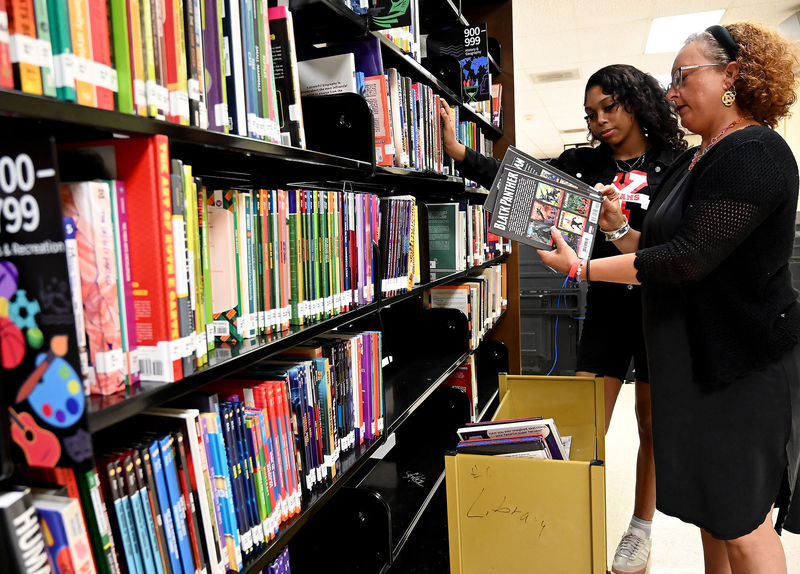
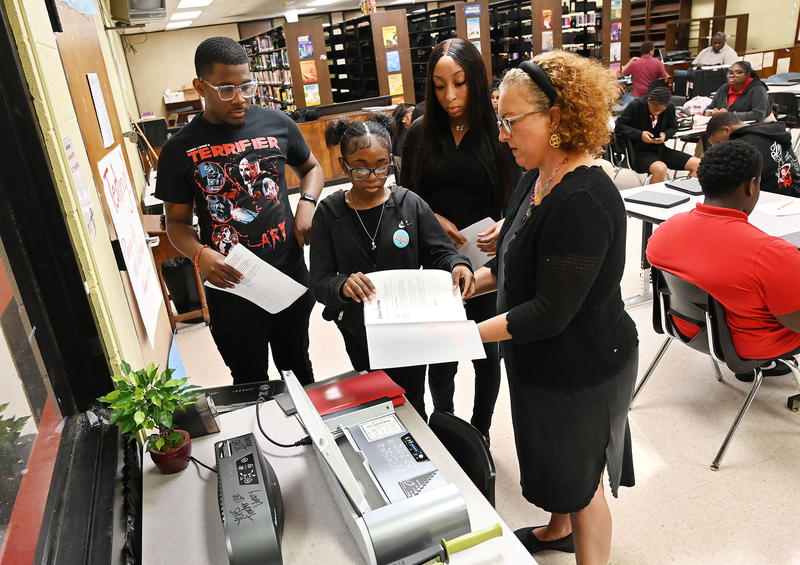
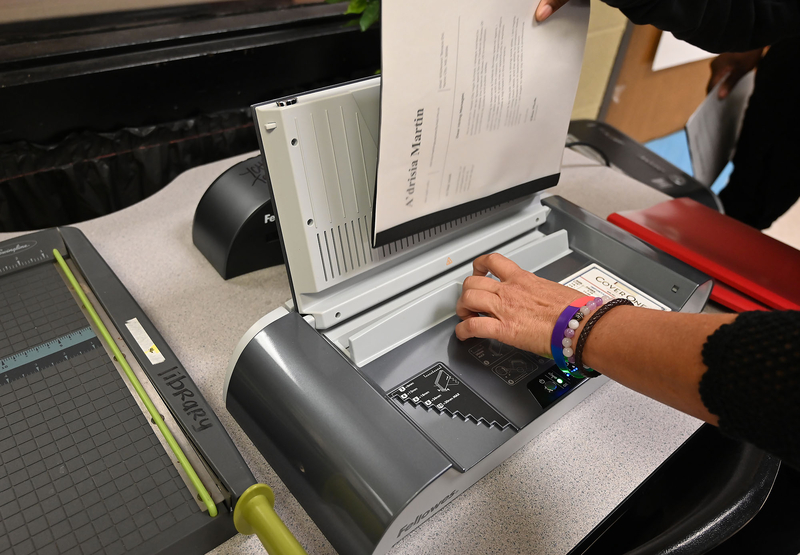
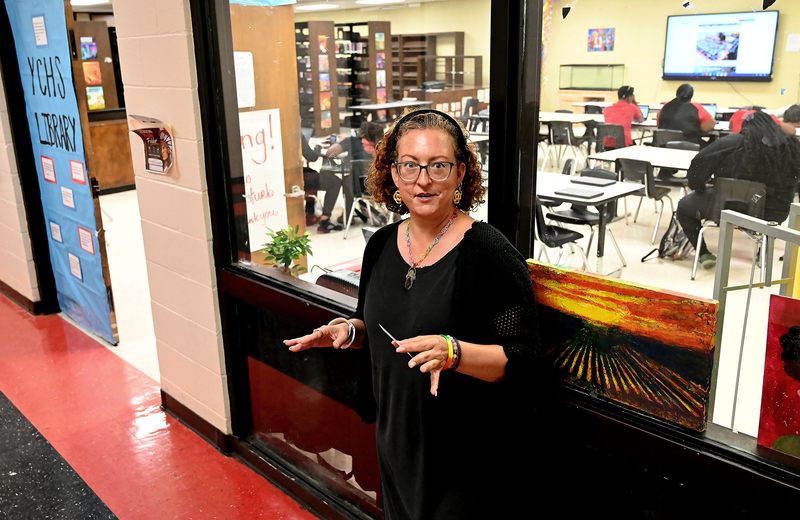
Katie Erwin is one of those educators who requires unique supplies. The Yazoo City High School librarian says the ClassWallet online marketplace offers beaucoup books, but it’s missing what she really needs: Book repair equipment.
She would typically buy those through Amazon, but her account is frozen because it’s linked to her old physical EEF card. Erwin has two options, and she’s not pleased with either: She could buy the supplies elsewhere and file for reimbursement, but she’s uncomfortable linking her bank account. Or she could request that another vendor is added to the marketplace, but she’s not sure how long that would take.
For now, she’s stuck borrowing supplies from teachers and relying on her principal to help her get what she needs.
“It’s just another rock in the road with this new system, another something to go around,” Erwin said. “I feel like I have very little control or say over where I buy from or what I buy. It almost feels like I’m being doubted.
“If I say the library needs something, it needs it.”
State officials weigh a solution
Erwin has run into another problem frustrating educators across the state: Paying for subscriptions.
Previously, educators were able to use their physical cards to pay for subscriptions to teaching platforms or teacher supply magazines. The new ClassWallet marketplace doesn’t account for subscriptions. Teachers have no choice but to pay out of pocket and file for reimbursement, which many prefer not to.
Erwin, for example, subscribes to her local newspapers and keeps them in the library for students. Other educators, such as music teacher Michelle Cook in Laurel, need subscriptions for curriculum.
Cook has for years subscribed to a music magazine, ordering songs for students that come with a digital download, making it easy to project lyrics onto her screen. The subscription is about $150 a year.
As the only music teacher at her elementary school, she has the same group of students from year to year. She uses the subscription to keep the songs fresh, keep her class fun.
Now, without being able to pay for the subscription with state funds, she’s going to reuse old songs.
“Some of the kids might remember it,” she said. “It’s just been frustrating. I would love to be able to get access to the stuff I need.”
Bagwell, the science teacher, is splitting a subscription to a science video service with other science teachers at her school. One teacher pays $300 for the subscription at the beginning of the year, and the others send her their share via Venmo.
Ronald Jeri, a Spanish teacher at West Jones High School, relies heavily on subscriptions to teach his students. The platform Señor Wooly, for example, allows his students to watch educational videos, answer questions and learn how to correct their mistakes.
Jeri estimates he spent around $400 on subscriptions each year. In early August, he said he wasn’t sure what he would do this year.
“I’m hoping that in the following weeks, somebody will try to correct this huge mistake,” he said.
Wiggins said the agency is aware of educators’ issues paying for subscriptions and acknowledged reimbursement is currently their only option — but it may not be for long.
State Education Department officials hope to introduce a hybrid model for the program in the future, she said. Part of the $748 in EEF funds would go to a physical card that teachers could use for subscriptions or last-minute supplies at their local store.
Agency officials deployed a new feature on Aug. 31 that allows businesses enrolled in the direct pay program to be paid directly from ClassWallet. That way, teachers don’t have to file for reimbursement. Currently, 20 vendors are enrolled.
Wiggins wants to hear from more teachers in the future to improve the program.
“Our thought was not ever making this a more cumbersome, complicated process,” she said. “We had little to no visibility into what teachers were purchasing. For us, this has been really informative to establish benchmarks about what teachers need.
“We just continue to listen to all feedback and figure out how to make this experience as efficient as possible for teachers while also finding the balance of being good stewards of $25 million in state funds.”
Erwin, though, wishes educators were more involved in the process from the start.
“Where’s our voice in all of this?” she asked. “Are we being consulted before the big decisions are being made, or are people just throwing Band-Aids at us afterwards?”
Jackson, MS