Walter Gilliam: SEED Act will give early educators a basic tax break other teachers already get
Sep 17, 2026 | 12:00 pm ET

Description
Federal payments for Head Start this year were significantly behind schedule compared with 2024 and that violated the Impoundment Control Act, according to the nonpartisan Government Accountability Office. (Photo by SDI Productions via Getty Images)
Teachers in Nebraska pour time, energy and, yes, money into their students and classrooms.
Data from the Buffett Early Childhood Institute at the University of Nebraska shows the average Nebraska early childhood educator spends $192 of their own money each year on classroom expenses. That could include picture books, crayons, extra fruit snacks, or a professional development course to learn new skills.
This happens every day in schools across America, where an estimated 95% of public school teachers dip into their own pockets for school supplies.
Under the federal Educator Expense Deduction (EED), K-12 teachers can receive a small tax break to offset these costs by deducting up to $350 and an unlimited amount for itemized taxes.
But for more than 20 years, early educators, who care for babies, toddlers and preschoolers, weren’t eligible for the same benefit.
Thankfully, Congress has acted to right this imbalance and finally recognize early educators in the federal tax code with the passage of the bipartisan Supporting Early-Childhood Educators’ Deductions (SEED) Act on Sept. 16.
After previous votes in the U.S. House of Representatives and Senate, the House gave final passage to a legislative package that included the SEED Act, which will extend the Educator Expense Deduction to early childhood educators.
The legislation is now set to become law.
Early educators have long been shut out of the existing Educator Expense Deduction and recent revisions, which expanded eligibility to coaches and athletic directors who spend money on their teams.
Think about it this way: In an Omaha elementary school, a kindergarten teacher can deduct her classroom expenses. But her coworker, the preschool teacher who works across the hall, cannot.
Same school. Same supplies. Same age range. One teacher has the option to save some money on her taxes, and the other doesn’t.
That doesn’t seem very fair to me.
At the Buffett Early Childhood Institute, we surveyed 25,000 early educators nationwide. Roughly 90% incurred work-related expenses that would have been eligible under the EED.
On average, early educators spent nearly $200 on supplies and materials. Those working in home-based programs reported spending the most, as well as educators in households with an annual income of $35,000-$49,999.
We need more — not fewer — incentives to retain and recruit early educators.
Driven in part by low wages and a lack of respect, turnover in the field is rampant, reaching an annual rate of 19% in the Omaha area.
Across Nebraska, early education workers earn a median hourly wage hovering around $14. That’s often lower than the starting pay at many fast-food restaurants and big-box stores, and less than half that of elementary school teachers.
Buffett Institute data shows there are potentially 4.2 million children across the United States — including more than 16,000 in Nebraska — without access to child care. These shortages persist when early educators leave for jobs with higher pay and better benefits. And that directly impacts working families, who may miss work or leave the workforce altogether if they don’t have reliable care.
Early educators set the stage for our children’s school readiness and lifelong educational achievement. We must find more solutions — like the SEED Act — to support and keep them in the field.
The Educator Expense Deduction was created in 2002 as a temporary “above-the-line” tax benefit for K-12 teachers, meaning they can claim out-of-pocket and unreimbursed expenses, such as classroom supplies and professional development opportunities, regardless of whether they itemized or took the standard deduction.
The deduction has proven popular and drawn bipartisan support. Nearly 90% of K-12 educators claimed it for the 2021 tax year.
By extending the educator tax deduction to early childhood educators, Congress has now taken an important step toward recognizing the essential role these educators play, offering a measure of support to a workforce that too often goes unsupported and unseen.
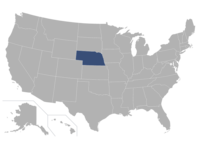
Lincoln, NE