As Idaho extends slim budgets and feds shift stance, disability care may face cuts, advocates worry
Sep 17, 2026 | 6:20 am ET

Description
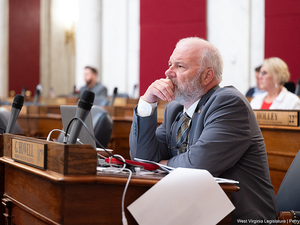
Members of the Idaho Legislature's Joint Finance-Appropriations Committee and their staff tour Southwest Idaho Treatment Center, or SWITC, in Nampa on Nov. 20, 2024. (Photo by Clark Corbin/Idaho Capital Sun)
In January, as Idaho state lawmakers prepared for budget cuts, the state’s governor laid out a list of options for Medicaid decreases.
One of them called to cut a set of programs that help people with disabilities live in their homes. In the end, lawmakers only adopted a more narrow cut to disability care.
As federal protections fade, Americans with disabilities fear a return to institutions
But as Idaho’s tight budget years dwell — and the federal government softens its stance on prioritizing keeping people with disabilities in their homes instead of in institutions — disability advocates are growing worried that home care might face cuts.
Expanded decades ago, home and community-based services have become a staple for state Medicaid programs. But as the Trump administration seeks to reinterpret a U.S. Supreme Court decision that serves as a foundation for expanded rights of people with disabilities to receive care in their homes, disability advocates worry that home and community-based services could be threatened. Advocates maintain that the underlying laws requiring home care options remain.
The federal government’s stance — detailed in a recent memo by the U.S. Justice Department — comes before states will see the impact of massive federal Medicaid cuts enacted in President Donald Trump’s One Big Beautiful Bill Act.
“When (states’) federal funding shrinks, they’re going to be reluctant to replace it with state funding, and so they will be tempted to try to reduce funding for home community-based services,” retired Idaho disability rights attorney Jim Baugh said. “But, I presume without a plan for what to do with the people who lose those services, or who have their services reduced, because we don’t have any alternative. So I just see this leaving people in the lurch. I see this being a dangerous possibility.”
Several advocates also worry that there aren’t enough institutional settings to care for people with disabilities, if home and community-based services faced cuts.
Earlier this year, Idaho officials estimated home and community-based services cost the state more than $176 million in state general funds, and were used by more than 16,000 Idahoans at least once a year.
Most Idahoans who use home and community-based services are aging seniors who paid off their homes and want to remain there but need support, said Disability Rights Idaho Executive Director Amy Cunningham.
“That’s consistent with Idaho values — that people buy homes and they live in their homes for as long as they can,” she said. “And home and community-based services allows that to happen. And it would be very sad if Idaho decided to move toward institutionalization versus allowing people to stay in their homes, in their communities, participate in community activities, participate in their community churches, be close to their families.”
Feds’ letter ignores that not providing home care will be costly, disability advocates say
The concerns stem from a June memo from the U.S. Justice Department that sought to reinterpret the Supreme Court ruling issued in Olmstead v. L.C., along with several other related disability rights laws.
In the memo, the Justice Department wrote that neither the Americans with Disabilities Act or the Rehabilitation Act “imposed an integration mandate on states in their treatment of mentally disabled individuals.” And pushing back against the Supreme Court ruling, the Justice Department added that the court didn’t interpret either of those laws to “require states to treat mentally disabled patients in the most integrated setting appropriate to their needs.”
Essentially, disability advocate Tara Rowe recently wrote that the federal government is saying that the Supreme Court incorrectly interpreted the laws “that have preserved the rights of people with disabilities to live in their homes and communities for nearly three decades,” and that “the federal government no longer needs to abide by the previous flawed interpretation.”
In a joint statement, several disability advocates from Idaho and surrounding states said the Justice Department’s memo doesn’t mention many of the risks of shifting people with disabilities to institutions.
“It is silent on the fact that institutional placements are the most expensive placements,” the joint statement said. “It is silent on the fact that those costs will be passed on to Idaho taxpayers. It is silent on the cost to Idaho taxpayers to defend Idaho actions based on the memo should it be sued for not following current law and US Supreme Court decision.”
The Justice Department could not be immediately reached for comment.
To Christine Pisani, the executive director of the Idaho Council on Developmental Disabilities, the memo reads like the Justice Department “will no longer enforce or do investigations when integration is being challenged for people with disabilities.” But she said that doesn’t mean people with disabilities can’t raise those challenges.
In Idaho recently, the feds investigated the alleged over-institutionalization of people with disabilities. More than a year ago, in the final days of the Biden administration, the Justice Department warned Idaho officials that the state was violating the Americans with Disabilities Act by unnecessarily institutionalizing people with physical disabilities.
Advocates worry Idaho doesn’t have enough institutions to care for people with disabilities. The state agreed.
To some, like Baugh, the letter appears to open the door for states to consider cutting home and community-based services when tight budget years hit. But he said there isn’t an infrastructure big enough to support a big shift toward institutional care.
He called experiences in institutions “horrific.”
“Things that we would all now call abuse and neglect were literally the standard,” Baugh said. “It’s just — it’s how institutions were operated.”
“What I’m afraid of is that people who don’t understand why community services first has become the rule might do something that would cause a tremendous amount of suffering because they don’t understand how the system has evolved,” he said.
That’s one area the state might agree on.
Idaho lawmakers dodged Medicaid expansion repeal. But what did they do with Medicaid?
In an internal budget memo earlier this year, obtained through a public records request, state officials with the Idaho Department of Health and Welfare wrote that if the state cut home and community-based services, the state agency “anticipates need for additional institutional providers as current capacity would not be sufficient to transition all Idahoans with disabilities who are served in the community today.”
Building those institutions would be “an astronomical cost,” Pisani said. Cunningham said her nonprofit, Disability Rights Idaho, spends a lot of time monitoring facilities, and it regularly finds abuse and neglect occurring.
During this year’s legislative session, lawmakers decided not to eliminate home and community-based services more broadly, but they did target one service under its umbrella for cuts. The Legislature passed, and Gov. Brad Little approved, $22 million in cuts to how much the state pays providers of residential habilitation, a service that helps people with disabilities with day-to-day living tasks.
As lawmakers prepare for next year’s legislative session, the governor’s budget chief instructed state agencies to prepare for continuing to operate state agencies and public programs with less funding, instead of trying to restore past budget cuts.

Boise, ID