Kauaʻi Vacation Rental Owners Urged To Take In Displaced Families
Sep 17, 2026 | 6:01 am ET
Description
Photo courtesy of Honolulu Civil Beat
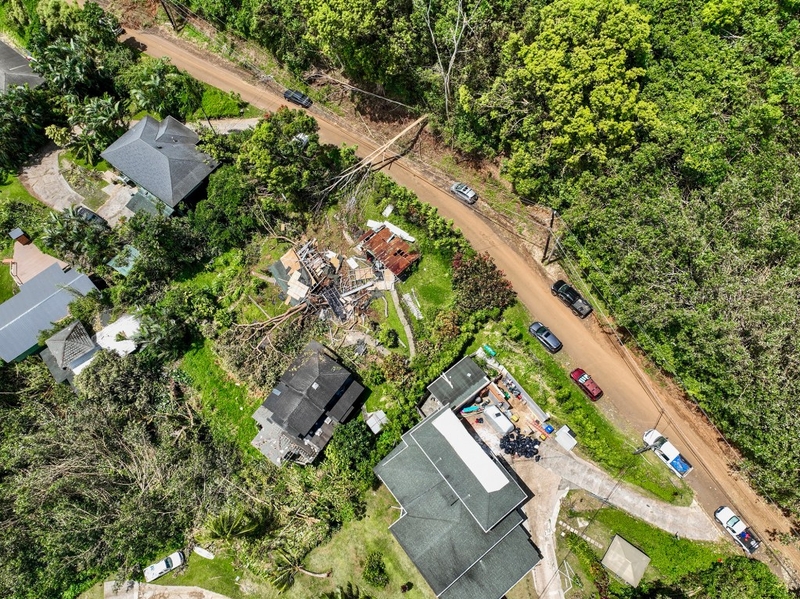
A week after Kaua‘i was sideswiped by Hurricane Lowell, dozens of North Shore residents are roughing it in flood-damaged homes with mud, sewage and mold on their floors and walls.
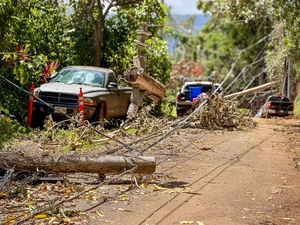
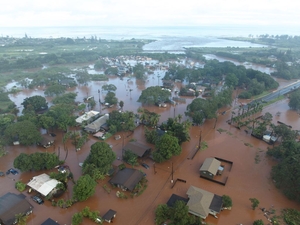
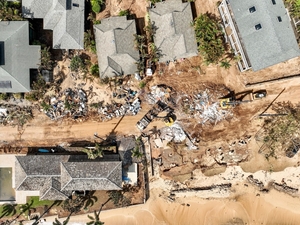
Heavy rains from the category 2 storm Sept. 7 caused fast-moving floodwaters to submerge homes near Wainiha River. Around the island, Kaua‘i County says at least 10 homes have been completely destroyed by Hurricane Lowell and that 67 suffered major damage.
On the rural North Shore, community members estimate 50 to 75 people need somewhere to go because the storm rendered their homes unlivable. Some Wainiha residents have opted to remain in their homes so they can focus on cleaning and getting them livable again.
“They want to stay somewhere in their communities,” said Wainiha resident Mahealani Chandler, who with other volunteers in recent days went door-to-door to check on neighbors.
That means staying in Wainiha and Hā‘ena as they get back on their feet. The rural North Shore communities are tight-knit, and many multigenerational families and long-time residents rely on one another for support and healing.
While some vacation rentals in the area have opened up their homes to displaced residents, community members wish more would do so. The area still does not have power and access is limited to residents and work crews. Chandler and other residents want to see the area closed off until electricity is restored and "people get back on their feet."
“People need the basic essentials," she said, "and clean houses.”
In a written statement, Solomon Kanoho, executive officer of the Kaua‘i Emergency Management Agency, said the county continues to assess hurricane damage and is working with its partners to identify and support residents who have been displaced. Residents are encouraged to report damage at kauairecovers.org.
Changing Demographics
The North Shore has drastically changed over the last several decades with more Native Hawaiian and multigenerational families priced out as homes are converted to pricey vacation rentals and second homes. A two-night stay at vacation rentals listed on Airbnb for later this month and October ranged from $460 in Hā‘ena to $11,300 in Hanalei.
Joel Guy, executive director of The Hanalei Initiative, said the wealth disparity has become more apparent over the years. Once, the wealthy were limited to oceanfront homes and behind gates. But now, they’re more prominently distributed throughout the area with larger, grander houses, and more Range Rovers and Teslas on the roads has become commonplace.
That shift has also meant that locals are sometimes forced to live near areas more prone to flooding and other hazards because they've been pushed away from being near the ocean and few affordable long-term rentals remain in general, said Megan Wong, a Wainiha resident who lives in the valley.
"It’s sad when when you see the change in the landscape of the communities," she said.
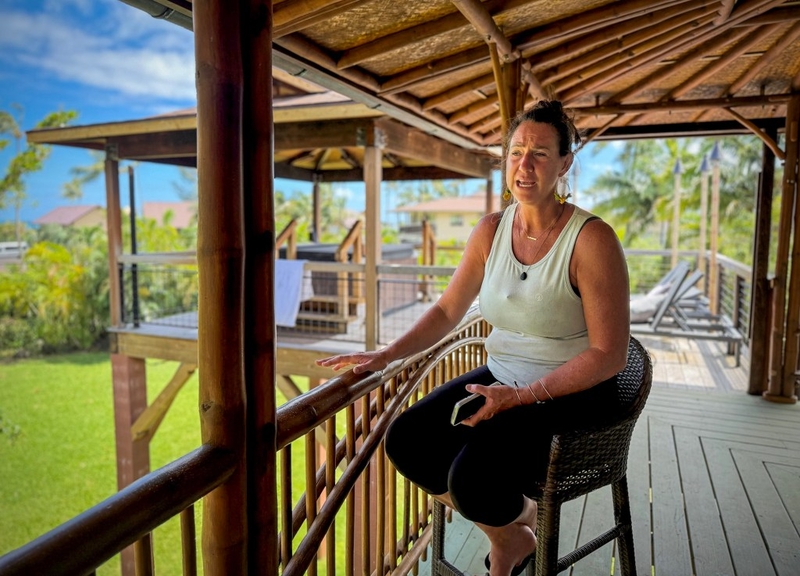
One of the beautiful things, though, is that when all the tourists are gone, neighbors show up for one another, she said.
Wong is running a community hub out of a vacation rental in Hā‘ena. The home sits atop 30- to 40-foot-tall stilts, making the shaded underside a good spot to organize and distribute supplies and meals to residents in need.
Elan Argil has owned that vacation rental for three years and told Civil Beat it was natural for him to open it up to support the community once the guests staying there left soon after the hurricane.
Based on O‘ahu, Argil said his business, HawaiiNorth, owns vacation rentals in other parts of the North Shore and O‘ahu and has a policy to support their communities.
“It’s really the right thing to do for everybody, especially in Hawai‘i because the community is so tight and it’s so small and everybody knows each other,” he said.
He added that he’s planning on holding off opening up his North Shore rentals to visitors until the community says it’s ready for visitors again.
Joell Edwards, who runs Wainiha Country Market where a second community hub has been set up, said another vacation rental owner who spends part of the year on Kaua‘i told her they immediately canceled all their bookings through December and offered their home up for displaced residents.
“There are some people that are responsible owners and they were like that before the flood,” she said. “This didn’t prompt them to be like this. So it does not surprise me that they’re the ones that are coming forward and saying, ‘Hey, what do you need? Does someone need a place to stay?’”
Guy said it’s been heartwarming that multiple silent donors from the community are contributing to recovery efforts. Those contributions helped The Hanalei Initiative bring its employees back to work by shuttling more than 65 North Shore kids to and from school while their normal shuttle service to and from Hā‘ena State Park is suspended.
"We're able to do some amazing things with this funding. So I think it's really important to remember that it's not just the evil rich guy," he said.
More Help Needed
North Shore community members hope more vacation rental owners will step up to help residents. Wainiha and Hā‘ena are home to roughly 80 transient vacation rentals registered with Kaua‘i County. The two communities contain roughly 400 housing units overall.
Edwards said one man who was displaced is couch surfing because he feels the available vacation rentals should go to families.
“I had asked him if he wanted me to find him a home, and he feels like the home should be for the family, because he’s a single guy,” she said.
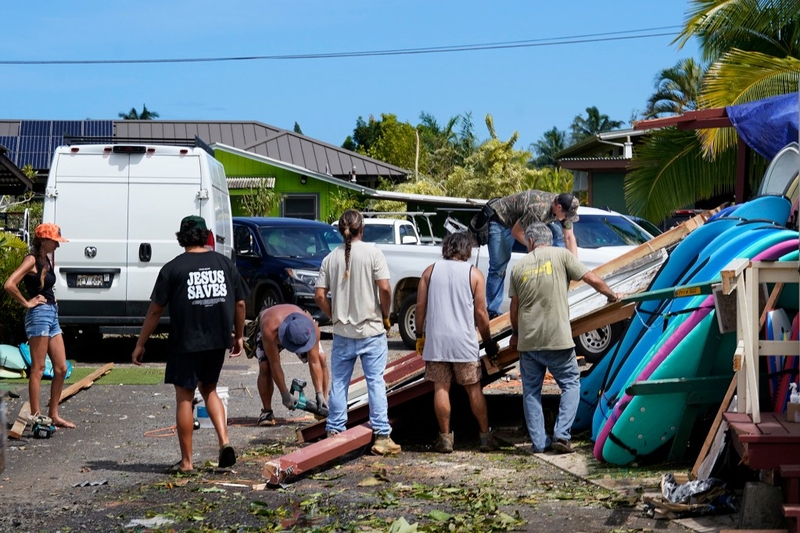
Chandler, who recently posted a plea to vacation rental owners on Instagram, said Monday that some vacation rental companies have told her they’re talking with their owners about helping residents.
Some vacation rentals were used to house residents displaced by the April 2018 storm and floods that damaged hundreds of homes between Hanalei and Hā‘ena, but it wasn’t as many as the community hoped for, Edwards said. Tents were also set up at Hā‘ena beach park to serve as temporary housing.
Then-Mayor Bernard Carvalho prohibited vacation rentals from operating in Lumaha‘i, Wainiha and Hā‘ena so the county could focus on helping impacted residents. That storm, which dumped 28 inches of rain in 24 hours, also took out the only road into the area for over a year.
Carvalho, who is running for mayor in the November general election, said Kaua‘i needs to manage its visitors, especially in disaster situations.
“They cannot be traveling all over the place. I’m sorry but that’s the truth – we got to take care of our ‘ohana and our families first," he said.
He decided to temporarily ban vacation rentals in 2018 to ensure that residents got the help they needed. At first the ban was only for a couple months but kept getting extended in consultation with both the community and tourism industry. The county and federal government also provided about $510,000 in direct assistance to North Shore families in need, he said.
If he were mayor again, he said he would be open to doing whatever was needed to serve residents first and then welcome visitors when the community is ready.
Hurricane Lowell dumped about 15 inches of rain over Hā‘ena on Sept. 7, according to the Hawai‘i Climate Data Portal. The storm caused Kūhiō Highway near Hanalei Bridge to close for several days and damaged the double bridge over the Wainiha River.
Kaua‘i County has advised the public that Kūhiō Highway from Princeville to Ke‘e Beach is only open to local traffic. Only one car can cross the Wainiha double bridge at a time; it also has a five-ton weight limit.
Hā‘ena resident Tiare Olanolan said that the bridge is the community’s lifeline, so it doesn’t need extra people and cars crossing it. Olanolan spent Monday under the shade of a canopy tent erected on Kūhiō Highway in front of Wainiha Country Market. She and her friends were helping to direct traffic and ensure tourists don’t enter the area.
Twenty feet away, Red Cross personnel were unloading Wheat Thins and other supplies, such as rubber boots and long rubber gloves. Savannah Gibson, the organization’s only Kaua‘i staff member, said community members had requested the boots and gloves to help them clean their flood-damaged homes.
Some community members dropped off pizza, tortillas and avocados, while others sat to connect to the market’s Starlink Wi-Fi. The area normally doesn’t get much cell service, so the internet has helped residents stay connected with the rest of the island.
But as volunteers were helping out at the hubs and residents were repairing and cleaning their homes, some beachfront properties were finishing their existing renovations and doing regular landscape maintenance.
Power And Unlivable Homes
The Kaua‘i Island Utility Cooperative recently restored power to 3,200 members in Princeville and parts of Hanalei, but Wainiha and Hā‘ena likely won’t see their power return until at least late next week.
As of Wednesday afternoon, roughly 3,200 customers islandwide still didn’t have power.
Kaua‘i County Mayor Derek Kawakami has asked visitors to postpone their travel to Kaua‘i while the island works to recover from the hurricane's damage. He's also asked visitors already on island to stay away from the North Shore because it's an active disaster zone.
Some homes are also unlivable in other parts of the island, though it’s hard to say how many.
In Kekaha, Myra Kanahele, who has been helping to distribute supplies to community members, said she knows of one family of three camping in a tent outside their destroyed home.
In Gay & Robinson’s plantation camps on the Westside, Howard Greene, vice president, said one home in Pākalā Camp and two on Kaumakani Avenue were deemed unlivable due to hurricane damage. The impacted tenants are staying with family and friends while their houses are repaired.
Honolulu, HI