In New York, Access to Lead-Free Drinking Water Doesn’t Come Cheap
Sep 16, 2026 | 5:00 am ET
Description
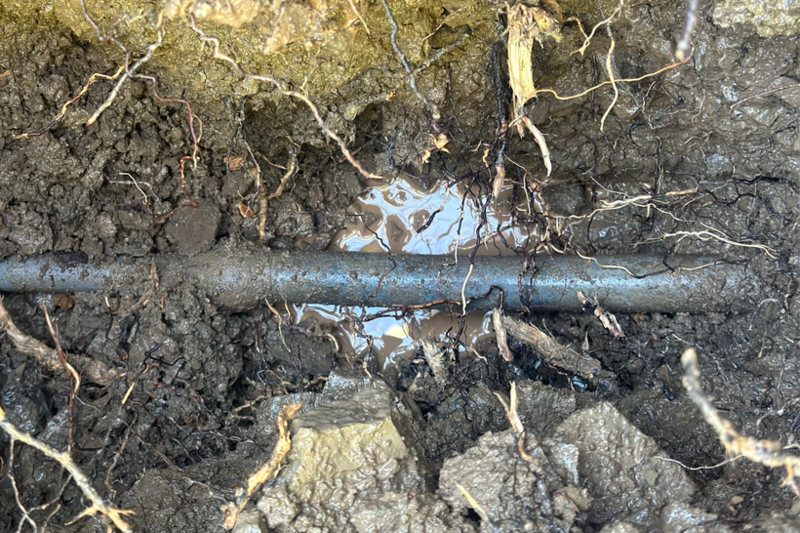
A lead water pipe during a replacement. / Amudalat Ajasa / New York Focus
Barbara Deyounge-Ezell and her husband worked overtime and saved carefully for nearly four years to afford a home of their own.
The day they toured a brick Tudor-style home with rust-colored gables and high ceilings in St. Albans, Queens, she knew immediately that it was theirs.
That feeling of euphoria lasted for 40 years, until she received a letter in 2024 from New York City’s Department of Environmental Protection: “Our records indicate that your water service line is made of lead,” read the letter, which was reviewed by New York Focus. It said homeowners were responsible for their lead pipes and required to replace them in accordance with federal regulations.
The pipe may be leaching a hazardous neurotoxin into her drinking water, but replacing it would cost more than $10,000, she later found. And as a retired senior now living alone on a fixed income, she simply can’t afford it.
Last week, New York City announced that it had received its fourth allotment of $24 million from the federal government to replace lead service pipes, which carry water into homes. To date, it’s received a total of over $143 million from a combination of federal grants and loans and state funding. With that, the city said it should be able to remove up to 7,000 lead serve lines on private properties in low-income and highly polluted neighborhoods. But Deyounge-Ezell’s home is not one of them.
Under a 2024 Biden-era federal rule, all of the country’s lead pipes must be replaced by 2037. The Environmental Protection Agency projects that New York state, home to some of the oldest housing stock in the country, will need to replace nearly 385,000 lead service lines — the third-highest concentration among all states, after Illinois and Ohio. The rule set a deadline and some parameters, but left states to figure out the details — and did not require water utilities to cover the full cost of replacement.
The federal government pays for the majority of lead pipe replacement through a yearly allotment to the state, which then determines which municipalities receive that funding and how much. So far, New York state has received $633 million in grants and loans through the federal fund and chipped in $258 million of its own money to pay off the loan portion.
The design of the federal law has left “intentional policy gaps that state and localities need to fill,” said Joshua Klainberg, senior vice president at New York League of Conservation Voters Education Fund, an environmental advocacy group that created a detailed map using state data to track the presence of lead pipes.
But New York doesn’t have a statewide standard for how cities should approach lead pipe replacement.
So decisions about how the pipes are replaced and who bears the cost vary drastically depending on where residents live. New York City, like some localities across the state, does not pay to replace residents’ lead service lines except in limited instances. About 350 miles north of Deyounge-Ezell’s home in Queens, the city of Rochester has committed to doing full service line replacement at no cost to homeowners by 2030.
New York Focus spoke with officials from municipalities across the state — ranging from small villages to large cities — and found that the jigsawed approach has led to uneven outcomes, with some residents being offered lead-free drinking water at no cost to homeowners and others facing a choice between steep bills or potentially contaminated water.
There is no safe level of exposure to lead, according to the Centers for Disease Control and Prevention. It can inflict irreparable damage on children, causing developmental delays, behavioral problems, and difficulty learning. In adults, exposure can cause brain and kidney damage and lead to cancer, heart disease, increased blood pressure, and stroke.
Drinking water remains one of the most significant sources of lead exposure in New York.
“Safe drinking water shouldn’t depend on your ZIP code or your ability to write a $5,000 or $10,000 check,” said Assemblymember Amy Paulin, who sponsored a bill this legislative session that would require water utilities to replace all lead pipes at no cost to the homeowner, ridding the state of its patchwork system.
“Ultimately, this bill is about treating lead service line replacement as a public health responsibility, not an individual homeowner’s responsibility,” she added.
The bill made it through committee in both the Senate and Assembly but never made it to the floor.
The question of who owns different parts of the lead service line — and who is responsible for paying for its removal — is central to the lead pipe debate.
Water utilities sued the Biden administration after it finalized its lead pipe replacement rule, arguing that the 2037 timeline was not feasible, costs were steep, and that they did not have authority over pipes under private property. The Trump administration upheld the mandate this spring.
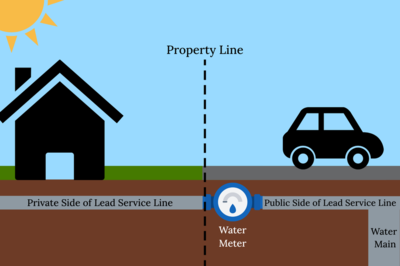
In many cases, the lead service line is divided up into two sides: the public side, which runs from the water main to the curb, and the private side, which runs from the curb into the home. Some cities have decided to replace only the public side, a move many experts and scientists fear could cause lead concentrations to spike because it can disturb and shake small lead particles loose on the private side. Those sorts of partial replacements don’t count toward federal reduction targets, either.
“Responsibility for addressing this patchwork is squarely on the shoulders of the water utilities who created the problem in the first place,” said Erik Olson, senior strategic director for health at the Natural Resources Defense Council, which has defended the Biden policy.
The New York Section of the American Water Works Association, which represents water utilities around the state, estimates that it will cost more than $4.8 billion to replace lead pipes in the state. The group said that the high cost, restrictive timeline, and limited state guidance poses challenges for water utilities. Without more funding from states and cities, the group said the cost will trickle down to ratepayers.
“Placing that burden on the water systems without outside funding will push water rates to unaffordable levels,” said Judy Hansen, the group’s legislative consultant, in a written statement. “There must be a funding mechanism on state level to get all the lead out in a safe and cost-effective manner without driving up rates.”
The lack of guidance has left many municipalities at vastly different places in the replacement process. Some are still trying to locate where the lead pipes are. Others have begun replacement. And some have introduced plans that require homeowners to foot the bill.
Rochester began replacing lead pipes on the public side in 2018, years before the federal government required the full service line replacement, with its own money. Since then, the city has replaced almost 12,000 public side and over 1,600 private side lead service lines. That early start, said Rochester Director of Water Bureau Nick Considine, put it first in line for federal funding.
“We saw some communities try to do it without paying for the whole thing,” Considine said. “We realized early that it would be an unreasonable burden to put on our customers to ask them to chip in.”
Rochester has received approximately $150 million from federal, state, and city funding sources, according to data from the city. There are still almost 14,000 lead service lines on the public side, 3,000 on the private side, and nearly 15,000 unknowns on the private side.
If it receives the maximum award this year, Considine believes the local government will have enough funding to cover the removal of all remaining lead service lines.
New York City has taken a different approach. In the city, like many places, the entire lead service line is privately owned. In the last days of then Mayor Eric Adams’s administration, his Department of Environmental Protection, or DEP, outlined its plans for lead pipe replacement stating the city was not required to pay for lead pipe replacement, officials said, and it did not intend to do so, except in specific cases where it deemed an area high-priority, water mains needed to be replaced, or it could secure outside funding.
“Safe drinking water shouldn’t depend on your ZIP code or your ability to write a $5,000 or $10,000 check.”
—Amy Paulin, New York state Assembly
The city, which has received one of the largest sums of any municipality in the state, has replaced just 900 privately owned lead service lines to date. It prioritized homes in low-income and highly polluted neighborhoods in the Bronx, Brooklyn, and Queens. A city official told New York Focus that Mayor Zohran Mamdani’s administration does not plan to change the program as it stands now.
“Replacing privately-owned lead service lines is one of my highest priorities as Commissioner, and DEP is working hard to undertake this work in environmental justice neighborhoods,” said DEP Commissioner Lisa Garcia in a statement to New York Focus.
But for many New York City homeowners like Deyounge-Ezell, whose home falls outside the priority areas, the city’s program offers little relief.
“Everybody becomes disadvantaged when there’s lead in your drinking water,” Deyounge-Ezell said. “ Who’s to say which area is more deprived than another area?”
There are still an estimated 4 million lead pipes across the country, according to the Trump administration, and the status of roughly 22 million are still unknown. New York has identified 251,000 lead service lines. The material of nearly 950,000 lines is still unknown.
Erin Clary, a spokeswoman for the state’s Department of Health, which co-administers federal and state funding for lead pipe replacement, said neither the state nor local government can legally require private homeowners to replace the portions of the water lines they own.
“While the Department encourages all landowners whose properties contain lead service lines to allow replacement of those lines, no enforcement actions can be taken against them for failing to do so,” Clary said in a statement to New York Focus. The agency did not respond to questions about whether it needs a broader, statewide approach to lead pipe replacements.
Clary said the state will move forward with new funding opportunities to help more communities identify and replace lead service lines.
“These continued investments reflect New York’s commitment to protect our neighborhoods and provide peace of mind for families across the state, one glass of water at a time,” Clary said.
Advocates and lawmakers have said it’s unclear whether the state will be able to eradicate its lead infrastructure without a statewide solution outlining who pays for lead pipe replacements. For Rob Hayes, senior director of clean water for Environmental Advocates NY, the clearest and most equitable answer is water utilities.
“The solution is simple: Governor Hochul and the State Legislature should enact the Lead Pipe Replacement Act, which will ensure that New Yorkers unlucky enough to have a lead pipe receive a replacement at no direct cost to them,” Hayes said in a statement.
Considine of Rochester said the city’s success came down to their decision to act before it was required.
“We’ll do it even if we’re not required to because it’s the right thing,” Considine said. “If the state makes funding available so that this is not an unfunded mandate, then other communities will be able to do what Rochester has been able to do.”
Back in Queens, Deyounge-Ezell wonders whether her situation would be different had she lived somewhere else. Would her pipes already be replaced? Would that have been done at no cost?
Instead, she runs the tap water in her kitchen — which she’s always preferred to bottled water — through her filter and hopes it’s enough.
“I don’t plan on leaving because I can’t,” Deyounge-Ezell said. “It would just be too expensive to leave. It’s cheaper for me to stay.”
Albany