Kotek, Drazan focus on development at final debate in Bend for Oregon governor’s race
Oct 13, 2026 | 11:17 pm ET
Description
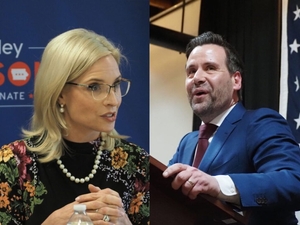
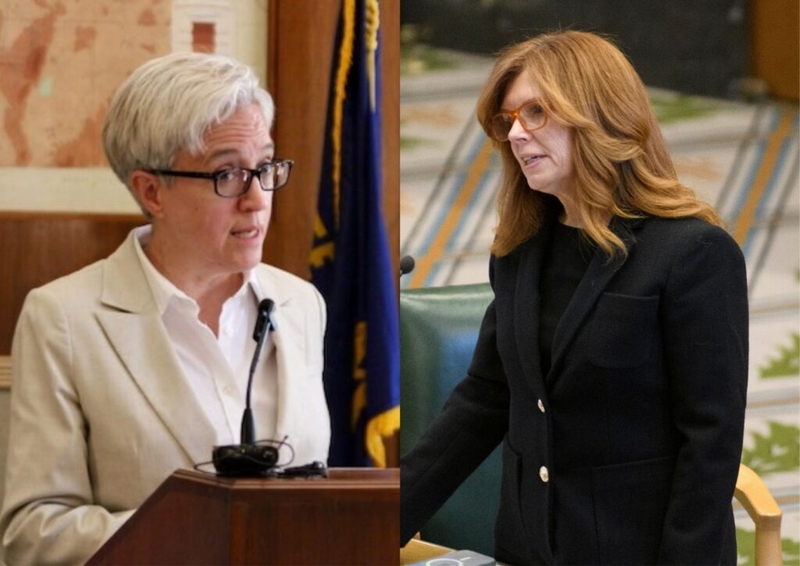
Oregon Gov. Tina Kotek (right) and now-state Sen. Christine Drazan, R-Canby, (left) participated in a debate in Bend on Tuesday, Oct. 13. (Photos by Julia Shumway and Laura Tesler/Oregon Capital Chronicle)
Oregon Gov. Tina Kotek and state Sen. Christine Drazan, R-Canby, spent their final televised debate for the 2026 Oregon gubernatorial race tussling over who could best spur economic growth, housing and development in the state with a focus on Oregonians outside of Portland.
Local news outlets KTVZ and The Source hosted the Bend debate, which coincided with the final day for Oregonians to register to vote. Election officials will begin mailing ballots to all registered voters Wednesday.
Drazan has spent much of the campaign hammering Kotek for increasing state spending while failing to improve outcomes on homelessness, housing and education. Kotek, meanwhile, has fired back that Drazan will roll over to enact the Trump administration’s agenda on issues such as immigration, abortion and mail-in voting.
That translated on Tuesday to Drazan pointing to her roots as a Klamath Falls native who opposes excessive regulation and transportation taxes that hamper businesses in rural areas. She encouraged supporters of the conservative-driven Greater Idaho movement to trust in her candidacy to turn the state around. The movement has support among some Oregonians in counties east of the Cascades who want to secede and join Oregon’s eastern neighbor, a long shot that would require approval from both states and Congress.
“The governor’s agenda is one I know you cannot afford. In rural Oregon, that gas tax fight, you were desperate to make sure that that tax did not actually pass because you couldn’t afford it,” Drazan said. “You drive further. The distances are more extensive. People don’t get that in Portland where they can pop on a bus.”
Kotek, in turn, repeatedly pointed out that the GOP’s 2025 federal tax and spending law would harm rural communities and hospitals through cuts to Medicaid, which 1 in 3 Oregonians relies upon. Those are expected to cost Oregon more than $400 million over the next two years that the state will need to account for to prevent loss of coverage and services.
“When I was speaker of the House, one of the things that was important for me was for Republicans and Democrats to see each other’s districts, and they would visit each other’s districts to make sure they understood what was going on,” she said. “We need to work as one state on the issues we all care about.”
Recent polling from news outlets and campaigns has shown that the race has been competitive, with Kotek and Drazan in effectively a statistical tie. National political analysts have suggested that it’s possible for Drazan to capitalize upon discontent with four decades of Democrats winning the governor’s race, but political headwinds for Republicans remain nationwide given their current control of the White House and Congress.
Housing, homelessness, economy take center stage in debate
Kotek took Tuesday to point to the state of Oregon’s progress on two of her top issues, housing and homelessness. She touted data showing homelessness is on the decline in Central Oregon by 19.1% in 2026. Statewide, Oregon experienced a 19% increase in homelessness between 2025 and 2026, the annual federal report based on counting people experiencing homelessness on a single night in January showed.
“The bills that I have been successfully getting passed in the Legislature before I was even governor, Senator Drazan voted against them, whether that was middle-housing and trying to have more options within our urban growth boundaries, or dollars to help build the housing that we need across our state,” Kotek said. “And so, if it’s really about who’s done the work, I’ve done the work.”
Drazan said Oregon needs to undergo a serious overhaul of the state’s land use system and increase the number of housing units being built without hampering the culture of local communities. She also said the state needs to take a “tough line” with local governments in order to ensure permits are approved.
“What you didn’t hear the governor say today is that she has achieved her own goals for housing across our state,” Drazan said. “When she ran for governor four years ago, she told Oregonians that she was going to solve our housing crisis across our state. She was unable to rein in government.”
The two also sparred over a tax credit legislative Democrats approved when they passed a law this year to prevent the state tax code from replicating some business-friendly tax breaks passed under the 2025 federal GOP tax and spending law. By blocking those tax exemptions, the law saved the state approximately $300 million in revenue.
But some political observers noted at the time that another benefit within that law to offer businesses up to $1,000 in a tax credit for each new job they create was significantly narrowed through the legislative process by the end of the session. Another law narrowed the credit to only apply to certain industries such as forestry, manufacturing, technology. The credit is capped at $10,000 per employer.
Drazan called the final incentive “almost laughable.” She said she would work across the aisle to reform the state’s corporate activity tax, which pays for education, and the state’s estate tax.
Businesses with more than $1 million in sales or other business activity pay $250 plus 0.57% on their commercial activity beyond the $1 million threshold, and critics describe it as a hidden sales tax. Oregon’s estate tax, meanwhile, has one of the lowest thresholds in the nation at $1 million.
“I will work across the aisle to ensure that we can reduce the regulatory burden on businesses in our state so they stay. We don’t want them to look to Arizona, to look to Nevada, to look to Montana for the growth of their company or to relocate there,” Drazan said. “We have got to do everything we can to get them to stay here.”
Kotek, meanwhile, pointed out that the state law passed by Democrats also included an expansion of the state’s earned-income tax credit for low and moderate income Oregonians. She referred to her pledge to create a Department of Commerce next year to help businesses of all sizes start up in the state.
“When it comes to our small businesses, remember 9 out of 10 businesses in our state have 50 employees or less,” she said. “We have to support our really small and mid-sized businesses to be successful. So it’s more than that kind of ‘If you add some employees, you’re going to get a tax break.’”
Data centers
Perhaps the other issue key to central and eastern Oregon addressed on Tuesday was data centers. Both Kotek and Drazan have called for moratoriums on further data center development statewide, and Kotek’s recent directive to halt air and water pollution permits for the server farms is expected to pose barriers for a proposed Amazon hyperscale facility in Boardman.
In eastern and rural Oregon, the centers have some public support, and they have helped provide jobs and fund services such as education in places such as Crook County. Kotek said she is focused on data centers that are in the pipeline rather than existing ones and ensuring that they are held to fair environmental and labor standards.
“That means making sure that they’re paying their fair share in their energy costs, creating more renewable energy instead of taking it off the grid, making sure union jobs are building these places and that they are friendly to workers who maintain these buildings, and making sure our communities have those community benefits,” she said.
Drazan, however, tailored her response to be more localized to community responses to data centers. She noted that the district she represents, Oregon’s 26th Senate District, is home to Oregon’s first major data center campus, which was established by Google in 2006. The data centers on the campus consumed nearly 40% of all of the city’s water supply last year, sparking outcry from some residents and local environmental advocates.
“That data center has arrangements and partnerships with that local community, which have been productive,” Drazan said. “But that’s not the case across all communities in our state. No community should have to have a data center shoved down its throat. We need to reset the table here.”
Salem, OR