Federal judge ends North Carolina mental health settlement after 14 years
Sep 15, 2026 | 4:25 pm ET
Description
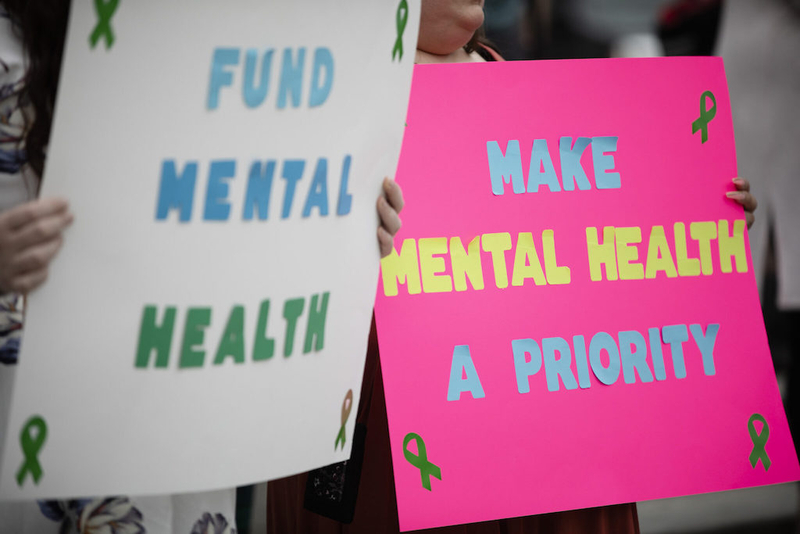
People rally for mental health care funding at the Pennsylvania Capitol in 2022. Federal Medicaid cuts could threaten already-struggling psychiatric units at hospitals across the country. (Photo by Amanda Berg for Pennsylvania Capital-Star)
A federal judge on Monday ended nearly 14 years of court oversight of North Carolina’s program to help people with serious mental illness move from institutional settings into community housing.
U.S. District Judge James C. Dever III approved a request from North Carolina and the U.S. Justice Department to end the 2012 settlement. The program, known as Transitions to Community Living, was created as part of the agreement.
In their filing, both sides agreed North Carolina had substantially complied with the deal and that court oversight should end early.
The settlement followed a federal investigation into North Carolina’s practice of institutionalizing people with serious mental illness in adult care homes. It required the state to provide housing, mental health services and employment assistance to help people who were able to live in the community to do so.
The agreement was supposed to end in July 2020. The state and Justice Department modified the agreement six times, extending the deadline and removing requirements the state had completed. The latest extension set a July 1, 2027, deadline.
The state says more than 4,150 people now have stable housing through the program and more than 6,700 have been diverted from adult care homes.
Advocates for people with disabilities say they’ll be watching closely to make sure the state maintains its efforts.
“North Carolina cannot afford to lose the progress it has made under this settlement,” Virginia Knowlton Marcus, CEO of Disability Rights North Carolina, told NC Newsline.
Marcus said the group appreciates the state’s renewed commitment to community living but will continue monitoring the state’s progress.
But the state still has work to do. That’s according to the court-appointed independent reviewer tasked with monitoring North Carolina’s compliance.
In a report filed in January, reviewer Martha B. Knisley said the state continued to struggle to provide supported housing, mental health services and employment. She said the state did not meet any new major requirements during the 2025 fiscal year.
Knisley was particularly critical of the state’s progress in moving people from adult care homes into supported housing. The settlement called for 2,000 people with serious mental illness living in adult care homes to receive supported housing in communities. As of January, the state was providing those slots to 1,022 people, up 22 from the previous year.
Knisley described the states’ progress in 2025 as “negligible.” She also found the state was not meeting some requirements for mental health services and supported employment.
The state, however, had surpassed several of the settlement’s broader goals. By June 2025, it had provided housing services to 3,998 people, above the 3,000 target. It also exceeded targets for Assertive Community Treatment and supported employment.
North Carolina and the Justice Department acknowledged the remaining gaps, but said they did not outweigh the state’s overall progress, according to the joint filing.
NCDHHS said the state will continue the work through its broader efforts to provide community-based housing and services.
“For almost 15 years, our mission has been to provide the right services at the right time so people with disabilities can live, work and receive treatment in the communities of their choice,” NCDHHS Secretary Dev Sangvai said in a statement.
Raleigh, NC