WV local govs spent most opioid settlement funds on police, jail bills, EMS in fiscal year 2024-2025
Sep 15, 2026 | 6:00 am ET
Description
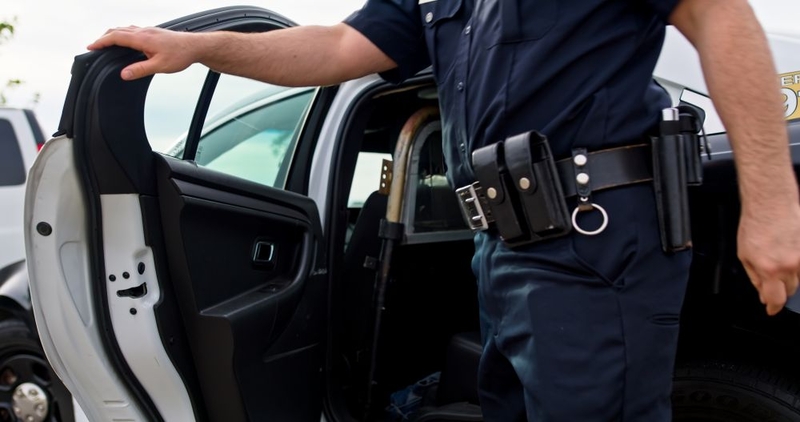
West Virginia localities gave the highest percentage — about 23.8% — of their opioid settlement funds to law enforcement in fiscal year 2025. Police cruisers were the largest single spending category for law enforcement.
(Stock photo by Halbergman/Getty Images)
West Virginia localities spent nearly $10 million more of the opioid settlement funds they received between 2024 and 2025 than in the year previously, with a bulk of that spending going toward law enforcement, jail bill payments and support for emergency medical services, according to a West Virginia Watch analysis of a local spending report published by the West Virginia First Foundation earlier this year.
The report covers opioid settlement dollar expenditures made by local governments between July 1, 2024 and June 30, 2025. Per the report, a total of $36.75 million was sent to more than 170 localities over that time. About $16.76 million of those funds were reported as being spent through 393 individual expenditures.
Of the 172 local governments included in the most recent report, 100 reported not spending any money.
Compared to the previous report, which covered expenditures from July 1, 2023 to June 30, 2024, about 70 fewer local governments sent spending reports to the First Foundation, meaning payments made by them have not been tracked or included in this analysis.
The allocations to local governments are separate from money being disbursed by the First Foundation, which is the private nonprofit created in 2023 to dole out the state’s share of opioid settlement dollars.
West Virginia Watch combed through all expenditures reported by local governments, and here we will break down what that spending looked like while providing you with tools to look up your own local government’s spending priorities.
Of the nearly $16.76 million spent by localities last fiscal year, about 23.8% — nearly $4 million — went toward law enforcement, which was the highest spending category for a second year. Jail bill payments made up about 22.6%, or $3.79 million, of the expenditures while support for EMS accounted for about 21% — nearly $3.56 million — of all money spent.
Treatment and recovery services accounted for nearly $3 million, or about 17.6%, of all money spent while $1.44 million (8.6%) went toward community-oriented programs and services and more than $912,000 (5.4%) was spent on youth-focused services.
Use the table below to search and see all expenditures reported by local governments during fiscal year 2025, then continue reading to see further breakdowns of the spending categories.
Cruisers, mass surveillance and more make up law enforcement spending
Law enforcement, for a second year, received the most money from all opioid settlement spending, according to the report. Police cruisers — including payments to upgrade and service existing vehicles — were the largest single spending category for law enforcement. Per the report, at least 25 new police cars — including a $157,000 armored vehicle for St. Albans police officers — were purchased, totaling more than $1.6 million.
The full breakdown of law enforcement spending was as follows:
- $1.63 million on cruisers and cruiser-related expenses
- $630,472 on equipment, including guns, tasers, computer software, canine units and more
- $606,271 on infrastructure costs, including remodeling police precincts, flood recovery efforts, utility bills and more
- $513,810 on police salary, payroll and overtime pay
- $422,619 on surveillance equipment, including automatic license plate readers, AI-powered camera equipment, licensing fees for accessing ALPR and camera databases and more
- $190,591 on training and related expenses, like travel and lodging
For surveillance, numerous localities spent thousands of dollars purchasing ALPRs and other contentious surveillance equipment. In Randolph County, officials spent more than $10,000 on Motorola license plate readers and the licensing fees and software subscription to use them. Upshur County spent about $10,000 on an in-car ALPR camera system from Motorola as well as about $4,000 to license four ALPRs.
More than $413,000 in total was spent directly on Motorola equipment or services. A lack of details provided by localities, however, make it difficult to ascertain how many of the cameras purchased — some of which also come from third party vendors — are ALPRs or AI-supported.
Tensions have been flaring across the state and the country as residents have stood up against mass surveillance purchased and installed by governments from companies like Flock Safety and Motorola. While supporters of the technology allege it will help in policing, residents and others worry that it will lead to mass invasions of privacy and constitutional violations.
The largest single law enforcement expenditure came from McDowell County, which put $339,000 in opioid settlement funds into a separate county fund to repair flood damage and replace equipment at the sheriff’s department.
Other large expenditures for law enforcement include:
- $268,600 from the city of South Charleston to its police department to reimburse previous costs for officers assigned to drug enforcement cases
- $219,200 from the Wood County Commission to Whiteside Chevrolet to purchase police vehicles, though the number of cars purchased was not reported
- $182,800 from the Wood County Commission to Axon Enterprises for law enforcement equipment and training
- $176,000 from the Boone County Commission to purchase and utilize a new records management system for law enforcement
Use this table to see all law enforcement spending:
Jail bill spending grows by more than 600%
During fiscal year 2024, just three counties — Grant, Upshur and Clay counties — sent portions of their opioid settlement funds to cover jail bills, totaling about $519,000 total.
For fiscal year 2025, these expenditures grew exponentially: 10 counties reported spending part of their settlement funds on jail bills, totaling more than $3.78 million, a 630% increase compared to the previous year.
While Clay County reported spending all of the money it received on the jail bill, the amount of that expenditure was not included in its report and is not reflected in this analysis.
A full breakdown of jail bill spending is as follows:
- Berkeley County: $1.16 million
- Boone County: $604,000
- Putnam County: $547,000
- McDowell County: $499,000
- Logan County: $366,000
- Wyoming County: $261,000
- Marion County: $159,700
- Taylor County: $83,500
Counties spending money on the jail bills said in their reports that using the opioid funds to offset jail bill costs allows them to provide other governmental services that otherwise would not be feasible due to the large bills.
Jail bills are a recurring fee. Each county pays its jail bill at the same rate, but the totals differ depending on how many people from a county are being held at a regional jail. Until 2023, a cap was in place that limited the amount each county would be charged per an inmate at $48.25 per a day.
Without the cap, the cost for each person held in a regional jail is $54.48 per a day. Many counties report that jail bills are their highest annual expenses each year.
Equipment and infrastructure upgrades make up most EMS spending
Localities spent about 459% more in opioid settlement funds supporting EMS services in fiscal year 2025 compared to the previous year, totaling about $3.59 million compared to fiscal year 2024’s $643,000, per the report.
Most of these expenditures went toward upgrading equipment, stocking ambulances and firetrucks and general infrastructure needed for EMS services to run.
A total breakdown for EMS spending is as follows:
- $1.5 million for communications and radio technology for dispatchers and responders
- $1.36 million on equipment including new ambulances, medical equipment, medication, fire truck upgrades and more
- $614,200 on infrastructure upgrades and expenses for existing and new EMS stations, including utility bills, contract services and more
- $83,000 for training responders and dispatchers
Nearly one-third of all EMS spending in fiscal year 2025 came from Wayne County, per the report. There, the Wayne County Commission spent nearly $1.2 million across 64 expenditures, which included monthly payments to Jan-Care Ambulances for contracted EMS services, rent payments for two additional EMS locations, utility bills for those locations and various other associated costs.
In Kanawha County, the Kanawha County Commission paid a combined $1.5 million over two expenditures to replace a radio tower necessary for Metro 911 dispatchers to respond to calls.
Other large individual EMS expenditures include:
- $434,000 from the Wayne County Commission to PennCare for the purchase of three new ambulances
- $218,000 from the Boone County Commission to purchase two new rapid response vehicles
- $168,300 from the Webster County Commission to Webster Memorial Hospital to purchase new ambulance equipment
- $137,000 from the Wayne County Commission to ZOLL Medical Corporation for medical supplies, including defibrillators and more
Use this table to see all EMS-related spending by localities:
Programming support and more dominates spending for direct treatment, recovery services
Direct treatment and recovery services received about $2.95 million from local governments in FY2025, about a 161% increase compared to spending from the previous year, per the report.
Nearly one third of that spending went toward general program support for nonprofits and agencies that service people who use drugs and those in addiction recovery.
The full breakdown for recovery and treatment spending is as follows:
- $983,000 for general support of nonprofits, including assistance in paying salaries, expanding services and increasing the amount of recovery beds available
- $723,818 in specific treatment and recovery services, like offering new kinds of programs, increasing access to existing ones and more
- $683,700 in transportation-related expenses for patients in treatment and recovery, including vans and vehicles to take clients to appointments
- $234,500 for endeavors related to housing, including building new in-patient and recovery housing and providing placements for people with substance use disorder
- $176,200 for harm reduction purchases, like naloxone, and medical assisted treatment for patients
Several localities gave a portion of their funds to helping expand existing services to confront debilitating gaps that can mean long wait times for those in need and few resources. In Monongalia County, the county commission gave $125,000 to help establish a new, 40-bed treatment facility in the community.
The Harrison County Commission spent more than $110,000 — nearly $36,000 to Highland Hospital and $76,000 to Stars and Strides Therapeutic Equine Center — to establish an equine therapy program for those in recovery and their families. Through June 2025, the Harrison County Commission reported that 232 clients had benefitted from the services.
Other large expenditures for treatment and recovery include:
- Nearly $250,000 from the Kanawha County Commission to Union Mission to purchase four vehicles to transport recovery residents and a storage building to secure the vehicles in
- $217,000 from the Randolph County Commission to Ally’s Hope, Inc. to purchase and convert a home into a sober living facility
- $200,000 from South Charleston to Thomas Hospitals to support existing addiction treatment efforts
- $200,000 from Martinsburg to Eastridge Health Systems to pay operational start-up fees for a new eight-bed sober living center
- $200,000 from the Berkeley County Commission, also to Eastridge Health Systems to start the new sober living center
Use this table to see all direct treatment and recovery expenditures:
Pickleball courts, flood recovery and more in community-based spending
Localities spent more than $1.4 million in opioid settlement funds on services and expenditures that directly affect whole communities, like equipment for disaster response, public services, infrastructure upgrades and more.
A total breakdown of community-based spending is as follows:
- $464,000 toward community services, including food pantries, support for people struggling and expanded nonprofit services, among others
- $366,500 paid by the Berkeley County Commission for debt owed related to the expansion of its Day Report Center
- $228,500 toward community infrastructure, including purchasing materials and equipment for local governments, replacing HVAC systems, demolishing homes and more
- $209,200 on health services, like dental care and general support for hospitals and health departments
- $183,700 for prevention education and programming
- $38,300 for recreation-related expenses
Most of the community expenditures went toward nonprofits, which run food pantries, operate community meetings, distribute prevention materials and more.
For community infrastructure, Bluefield paid more than $51,00 to purchase a tandem truck to assist with cleanup efforts from Hurricane Helene as well as almost $8,000 to rent machinery. The city also paid $30,400 to demolish two homes in its downtown.
In the recreation category, Oceana spent $2,100 on a chili fest where city employees including police and firefighters worked to “foster better relationships” with the public. In Gilmer County, the county commission paid $36,200 to Erskine Pavement for the installation of a new pickleball court. The new court, per the report, can provide “therapeutic recreation” for those recovering from addiction.
Other large community-based expenditures include:
- $350,000 from Huntington to support the Huntington City Mission. Details on the grant were not provided
- $75,000 from the Nicholas County Commission to the Nicholas County Health Department for general support
- $75,000 from Huntington to the Cabell-Huntington Coalition for the Homeless for program support
- $63,500 from the Harrison County Commission to Healthy Harrison, a community initiative, to collect and disburse addiction impact stories
Use this table to view all community-based spending from fiscal year 2025:
Prevention education and school-based services make up most spending on children
From stage lighting and little league field upgrades to social workers and addiction intervention training, localities across West Virginia spent about 5.4% of funds in fiscal year 2025 on services for children.
While the amount of money spent on youth-based services increased about 120% between fiscal year 2024 and fiscal year 2025 — up to $912,300 from last year’s $413,300 — the overall share of the spending decreased slightly compared to last year’s 6%.
A total breakdown for spending related to children is as follows:
- $345,000 on prevention education efforts, including trainings and materials
- $297,000 on school-based activities, including materials for kids, social workers, literacy programs and more
- $154,400 on counseling services and other related interventions for children impacted by substance use disorder
- $115,800 on recreation-related activities, like extracurriculars, after school programs, student celebrations and more
Last year, the politically-connected GameChanger program received a bulk of all opioid settlement spending related to children. That program was created in 2018 and is based on schools paying varying fees for prevention materials and a curriculum that experts have called questionable and based in fear, which are not conducive to lowering rates of drug use or overdose among students.
In fiscal year 2024, the program received $270,000 from Marion County schools to implement three years of programming at all public schools.
For fiscal year 2025, however, the GameChanger program saw a drastic reduction in payments. The only recorded example came from Harrison County, which gave the program $30,000 to expand programming in 14 of the county’s schools.
In recreation-related spending, two governments — Randolph County and Bluefield —paid $30,500 and $6,300 respectively to upgrade area little league fields. The Hardy County Commission paid $25,000 to the McCoy’s Grand Theater and Museum to install stage lights on the youth theater while Jackson County spent $10,000 to upgrade playground equipment and $20,000 on a children-focused museum.
Overall, the largest single expenditure for youth-related services came from the Mason County Commission, which paid almost $247,000 to the county board of education to hire social workers to work in schools. The social workers, per the report, will help students with counseling and provide connections to community services when needed.
Other large single expenditures for children include:
- $130,700 from the Fayette County Commission to the county health department for youth-focused intervention and harm reduction programming
- $90,000 from the Barbour County Commission in grants to local organizations. Per the report, 43 organizations received $1,500 grants and payments for transportation, programming, facilities and more.
- $50,300 from the Monongalia County Commission to support an addiction intervention project for children
- $50,000 from the Mingo County Commission to circulate drug prevention materials in local schools
Use this table to view all youth-based expenditures:
All other spending
While local governments spent more than $350,000 in fiscal year 2024 transferring money out of their opioid funds to cover general spending needs, no such expenditures were reported for fiscal year 2025.
Instead, in the “other” category are only two expenditures, both from the town of Mullens: $31,700 to purchase insurance for the city and $814 to pay dues for the Region 1 Planning and Development Council.
In total, $803 was paid by six localities in bank fees for managing their opioid settlement account or for purchasing checks.
The local opioid spending report is published by the West Virginia First Foundation annually. While this marks the second year of opioid settlement spending, there are still many localities who have not reported using a single dollar.
If you have concerns, comments or tips regarding how your local government is spending its settlement dollars, reach out to West Virginia Watch to speak to a reporter at [email protected]
Charleston, WV