All the information you need to participate in Indiana’s democracy
Sep 15, 2026 | 4:15 am ET

Description
Everything you need to know to participate in Hoosier democracy. (Getty Images)
Hundreds of Hoosier candidates will compete for elected offices in the midterm general election on Tuesday, Nov. 3,
Read on to learn how to vote and how the three branches of government work. A companion story explains the legislative process.
These stories are part of an international collaboration called Democracy Day. Newsrooms nationwide are helping readers understand the roles of their elected officials and the impacts of their decisions amid widespread disinformation about our nation’s democracy.
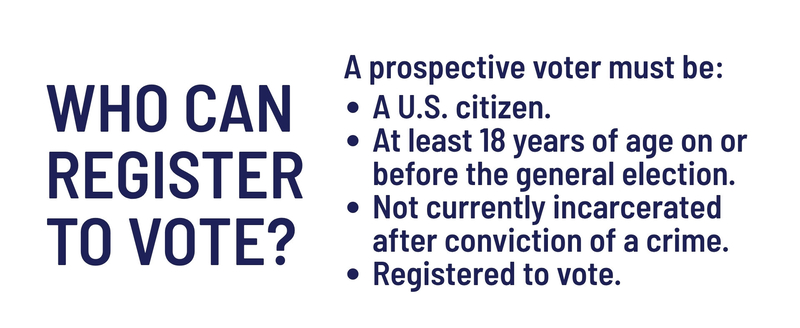
Where do I register?
If you’re not already registered to vote, you must sign up by Monday, Oct. 5.
There are three ways to register to vote:
Online: Visit IndianaVoters.in.gov and click the “apply now” button within the “register to vote” box. Fill out the form as prompted. You’ll need a valid Indiana driver’s license or state identification card to register online. Applications are due by 11:59 p.m. on Oct. 5.
In person: Register at your county’s clerk or voter registration office or the Indiana Election Division. Voters-to-be can also register at “full-service” voter registration agencies like an Indiana Bureau of Motor Vehicles branch if obtaining any personal identification document like a driver’s license, permit or identification card. Find the complete list of full-service agencies here. Applications are due by close of business.
By mail: Complete a voter registration form and mail it to your county clerk’s office or voter registration office, or to the Indiana Election Division. Download Indiana’s form here, the federal form here, or obtain one at the government agencies above. Mailed applications must be postmarked by Monday, Oct. 5. This is separate from the Oct. 22 deadline to apply for an absentee ballot.
Find your local election administrator’s address and other contact information on the registration form itself, or here.
In “vote center” counties, voters can cast their ballots at any vote center instead of a designated neighborhood polling place.
Visit the Indiana secretary of state’s website to find out if your county uses vote centers.
When does voting start?
There are several ways to vote before Election Day:
- Vote early in person starting Tuesday, Oct. 6, until noon on Monday, Nov. 2. Hours vary by county.
- Vote by mail if you meet one of the state’s eligibility criteria, such as expecting to be away from your county for the entire time polls are open on Election Day or lacking transportation to the polls. Find the list here. Fill out and submit an application to vote by mail. Election officials must receive it by 11:59 p.m. on Thursday, Oct. 22. Once you receive your absentee ballot, fill it out and return it promptly, following the instructions provided. To be counted, county election officials must receive it by 6 p.m. local time on Election Day. A postmark by the deadline is not enough.
- Vote with the help of a travel board if you have a disability and believe your polling place is inaccessible; expect to be confined due to illness or injury, or caring for someone confined at a private residence, on Election Day; or are physically unable to complete the ballot and sign the affidavit on your own. Fill out and submit an application. It must be received by noon on Monday, Nov. 2. A bipartisan team will deliver the ballot and help with its completion during the 19-day period before Election Day.
Or, vote in person on Election Day.
Polls open at 6 a.m. and close at 6 p.m. local time.
If I move, what do I do?
Head to IndianaVoters.in.gov and update your voter registration by Monday, Oct. 5.
If you move after the registration deadline, contact your county election office to find out where and how you can vote. Depending on when and where you moved, you may qualify to vote in your former precinct after completing an affidavit.
What am I voting for, anyway?
Hoosiers will select federal representatives to send to Washington, D.C. All nine of Indiana’s U.S. House seats are on the ballot this fall. The state has two U.S. senators, but neither are up for election.
Indiana also has its own three branches of government: the executive, legislative and judicial branches.
The executive branch is headed by Gov. Mike Braun, who acts as the state’s chief executive officer. The governor has the power to sign or veto bills passed by the Legislature and acts as the commander-in-chief of the Indiana National Guard and the Indiana Guard Reserve.
Lt. Gov. Micah Beckwith is his second-in-command.
Neither Braun nor Beckwith are up for reelection in the midterm cycle, but three other statewide executive offices are on the ballot: secretary of state, treasurer and comptroller.
GOP Secretary of State Diego Morales was knocked out of reelection contention at the Republican convention in June. He will be succeeded by the victor of a four-way race between Republican Max Engling, Democrat Beau Bayh, Libertarian Lauri Shillings or Lincoln Party independent Greg Ballard.
Republican Treasurer Daniel Elliott faces Democratic challenger Coumba Kembe, while Republican Comptroller Elise Nieshalla will go up against Democrat Jessica Bailey and Libertarian John Schick.
The legislative branch, or the Indiana General Assembly, includes the Senate and House chambers. This branch, with 50 state senators and 100 representatives, is responsible for drafting and passing laws which the governor can sign or veto. In the event of a veto, the chambers can overrule the governor with a majority of all elected members in each chamber.
All 100 House members and half of the Senate are up for election this year.
Indiana Supreme Court rules Sen. Spencer Deery winner in 3-vote Republican primary
Senators serve for four-year terms, while representatives serve for two-year terms. This branch drafts the state’s two-year budget, which it writes in odd years in a “long session,” typically between January and April. The “short sessions,” held in even years, usually start in January and end in early March. Only the governor can call the General Assembly into a special session, if one is considered necessary.
The judicial branch interprets Indiana’s constitution and laws and includes the Indiana Supreme Court, the Court of Appeals, the Tax Court, superior courts, circuit courts, probate court, small claims courts, city courts and town courts.
Trial courts hear cases and resolve disputes. Appellate courts review decisions when a party challenges a ruling, often arguing that a legal error occurred. Indiana’s appellate courts are the Supreme Court, Court of Appeals and Tax Court, although the Tax Court primarily reviews decisions from state tax agencies.
Created in 1986, the Tax Court hears cases arising under Indiana tax laws that involve appeals of final decisions made by the Indiana Department of State Revenue or the Indiana Board of Tax Review. Certain appeals of decisions from the Department of Local Government Finance may also be heard in Tax Court.
Courts can strike down laws they find unconstitutional. The governor appoints Supreme Court justices and Court of Appeals judges from nominees submitted by the Judicial Nominating Commission. Voters decide whether to keep them in office through retention elections at the first statewide general election after they have served two full years and every 10 years thereafter if retained.
Court of Appeals judges and Supreme Court justices have a mandatory retirement age of 75.
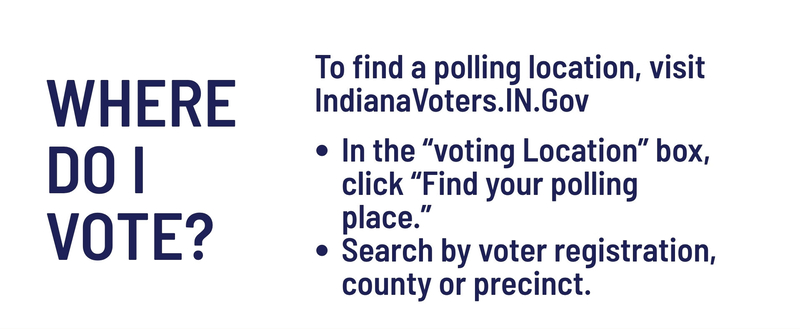
See who’s on your ballot at IndianaVoters.in.gov.
Indianapolis, IN