New courses are in the works at University of Utah amid state’s push for nuclear energy
Sep 14, 2026 | 7:02 am ET
Description
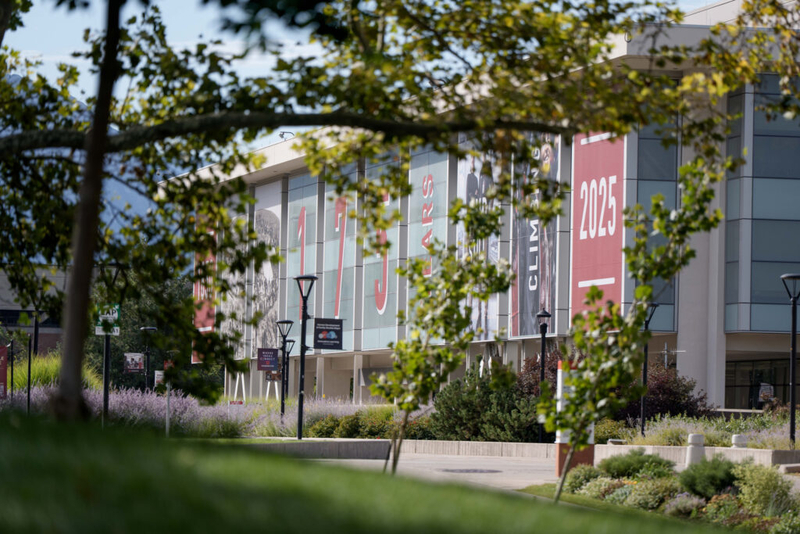
The J. Willard Marriott Library on the University of Utah campus in Salt Lake City is pictured on Saturday, Aug. 23, 2025. (Photo by Spenser Heaps for Utah News Dispatch)
For University of Utah students, a nuclear engineering track had to do more with healthcare technology and less with the nuclear reactors that Utah elected officials keep mentioning in their speeches when debating energy abundance. But, amid that big push to make the state a major piece in the nuclear energy space, the curriculum is about to change.
The university’s academic senate has approved a revision of the nuclear engineering minor core courses, putting the updated curriculum on track to be open for students in the fall of 2027, pending other university leadership approvals, said Supathorn Phongikaroon, director of the Utah Nuclear Engineering Program at the University of Utah.
“Our minor has been focused a lot on medical physics and isotopes, and then radiochemistry, and a variety of things that relate to instrumentation and radiation detection,” Phongikaroon said. “With the new revision of the course, we are now offering more in terms of nuclear energy and science, nuclear science and technology. That means that we are offering a little bit more to provide and support the state on workforce development.”
The new curriculum would add seven new classes, Phongikaroon said.
One of the courses is expected to be open to students of other disciplines as a general education class to learn about nuclear energy history and the global impacts of it, Phongikaroon said. There will also be courses on nuclear fuel cycles, as well as nuclear power plants and thermodynamics analysis, biological effects of radiation, nuclear systems and design, and nuclear security and nonproliferation.
The new curriculum won’t replace the current healthcare technology offerings. Students may still pick the route of researching isotopes, radiochemistry and medical physics. This update is an expansion of the school’s portfolio for those interested in energy.
Utah may be home to a nuclear innovation campus, Department of Energy announced
The hope, Phongikaroon said, is to fit the vision of Utah Gov. Spencer Cox’s Operation Gigawatt, an initiative to double energy production in the state, as well as Utah’s bid to host a nuclear lifecycle innovation campus, a U.S. Department of Energy project to support nuclear fuel operations.
“I hope to see more interest in nuclear energy, and then to see more vibrance of students and people to understand and accept what nuclear is, instead of just listening to the news,” he said. “So hopefully we’ll get more workforce. We’ll get more people who like to learn more about nuclear and be more open, receptive to that.”
As nuclear energy announcements from Utah elected officials increase, so is the student body’s interest in the industry, Phongikaroon said. An introduction to nuclear engineering class, for example, went from having between 20 and 25 enrolled students to almost 50.
The new classes are projected to be open to 30 to 40 students, he said.
Phongikaroon has been at the university for about a year. But, having spent more than a decade in a similar role at the Virginia Commonwealth University, he knows what it’s like to have nuclear energy already implemented in the grid.
Two nuclear power plants in Virginia produce at least 34% of the state’s electricity, whereas Utah doesn’t have the technology.
“People here are interested in nuclear, but it’s just another infrastructure to add,” Phongikaroon said. “So it’s a different view of the people looking at it (from Virginia), like, is it going to be successful? Is it going to be just a myth?”
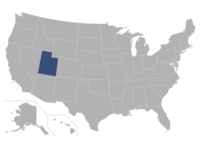
Salt Lake City, UT