Hawaiʻi Can’t Catch A Break From Storms. It Has To Adapt
Sep 14, 2026 | 6:01 am ET
Description
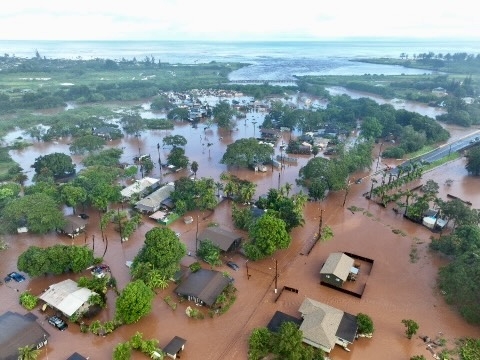
Photo courtesy of Honolulu Civil Beat
The back-to-back disasters unfolding in Hawaiʻi this year — each one interrupting the recovery efforts from the last — have been nothing short of brutal.
As Kauaʻi residents and lawmakers assess the significant damage caused by Hurricane Lowell last week, crews are still repairing roads on Hawaiʻi island and Maui after Hurricane Lala, some Kaʻū residents don’t have running water and others are still relying on local resilience hubs to meet their basic needs. Meanwhile, the state is still rolling out relief programs to businesses and residents impacted by the Kona low storms in March.
This year’s supercharged, historic El Niño has already surpassed the scientists’ predictions, and experts are bracing for yet more hurricanes or tropical storms, as well as an elevated risk of wildfires after the wet season passes.
David Lopez, the administrator of the Hawaiʻi Emergency Management Agency who took on the role in July, said the sheer number of concurrent operations has required the agency to hire more personnel and improve its training to handle multiple rolling recovery efforts at once.
The state has been stepping in to help survivors of all these disasters, he added, but “it’s a big lift. It's a long lift — and expensive as well. It takes a large workforce.”
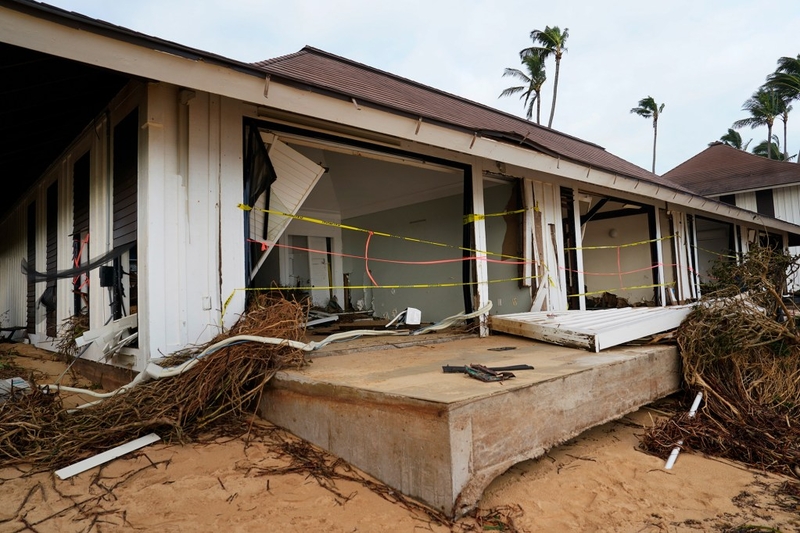
Lopez and other state and county leaders are facing important questions about how to pay for all the damage and build in more resilience at the community and government level — and how to do it quickly. In addition to more storms in this El Niño cycle, they're also up against the compounding impacts of climate change.
As multiple simultaneous stages of disaster recovery play out at once, and gaps in the government’s disaster playbook are being made clear, residents, too, are considering what they will need to do differently — from how they plant crops and run businesses to how they protect their homes — as the state adjusts to the impacts of a warming atmosphere. They’re also returning to ideas that have already borne results, such as changes to building codes and community-based disaster preparations, with an intention to expand on them.
‘We're very fortunate in terms of having some lead time to prepare for storms, but our basic systems are very vulnerable here, and that's hard to fix,” said Laura Brewington, a professor at the East-West Center and Arizona State University and a lead investigator at the Pacific Research on Island Solutions for Adaptation. The perennial hope that disasters that have hit other places won't hit us is baked into human behavior, she added, “but we all still have to recognize how vulnerable we are.”
Warmer Ocean + El Niño = More Storms Possible
While the relentless series of storms hitting — or just missing — the Hawaiian Islands this summer has caught many people by surprise, scientists and climate advocates have seen the battering coming since May. That was when the National Oceanic and Atmospheric Administration’s Central Pacific Hurricane Center released its season outlook predicting that this year’s climate change-fueled El Niño could usher in between five and 13 named storms this year.
A typical Pacific storm season has four to five named storms, said Alison Nugent, associate professor of atmospheric sciences at the University of Hawai'i Mānoa. “Five to 13 storms in one summer is exceptional,” she said.
The Pacific Ocean is considerably warmer than normal, including a large swath of water that is 5 degrees warmer than normal and extends from Baja, California to a spot just east of the Hawaiian Islands. Those elevated ocean temperatures, which recent research shows are 60 times more likely to occur due to climate change, is “allowing the storms to have more energy and more intensity as they maintain their track,” said Matthew Rosencrans, lead hurricane season forecaster with NOAA's National Weather Service.
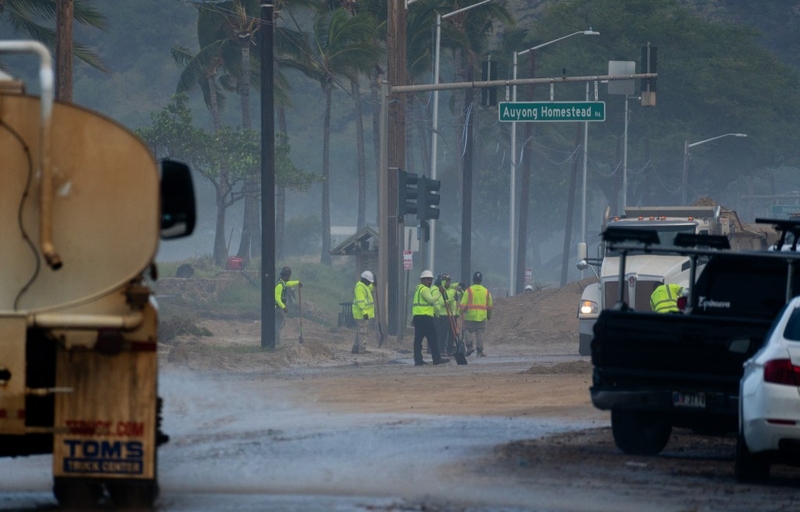
July, August and September are the three-month peak of the East and Central Pacific hurricane season, and the season has already brought 15 named Pacific storms and five hurricanes — or four times the number of storms in an average year. Rosencrans said he wouldn’t be surprised to see this year’s season last well into the fall.
“There could be two or three more, and there is nothing out there barring them from getting to Category 4 or 5 intensity,” he added.
All this comes at a time when the United Nations recently declared it unavoidable that the Earth’s temperature will surpass the 1.5 C warming threshold set by the Paris Agreement, a key global charter drafted in 2015. The agency now predicts that Earth is currently on track to reach at least 1.8 C under the most “optimistic” circumstances.
Lessons Learned On Kauaʻi
Though Hurricane Lowell may have caused as much as $1 billion in damage, many homes and businesses stayed put, thanks to lessons learned during the last big hurricane to hit the islands.
Will Dargan, a resident of Kekaha on the Southwestern Coast of Kauaʻi, said he was petrified by the storm’s enormous waves, which acted “like a river in the front yard.” But he was able to remain safely in his home on Monday night, even as giant waves washed dozens of large boulders onto his property.
Dargan’s home is located in the region that was badly hit by Hurricane ‘Iniki in 1992, and the previous owner renovated the home to withstand a Category 3 hurricane. The house is elevated, aside from the garage, which has two sets of breakaway doors. Once the water hits them, they automatically lift so water can flow through, giving the house a better chance of staying put.
ʻIniki damaged 5,000 homes, destroying more than 1,400 and rendering 7,000 people homeless. At the time, federal investigators found the island’s lax construction standards were largely to blame.
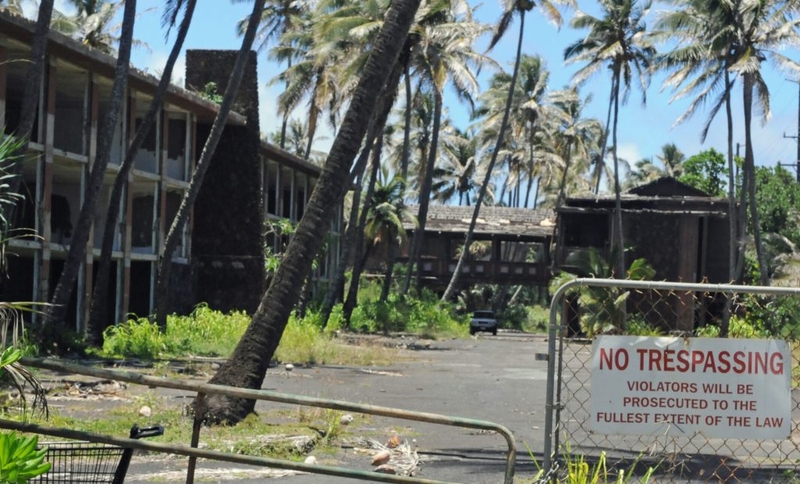
Damage assessments from Lowell are still taking place, but the changes that came about after ʻIniki — which had seven fatalities and cost the state over $3 billion — may have helped many residents stay safe.
Then-Mayor JoAnn Yukimura took a hard line in favor of stricter building standards, including hurricane clips, which secure roofs to the foundations of homes to prevent them from moving through the air like frisbees during storms.
The county staffed a dedicated office with enough people to speed up the permitting process and enforce the change. Hurricane clips were incorporated into the state-level building codes soon after.
Hanalei Valley resident Mina Morita remembers being told at the time by people who visited the construction site for her home that she couldn’t rebuild without hurricane clips. On Tuesday, Morita was thankful for the law as 74 mph gusts roared down Hanalei Valley, breaking branches, toppling trees and making a mess of her yard. Her roof stayed put.
“I'm just so relieved that we don't have to file an insurance claim,” Morita said.
Newer upgrades aimed at protecting homeowners from wind and rain will not make it into state building codes any time soon, however. Gov. Josh Green has allowed for a suspension of the State Building Code Council, which has traditionally set and updated the codes, as part of his 21st emergency proclamation related to affordable housing, first declared in 2023.
Because the council has not met, the state is currently using an unamended version of the International Code Council's 2021 building, residential and electrical codes. The counties, which Green's resolution says do not have to abide by state code developments, are still on the 2018 building codes.
That could be a serious concern, because it's often stipulated in federal disaster relief that up-to-date codes are needed for states to obtain disaster relief funding. That raises the question of what standard disaster victims rebuild their homes to, said Melanie Islam, president of the Hawaiʻi arm of the American Institute of Architects.
"We’re getting very close to an almost 10-year lapse of building codes," Islam said. "It's very concerning."
More Resilience Work From The State
One thing that's already changing after this year's storms is how the state emergency management agency stages disaster workers.
Typically, much of the immediate disaster response has been done by county workers and community members, as well as charity groups that fly in from the mainland. Lopez said that HI-EMA’s role has been to step in when counties have reached the limit of their response or need additional support. For instance, the agency is responsible for bringing in support from other counties when it's necessary.
But this year’s active storm season has caused the agency to refine its approach, Lopez said.
On Kauaʻi this week, the agency sent over 49 generators and 10 Starlink internet routers, as well as six HI-EMA staff members to help with damage assessment and communications, and to support the existing Emergency Operating Centers on the island. The National Guard also pre-staged heavy equipment.
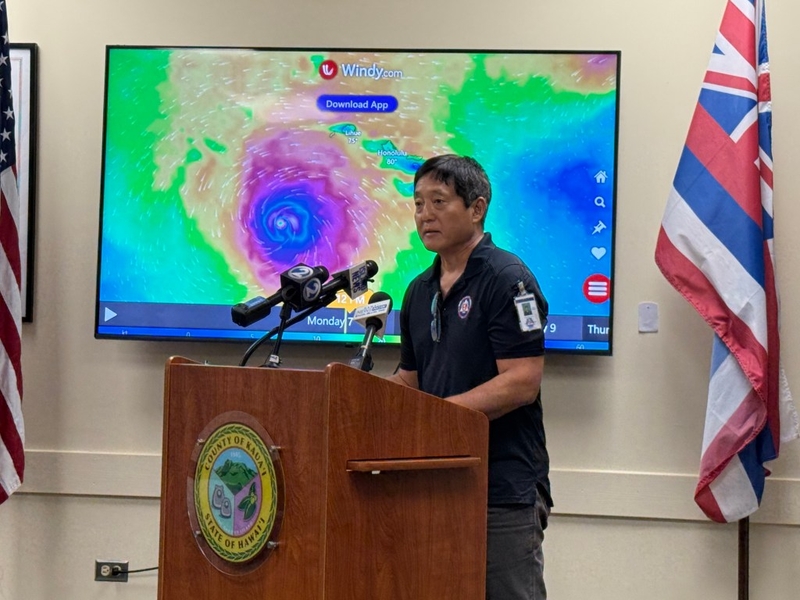
“There's always a concern about how much to pre-stage, because you're actually putting resources and possibly people into the threat area, and you run the risk of losing or damaging them,” Lopez said. This time, he said, it was worth the risk.
He added that HI-EMA has plans to create “readiness centers,” and that would connect the agency directly to various high-risk communities. “Those will give us some regional touches into the community, and that would help facilitate a sense of resiliency and also quicker response, especially early on, when it's very hard to get around because roads are out, and debris is everywhere.”
HI-EMA also oversees the Hawaiʻi Hazards Awareness and Resilience Program, an emergency preparedness initiative run by groups of volunteers, often on existing neighborhood boards, in various parts of Oʻahu including Waiʻanae, Waimānalo, and Mānoa.
Two Oʻahu North Shore communities have also created groups, prompted in part by fallout from the Kona low storms. They were given access to a resource kit from the state, as well as structured opportunities for education and emergency training. Lopez said he wants to see that program expanded in scope and brought to the outer islands, but it’s typically up to the community groups to get organized and request access.
Farmers Hit Hard
The Kona low storms cost Hawaiʻi farmers more than $38 million, then Hurricane Lala added $5 million in damage, predominantly on the Big Island, according to the Hawaiʻi Agriculture Disaster Response tool. Now Kauaʻi faces a similar situation, with wind-whipped crops, destroyed irrigation and lost harvests.
Emilio Ruiz-Romero, a Kauaʻi kalo farmer and kalo flour producer who owns a business called ResiRoots Café, lost most of his crops, and part of the roof at Nitta’s Corner, the community hub where he processes flour, blew off during Hurricane Lowell.
While he has no plans to change what he plants, Ruiz-Romero said the storm did make him think about the importance of documenting what he’s doing on the farm on a regular basis, like what he planted and how long they’ve been in the ground.
“When you’re farming for a purpose, for a business, for yourself, you should always be documenting progress and all that.”
Such documentation could help him apply for crop insurance payouts and other forms of financial support.
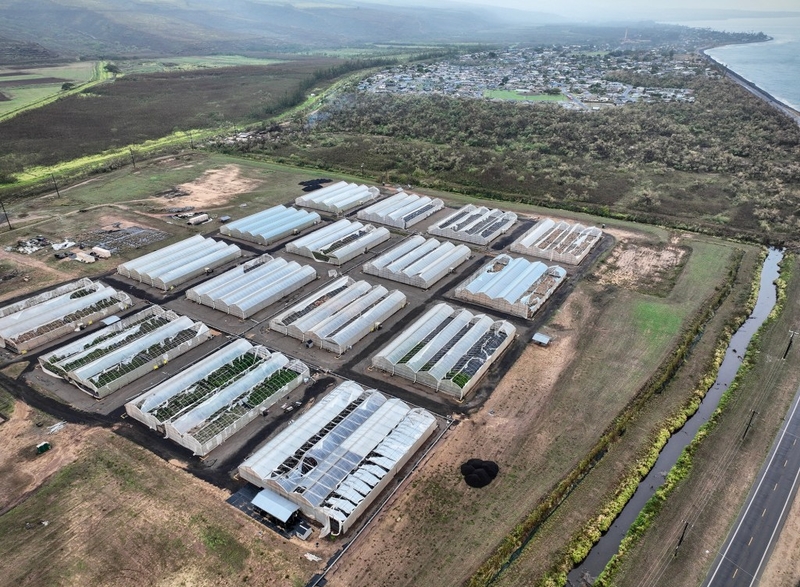
Contending with weather is a part of farming. But the increased severity of disasters has agricultural organizations seeking ways to reduce the impacts. More frequent disasters mean not only lower food production but could also mean fewer farmers.
“We can’t understate the challenges,” state food systems coordinator Amanda Shaw said. “There are very real fears among farmers.”
The Hawaiʻi Agriculture Disaster Response tool was developed to quickly provide authorities with information so they’re able to better support recovery efforts. It was also developed to connect farmers with relief programs, which are mostly provided at the federal level.
However, federal programs don’t always work for farms whose crops fall outside those typically funded by the U.S. Department of Agriculture's relief programs. But at the state level, there is little for farmers. In the wake of the Kona low storms, the state agriculture department offered low-interest loans and $1,000 emergency relief checks, which did little to abate the $38 million in damages.
Ultimately, Shaw said, better planning is needed to make farmers more resilient. Proactive programs, such as funding for soil conservation or flood mitigation, have proven among the most effective in Hawaiʻi thus far.
“We just need to build those up. And do it continually," Shaw said.
Investing in land and crop management practices that build resilience isn’t easy but it’s necessary, said The Hawaiʻi Farmers Union’s advocacy director Hunter Heaivilin. On an individual level that could mean sacrificing productive land to mitigate fire and flooding, but it has to be done collectively.
“Otherwise — imagine the corollary from beachfront hardening — if only one person does it, it may have a negative effect on others.”
Compounded Risks Require Many Solutions At Once
The rocks that washed into the roads on Kauaʻi last week are just the latest in a long list of unpredictable outcomes from storms like Lala and Lowell. The state’s isolation, lack of close neighbors, and reliance on the mainland can make it challenging to prepare for disasters.
Here, hurricane preparedness requires an understanding of the ways multiple impacts can compound one another, said Brewington. “Flooded roads coincide with power outages and stress on water systems and potential disruptions to things like food, fuel and medical access,” — all important parts of the equation, she said.
Leah Laramee, coordinator of the Hawaiʻi State Climate Change Mitigation and Adaptation Commission, pointed to the way El Niño has exacerbated the conditions in the varied microclimates around the state.
“For example, Kaʻū got really hammered, and then Kailua-Kona barely got any rain and hasn't had rain for like a month,” she said. “As far as how to prepare, there's so much to do, and so many impacts to weigh."
Laramee added that the commission is already thinking forward to wildfire season, which will also likely be worse than average because of the way increased rainfall can lead to the growth of more flammable grasses and other invasive plants. “We’re already thinking about how to help people to ensure that they have good buffers around their homes, and ensuring that we're educating people about preventing fires before they start.”
HI-EMA is set to receive funding from the state’s new Green Fee to provide grants to homeowners in high-risk areas who want low-cost ways to make their homes more resilient to extreme weather. The program is still in the works, but it’s a good sign of what’s to come from the state, Laramee added. The Commission plans to advocate for more real-world policies that help bake in resilience to other necessary home improvements.
“If homes are more prepared for storms, it means less costs down the road," she said. "But it’s really hard for people who are struggling to put food on the table and pay for gas to get to work, so it really does require the professionals in charge to make it easier for people.”
Nugent, who regularly appears on KHON2 News to discuss the weather, said she has received a number of questions from the station’s viewers about the future of this year’s storm season, and its connection to overall warming.
Nugent said she hopes this year’s overlapping disasters will open up more conversations about climate change.
“I would honestly be surprised if it didn't,” she said.
Honolulu, HI