First tribal police recruits set to graduate from basic training in North Dakota
Sep 14, 2026 | 6:00 am ET
Description
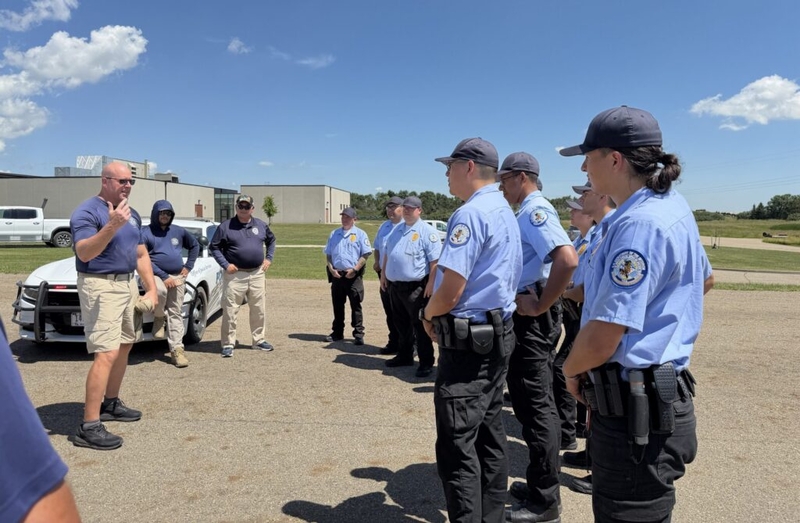
Tribal police recruits participate in the Indian Country Police Officer Training Program at Camp Grafton near Devils Lake, North Dakota. (Photo courtesy of the Bureau of Indian Affairs)
Basic law enforcement training for tribal police officers expanded to North Dakota this year, offering tribes in the northern region a training option other than the U.S. Indian Police Academy in New Mexico.
Twelve recruits from nine tribal law enforcement agencies participated in the first 14-week class of Camp Grafton’s Indian Country Police Officer Training Program, with graduation set for Tuesday.
Camp Grafton Training Center, a North Dakota National Guard base near Devils Lake, previously offered advanced law enforcement training for the BIA. But the only basic training option was in New Mexico, which leaders in North Dakota and other northern states have said is a barrier to recruiting new tribal police officers.
Tribal law enforcement academy to be located in North Dakota
Charles Addington, principal director for justice services and law enforcement for the Bureau of Indian Affairs, said in a statement that the response to the new program has been “overwhelmingly positive.”
“This pilot offering has provided renewed hope for many agencies across the northern region by giving them a closer, more accessible option for training their officers,” Addington said.
One North Dakota tribal police recruit joined the pilot program from the BIA Turtle Mountain Agency. Other participants are from tribal nations in Washington, Nebraska, Wyoming and Wisconsin. The program also was promoted to Idaho, Montana, South Dakota, Minnesota and Iowa, Addington said.
The training at Camp Grafton is closer to home and easier on family life, said Turtle Mountain Band of Chippewa Indians Chairman Jamie Azure.
“You’re not having to displace yourself and go all the way across the country just to receive training to come back and provide a service in our own communities,” Azure said. “It provides more opportunity to more people, being closer.”
Sgt. Mike Roy, a school resource officer for the Three Affiliated Tribes, said he would have preferred to have a training option closer to home. He attended the tribal law enforcement academy in New Mexico while his wife and kids were home in North Dakota.
“Being away for like five months, that’s hard,” Roy said. “Had I been here, I could have been coming home on the weekends.”
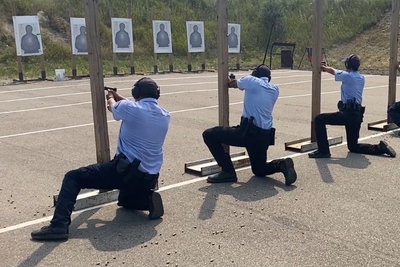
The program features nearly 600 hours of training across different disciplines, such as report writing and court testimony, federal and tribal criminal law, emergency vehicle operations, firearms fundamentals and arrest and control techniques, according to the bureau.
Addington said the goal of the pilot program is to assess the capabilities of Camp Grafton as a training site and ensure adequate resources, facilities and the number of instructors are in place to provide the basic law enforcement course into the future.
The bureau is planning to offer multiple tribal basic law enforcement courses over the next year that will include 24-36 officers in each class.
In addition to basic law enforcement training, the bureau will also feature basic training for tribal correctional officers and additional specialized training for tribal police and corrections officers in missing persons, defensive techniques, child and elder abuse and high-risk traffic stops, according to the bureau’s website.
“All academy programs are taught by subject‑matter experts who have extensive experience working in tribal communities and handling the complex and sensitive investigations often encountered in Indian Country,” Addington said.
North Dakota Monitor journalists Jack Dura and Amy Dalrymple contributed to this report.
Bismarck, ND