Massachusetts utilities, Canadian hydro company file dueling lawsuits over new transmission line
Sep 10, 2026 | 1:54 pm ET
Description
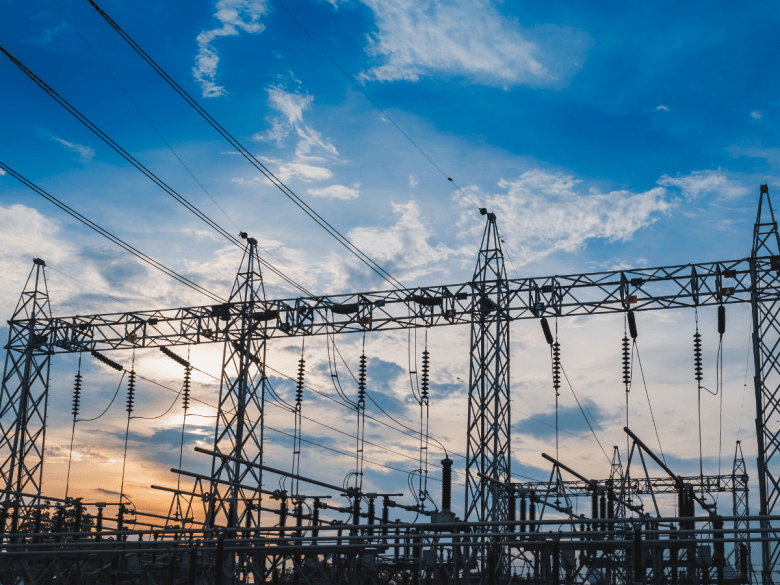
Utility companies serving Massachusetts are locked in a legal battle with Hydro-Quebec over a new hydropower transmission line.
IN THE LATEST twist in the drawn-out effort to bring Canadian hydropower to Massachusetts, a scorched-earth legal battle has erupted between the state’s electric utilities and the Quebec-based company responsible for delivering energy into New England through a long-delayed transmission line that flickered to life earlier this year.
Eversource, National Grid, and Unitil — the state’s three electric utilities — are suing Hydro-Quebec in federal court for shutting off power just eight days after the transmission line began operating and in the middle of one of the biggest cold snaps the region has experienced in recent history.
According to the lawsuit, filed Tuesday in US District Court in Boston, in “flagrant violation” of its contract with the utilities, Hydro-Quebec stopped delivering power over a 12-day stretch “as if it were free to act with impunity,” even though the utilities had to spend an additional $40 million for more expensive energy sources to keep the lights on and heat flowing in the Bay State.
Hydro-Quebec roared back with an explosive lawsuit of its own, filed the same day in federal court, charging that the state’s utilities owe the Canadian company $50 million for the energy provided over the course of January and February — which the utilities thus far “have refused to pay.”
Hydro-Quebec doesn’t dispute that this past winter’s extreme cold weather impacted its ability to send power into New England, citing emergency reliability curtailments issued by its electric grid operator. But those events, it argues, constitute “force majeure” circumstances — the legal term for events beyond human control — that grant the company the ability to withhold energy exports.
The unfolding legal drama marks a major pivot point for a project intended to provide 20 percent of Massachusetts’s electricity — and exposes just how fragile and volatile the state’s energy mix continues to be.
If the viability of the project, known as the New England Clean Energy Connect, is called into question through these court cases, it further squeezes the state’s energy options as President Trump continues to stifle offshore wind projects and affordability concerns continue to mount.
Gov. Maura Healey this past January celebrated the launch of the project as a significant milestone in her “all-of-the-above” approach to energy issues as the state grapples with electric rates that are double the national average.
To get there, NECEC already had to win a high-stakes court fight in Maine after voters there approved a ballot question seeking to block the $1 billion transmission line, which runs through 145 miles of rural wooded areas of the state. And it weathered a contested process to secure a 20-year power purchase agreement with the utilities, which Massachusetts regulators approved in 2018.
Yet just as the project finally got going, signs of trouble quickly emerged.
A severe stretch of cold weather descended on the region, sending gas prices spiking and forcing the region to rely more on much more polluting oil-fired generation. For all or parts of 12 days in late January and early February, NECEC went dark, just as the region’s energy needs were arguably highest.
The interruptions, the utilities argue in their lawsuit, were imposed in a “discriminatory, discretionary, and non-transparent manner.” And Hydro-Quebec’s conduct indicates that it will “continue interrupting service” in such a way, forcing New England to “rely on higher-cost, higher-emitting” energy sources to meet demand, according to the suit.
Hydro-Quebec maintains that these extreme events, which caused power outages for more than 15,000 households in Montreal and claimed the lives of two elderly women, were outside of its control and they therefore can’t be held liable for breach of contract.
The Healey administration, at the time, promised that Hydro-Quebec would pay for the lack of delivered power this past winter.
“Hydro-Quebec is facing steep penalties for each day they are not providing power to Massachusetts, and we know they are working to resume power as quickly as possible,” Maria Hardiman, a spokesperson for the Executive Office of Energy and Environmental Affairs, said in a statement during the outages in January. “Our contract ensures that ratepayers will still see lower-priced electricity, regardless of the power flowing over the line.”
But the dueling lawsuits signal an all-out standoff with Hydro-Quebec just as broader trade tensions between the White House and Ottawa are spiking and while Healey looks to partner with Canada on other energy issues.
Though not part of the lawsuit, later pauses on the delivery of power to New England via the new transmission line continued to raise questions about the success of the project not even a year into its life.
Earlier this year, as New England endured a rare early-season heat wave, NECEC failed to deliver power for about two weeks across May and June with no public announcement from Hydro-Quebec.
Lynn St-Laurent, a spokesperson for the company, told CommonWealth Beacon in a statement at the time that NECEC had been “offline” due to “technical issues” but that “repairs are currently underway and should conclude shortly.”
Boston