Former EPA officials warn of health risks from data center pollution
Sep 10, 2026 | 4:47 pm ET
Description
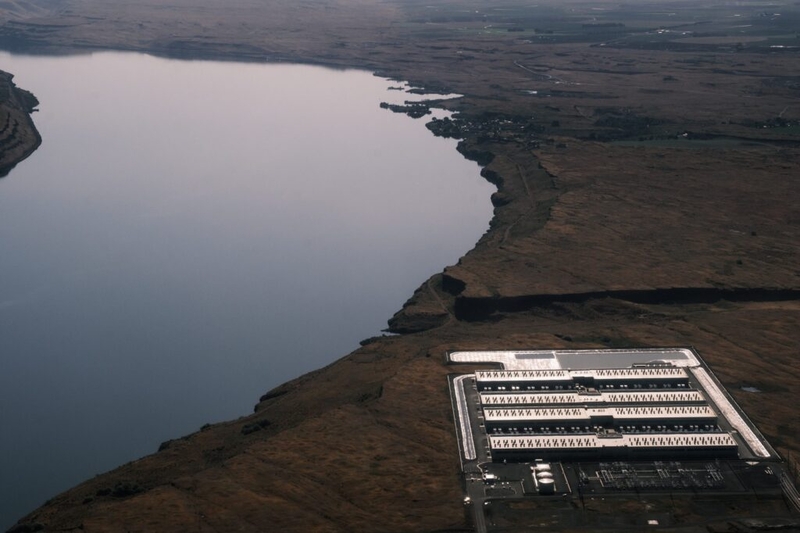
An explosion of data center facilities, including the one pictured here in northeast Oregon on May 18, have been built along the Columbia River Gorge during the last few years. (Photo by Jordan Gale/Oregon Capital Chronicle)
Former federal environmental officials are sounding an alarm in a new report about potential health impacts from data center pollution amidst what they see as a breakdown in oversight.
The Environmental Protection Network, a nonprofit organization made up of current and former Environmental Protection Agency staff and leadership, released its report Thursday on the hidden health costs of artificial intelligence data centers.
The report said that as AI expansion drives demand for electricity to power the data centers, an increasingly weakening EPA is unprepared to manage the increase in pollution that comes with it.
“This massive AI buildout can have enormous consequences for America’s health,” Dr. Lynn Goldman, a pediatrician and former EPA assistant administrator, said in a media briefing on the report’s release. “At the very same time, EPA is touting its efforts to weaken or reconsider safeguards designed to protect people from harmful pollution.”
The report cited health figures from a 2026 study by scientists at University of California Riverside and California Institute of Technology that estimated data center-related air pollution could impose roughly $11.7 billion to $20.9 billion in annual public-health costs by 2028.
The research also estimated that, under a rapid-development scenario of AI data center expansion, pollution from power sources generating electricity for the centers would contribute to roughly 600,000 asthma cases and 1,300 premature deaths.
The Environmental Protection Network report paralleled the academic study with more than 30 different federal actions that the group says increase pollution-related health risks as data centers expand. The actions include narrowing environmental reviews for approved projects, moving to end citizen-led pollution lawsuits and changing the minimum public participation requirements in the process to grant pollution permits.
“Public involvement in decision making is not just red tape. People are showing up at data center meetings because they want, and they deserve, a voice in the decisions that affect where they live and what they breathe,” said Walter Mugdan, a former EPA deputy regional administrator. Mugdan spent 48 years in his role working for the federal agency.
“The government should be opening those doors, not closing them,” he added.
The Environmental Protection Network’s report reiterated that its members don’t view increased health risks from data center pollution as an inevitable consequence of AI expansion. Before President Donald Trump returned to office in 2025, “stronger pollution safeguards, planned fossil-fuel plant retirements and expanding cleaner power were on track to constrain additional pollution from rising demand,” the report states.
But when paired with current federal policies removing pollution safeguards and fast-tracking permitting for air and water quality control, it’s easier to “keep more-polluting sources of power online or add new ones while weakening many safeguards,” according to the report.
“When you don’t have tough permitting or enforcement, you are not incentivizing people to do the right thing,” Goldman said.
The report calls on the federal government to restore pollution safeguards, such as requiring power plants that supply data centers with electricity to manage their pollution, properly permit and monitor on-site power generation at data centers and rebuild the EPA’s scaled-back enforcement division to ensure laws are followed.
The Environmental Protection Network has calculated Trump administration staffing cuts across the EPA have affected roughly 25% of its workforce, which totaled more than 16,000 before January 2025.
Baton Rouge, LA