If you care about Idaho’s Priest Lake, you have to care about the Coolin Wetlands
Sep 10, 2026 | 6:00 am ET
Description
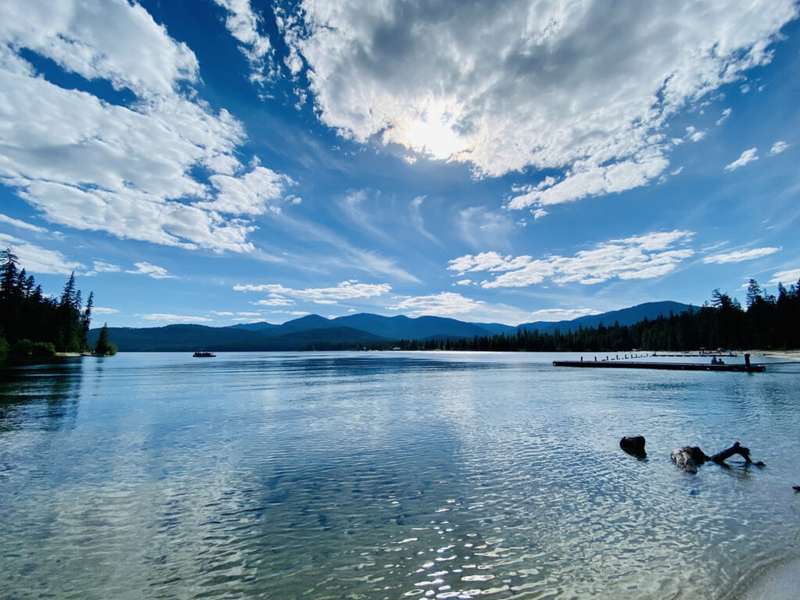
Priest Lake is located in North Idaho's Bonner County. (Photo by Getty Images)
I spent more than 40 years as a professional biologist working to preserve, protect, perpetuate and manage Idaho’s fish and wildlife – over two thirds of that in the Idaho Panhandle.
In retirement, I serve as president of the Idaho Panhandle Chapter of Trout Unlimited, part of one of the nation’s most respected conservation organizations. In both roles, a central focus has been to ensure fish, wildlife, and the habitats they depend on, and especially high value habitats like Priest Lake, continue to flourish for the enjoyment and benefit of the people of Idaho.
For three decades I’ve worked with land management and regulatory agencies, industry, NGOs, and the public to help ensure Priest Lake maintains its status as a crown jewel of Idaho.
I’ve seen a lot of projects in that time. Like others, I’ve learned to recognize those where someone decided it was easier to ask for forgiveness than permission. What’s happened to the Coolin Wetlands is one of the most egregious examples I’ve seen.
The Coolin Wetlands are a 65-acre peat bog on the south shore of Priest Lake, one of only 13 Class 1 wetlands in the entire state of Idaho. That classification means near pristine condition. It means the system is functioning at full ecological capacity. The Idaho Department of Fish and Game has identified this area as among the top 50 most important wetland habitats in the state.
These are not ordinary acres. They’re a filtration system, a carbon sink, and support essential and critical habitat for wetland species, and fish species that depend on the cold, clean water Priest Lake is known for.
Priest Lake is a gem. People from across Idaho and beyond come here because it remains one of the few truly pristine lakes left. That’s because of the wetlands, uplands and riparian systems that surround it, systems like the Coolin Wetlands that humbly do the work of keeping the water clean. From a water quality standpoint, the importance of large, intact wetland areas in close proximity to a lake like this cannot be overstated.
Bull trout, listed as a threatened species under the Endangered Species Act, rely on Priest Lake as critical habitat. Westslope Cutthroat Trout, a species that nearly disappeared in Priest Lake, have made a meaningful comeback over the past three decades because of conservation efforts and the regulatory systems put in place to protect their habitat.
I’ve been fortunate to watch that comeback happen. I know what it took, and I know how quickly it can unravel when the systems protecting habitat and water quality are compromised.
During my career, projects like this – proposals to fill or develop sensitive wetlands in proximity to critical fish habitat – were exactly what we worked to avoid and/or mitigate.
Not to obstruct development for its own sake, but to find outcomes that maintain fish and wildlife habitat. However, where habitats are high functioning and unique, such as the Coolin Wetlands, the science is unambiguous: you cannot fill a high-value peat bog and expect the surrounding ecosystem to absorb that loss.
Once it’s gone, it’s gone. No mitigation credit, no restoration project, no amount of money can bring it back.
A developer acquired three large parcels, encompassing the Coolin Wetlands, along the south shore of Priest Lake in 2021 and moved to develop them, filing 54 quitclaim deeds in a single day to manufacture 26 waterfront lots without triggering any public review. He then submitted two additional land division applications, each kept just under the threshold that would require full subdivision scrutiny.
Bonner County’s own attorney acknowledged on the record that the developer was gaming the system. The county approved the applications anyway.
In July, the Idaho Supreme Court unanimously ruled that this scheme cannot stand and reaffirmed that decision at the end of August following an appeal. The court held that the developer’s applications, filed simultaneously for contiguous land under common ownership, function as a single subdivision and must face full public review.
It’s the right call. The public process exists for exactly this kind of situation.
Now the case returns to district court. Bonner County faces a choice: accept the Supreme Court’s ruling and let the process move forward, or spend taxpayer money continuing to defend a position their own attorney conceded was indefensible. I hope they choose wisely.
Perhaps the developer would consider shifting gears and donate or sell the property to a land trust or conservancy … a win-win outcome. But gaming the permitting system to avoid public review and then putting heavy equipment to use on site, while the court case is still pending? That’s asking for forgiveness rather than permission.
In my experience, when someone operates that way with a resource this sensitive, the damage is rarely undone.
Priest Lake is one of Idaho’s most treasured resources. The Coolin Wetlands are part of what makes it that way. The wetlands and the lake they protect are worth more than the legal fees.
For those great many of us who value Priest Lake, let’s not be willing to watch them disappear without saying something.
Boise, ID