Chesapeake Bay grasses notch best numbers since 2018
Sep 08, 2026 | 7:26 pm ET
Description
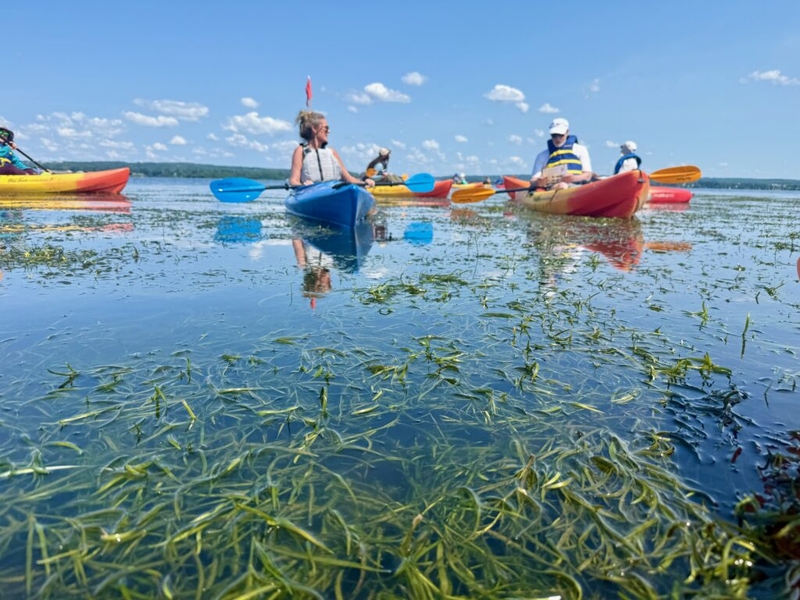
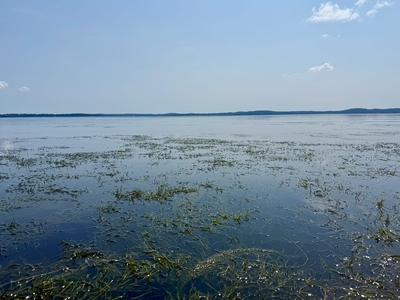
Brooke Landry, left, an SAV expert with Maryland's Department of Natural Resources who chairs the Chesapeake Bay program work group on underwater grasses, speaks with an attendee during a kayaking trip to the Susuqehanna Flats on July 24, 2026. (Photo by Christine Condon/ Maryland Matters)
Aerial surveys show that underwater grasses in the Chesapeake Bay had a strong year in 2025, taking up the most acreage since 2018.
The numbers are a 7% improvement over 2024, covering 89,385 acres — just below a previous 2025 goal calling for 90,000 acres.
But since then, the goalposts have moved.
In December, Maryland Gov. Wes Moore (D) and other bay governors signed a new pledge for the Chesapeake Bay. It calls for the bay states to achieve 196,600 acres of grasses across the entire bay — and maintain that number once they get there. But it stretches the agreement out, calling for 90,000 acres of submerged aquatic vegetation, or SAV, by 203o, 95,000 acres by 2035 and 100,000 acres by 2040.
In a news release Tuesday, Maryland officials touted a 13% increase in bay grasses in the Maryland portion of the Chesapeake Bay.
“More underwater grass means more habitat for blue crabs and fish, cleaner water, and a more resilient Chesapeake Bay,” Maryland Department of Natural Resources Secretary Josh Kurtz said in the release.
“This year’s increase is welcome progress, but it also reinforces the work ahead. We need to keep reducing pollution, protecting existing underwater grass beds, and restoring the shallow-water habitats that allow these plants and the Bay life that depends on them to thrive,” Kurtz said.
Brooke Landry, SAV program chief for Maryland DNR and chair of the Chesapeake Bay Program SAV Workgroup, called the 2025 numbers “especially encouraging” because “the gains were not confined to one place.”
Seven different Maryland river or bay segments met or exceeded their individual SAV restoration goals for 2025, including the Back River, the Upper Gunpowder and the Upper Chester. And on the Eastern Shore, eight rivers or river segments increased their SAV acreage by 50% or more, even though they did not meet their goals.
For freshwater grasses, it was a rebound after losses in 2023. And for moderately salt-tolerant grasses in the mid-bay, it was a rebound from 2024, according to the DNR news release. But this progress is fragile.
In Maryland’s mid-bay, for example, much of the grasses are made up of two species: sago pondweed and widgeon grass. The latter species can thrive in a variety of salinity types, but it is particularly vulnerable when other environmental conditions deteriorate, including water clarity, Landry said in the news release.
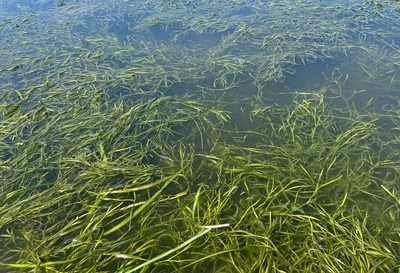
“These communities are dynamic: when light, salinity and other growing conditions align, species such as widgeon grass can spread quickly,” Landry said. “The flip side is that the same beds can decline just as quickly when conditions deteriorate.”
There were also areas of the bay that performed poorly in 2025’s study. Overall, the tidal fresh zone, which includes geographically isolated rivers and embayments, actually experienced a small decline in 2025, from 20,221 acres to 18,653 acres. Researchers at the Virginia Institute of Marine Science, which produces the annual study, noted particularly significant losses in Virginia’s Rappahannock River.
The survey’s overall gains also “mask troubling declines” in rivers such as the Patapsco, Gunpowder and James, read a news release from the nonprofit Chesapeake Bay Foundation, a leading bay advocacy group.
“Underwater grass gains across the Bay are welcome news, but Maryland’s rivers tell a more complicated story,” said Julie Luecke, the foundation’s Maryland coastal research scientist, in the release. “Declines in places like the Patapsco, Gunpowder, and Potomac show the pressure from polluted runoff and increasingly intense rainstorms.”
But the salty waters near the bay’s mouth had a second straight record-setting year, improving more than 11%. Researchers at VIMS believe this occurred because of improved water clarity in the lower bay.
“It’s been remarkable to watch how fast the lower Bay meadows are expanding right now,” said Christopher J. Patrick, associate professor and director of the SAV Program at VIMS. “It’s another example of how rapidly seagrass can recover when conditions are right and gives us hope that the ultimate seagrass restoration goals for the Chesapeake Bay remain achievable.”
Annapolis, MD