Trump doesn’t have the power to limit mail-in voting, lawmakers tell US Supreme Court
Sep 08, 2026 | 5:27 pm ET
Description
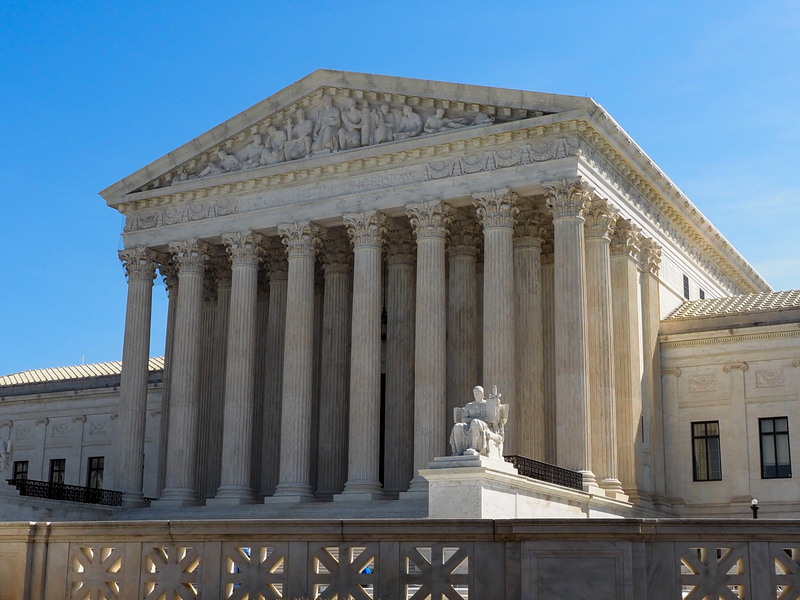
The U.S. Supreme Court on April 9, 2026. (Photo by Ashley Murray/States Newsroom)
The hotly contested U.S. Postal Service rule restricting mail-in voting usurps Congress’ authority, as well as states’ power to administer elections, more than 250 current and former members of Congress said in a filing to the U.S. Supreme Court on Tuesday.
All 47 members of the U.S. Senate Democratic Caucus, 199 current House Democrats and 15 former House Republicans signed the friend-of-the-court brief opposing President Donald Trump’s policy to add several requirements to mail ballots.
The U.S. Constitution “is unambiguous” in empowering states to run elections, while Congress can enact laws to oversee elections generally, they argued.
“Congress has passed several laws regulating federal elections—though it has always done so surgically, deliberately leaving the States with considerable room to maneuver,” they wrote.
The executive branch has no role, they said.
The Trump administration has argued the rule, published last month, requires only “modest” technical specifications for mail ballots and that states transmit lists of eligible voters to receive the ballots. The rule is a targeted measure affecting mail delivery, not elections, the administration says.
But the lawmakers say that argument fails.
The agency cannot take action related to elections without a congressional directive, they wrote. Congress never wrote a law asking for the requirements included in the USPS rule, they said.
Executive order
In this case, Trump spurred the Postal Service to write the rule in a March executive order, based on the unsubstantiated premise that vote-by-mail is vulnerable to fraud.
That shows the rule is meant to address Trump’s concerns about election administration, not mail specifications, the lawmakers said.
“The integrity of our constitutional system depends on each branch keeping to its assigned role,” they wrote. “The Framers set up a two-part system that gave States default authority to regulate federal elections subject to Congress’s authority to override the States. The Framers did not provide the President with any authority to interfere in that system, nor has Congress imbued the Executive Branch with any such authority by statute.”
Spokespeople for the White House, USPS and the Department of Justice, which is representing the Trump administration in the case, did not immediately return messages seeking comment Tuesday.
In a separate brief, the legal advocacy group the Society for the Rule of Law made a similar argument, saying the federal postal law the administration has cited provides only broad language that does not empower the agency to regulate election mail.
“The non-election, boilerplate … provisions on which Applicants rely are not a secret, alternative way for the USPS to bar ballot mail, conditionally or otherwise, on the eve of election day,” the group wrote. “Under the federalism presumption and the major question doctrine, the USPS needed a clear statement of statutory authority.”
Rushed delivery
The rule would require technical elements such as unique barcodes on ballot envelopes. Elections experts say those requirements are unworkable in time for the fall’s midterm elections because states have already designed, printed and — in some cases — begun sending ballots.
The rule would also require states to send to the federal government lists of eligible voters, which would be checked against a Department of Homeland Security database to verify citizenship.
The rule bans the Postal Service from delivering ballots to registered voters who are not verified through that method.
The online portal that the rule says states should use for this process has still, less than two months until Election Day, not been introduced to states. A whistleblower last week reported the rushed development has led to myriad problems with the tool, which could result in legitimate ballots being rejected.
Opponents, including more than 20 Democratic state officials and voting rights groups that sued to challenge the rule, say it would risk disenfranchisement for the millions of voters, including Trump, who vote by mail.
High court ruling pending
The rule has been the subject of rapidfire legal fighting over the past several weeks, and the Supreme Court is now weighing whether to overturn a Massachusetts federal judge’s order pausing the rule while litigation continues, after the Trump administration filed an appeal over the weekend.
Justice Ketanji Brown Jackson on Sunday asked the states and voting rights groups challenging the rule to file their response to the application by Wednesday at 4 p.m. Eastern.
That district court injunction from Judge Indira Talwani, who was appointed by President Barack Obama, held that the rule was likely unconstitutional and unlawful for reasons the members of Congress articulated Tuesday: The Constitution grants states and Congress the power to oversee elections and states would be harmed if they are forced to comply with the regulation before courts can determine its legality.
All States Newsroom content is free to republish. Read our republishing policy for more information.