Louisiana’s marine research collaboration becomes a political battleground
Sep 08, 2026 | 2:21 pm ET

Description
This LUMCON ship is among the $500 million in assets at stake in a task force determining the research agency's future. (Photo courtesy of Louisiana Board of Regents)
On paper, a select group of Louisiana university leaders has been tasked with finding ways to maximize one of the state’s premier scientific research institutes. Unofficially, they are in the middle of a political tug-of-war over who will control an entity with $500 million in assets and a multi-million-dollar annual budget.
The state legislature created the Louisiana Universities Marine Consortium, better known as LUMCON, in 1979 to specialize in marine and coastal research that prioritizes the state’s interests. It currently consists of 10 professors, facilities in Houma and Cocodrie, and a small fleet of research vessels. Every two- and four-year college, public and private, in the state is part of the consortium.
An independent board oversaw LUMCON until 1995 when the legislature allowed the schools taking part to handle its governance. That changed in 2016 when the consortium was moved under the Board of Regents, the body that oversees all higher education matters in Louisiana.
Sen. Mark Abraham, R-Lake Charles, introduced legislation this year to shift many of the Regents’ responsibilities to university system boards and other state agencies. It included moving LUMCON to the LSU System, which Abraham said could double or possibly triple the $9 million in research funding the consortium’s faculty spends annually on research.
The move was scuttled when it ran into resistance from lawmakers who represent areas without an LSU campus. Instead, Abraham’s bill was amended to create the LUMCON Efficiency and Research Competitiveness Commission, which met for the first time last Wednesday in Baton Rouge.
The panel is made up of leaders from all four public higher education systems and a representative from Tulane University.
The battle for LUMCON control resumed at last week’s commission meeting, which LSU System President Wade Rousse attended. Unlike other university presidents who appointed designees, Rousse is serving on the panel himself.
“Obviously, this is an asset that we need to leverage, and that we need to push us and push the science forward,” Rousse said.
Since Rousse was put in charge of LSU in November, with Gov. Jeff Landry’s endorsement, he has spurred an effort to raise its research ranking to place it among more prestigious universities. His campaign has demoted leaders at LSU’s two medical schools and its agricultural and biomedical research institutes so their respective research dollars would count toward the main campus total, a key aspect of the rankings.
As part of the LSU System, LUMCON would have an proprietor more accountable for its welfare, according to Rousse.
“The counterpoint would be sort of property rights, if you will, and … why is it that someone that owns a home takes care of it better than someone that isn’t a homeowner,” he said.
Commissioner of Higher Education Kim Hunter Reed said at the meeting the consortium was placed under Regents’ oversight 10 years ago, alongside several other higher education-related entities, because state leaders believed any entity with a statewide reach should be housed under Regents.
The LUMCON Efficiency and Research Competitiveness Commission is the result of a legislative compromise that kept the consortium under the Board of Regents. In debating the original legislation, some lawmakers were resistant to hand LSU the keys.
Sen. Katrina Jackson-Andrews, D-Monroe, said at a legislative hearing she was concerned LSU would prioritize its use of LUMCON facilities, and schools such as the University of Louisiana at Monroe would have less access to those resources.
Other lawmakers suggested Abraham’s bill was introduced at the instruction of LSU Board Chairman Lee Mallett, a wealthy Lake Charles businessman and major donor to Landry and previous Gov. John Bel Edwards and Bobby Jindal. Mallet was also a driving force behind the hiring of Rousse at LSU.
Abraham said in an interview earlier this year that although Mallett didn’t directly ask him to file the bill, he had previously raised the issue around the time Abraham filed similar legislation in 2024 that also did not advance.
In an interview, Mallett said his only interest in LUMCON is in its work as a research institution. Mallett said he is not in contact with the study commission’s members and will respect their recommendation.
At last week’s meeting, Abraham said he wanted to ensure the state was maximizing LUMCON’s assets. The consortium’s executive director, Brian Roberts, told study commission members he estimates LUMCON’s assets to be worth around $500 million.
The commission will study how LUMCON can increase collaboration, maximize its research funding and reduce administrative duplication. The group will meet at least three more times, including at its facilities in Cocodrie and Houma, before submitting its report to the legislature sometime in early 2027.
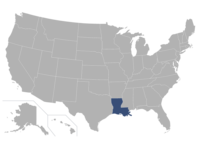
Baton Rouge, LA