In aftermath of alleged attack on Acton, calls renewed for bill against political violence
Sep 08, 2026 | 8:32 am ET
Description
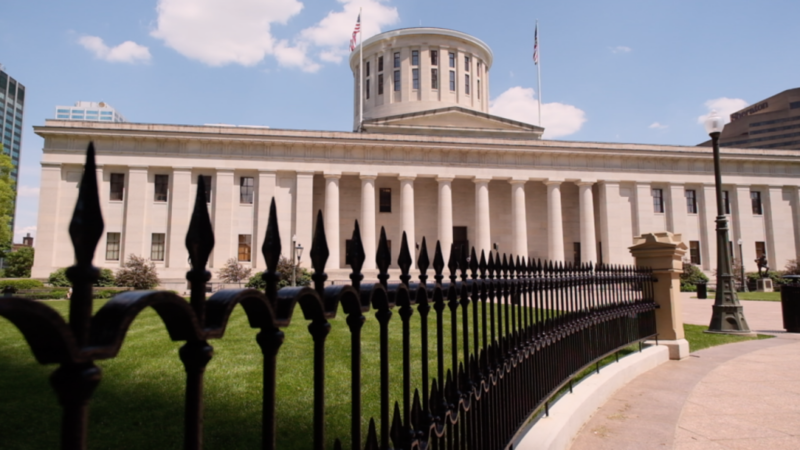
The Ohio Statehouse. (Photo by WEW.)
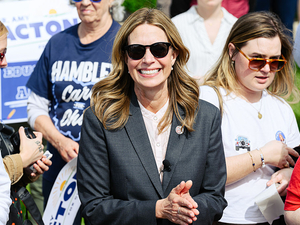
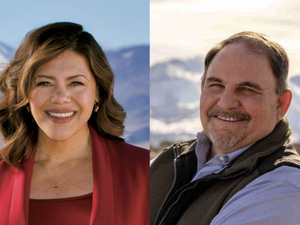
There has been a rise in political violence in Ohio, but bills meant to curb these types of crimes have stalled. After a man allegedly attempted to attack governor candidate Dr. Amy Acton over the weekend, lawmakers are hoping to get some safety measures passed.
A man is now in custody, charged with two counts of assault and disorderly conduct after Ohio troopers say he lunged at Acton. Patrick Havas, 38, did not display weapons during the incident, police said, but was carrying two pistols and a taser in the shape of brass knuckles.
Acton was uninjured, but Havas allegedly knocked down multiple fairgoers, resulting in injuries.
“We had a rough day yesterday,” Acton said at a Cleveland parade Monday. “I am so thankful to our first responders and our state highway patrol and everyone who helped out the people who were injured, and our prayers are with them.”
While campaigning, bipartisanship has been key to Acton’s campaign. She is fighting for “common humanity,” she said.
“Everywhere I go, it doesn’t know party,” she continued. “Everyone is showing up, and they’re exhausted of the hate and the chaos and the vitriol and the purposely being pitted against one another.”
Political violence continues to be a problem.
Just this past spring, a man pleaded guilty to threatening more than 30 public officials, including sending white powder to Gov. Mike DeWine, as well as sending a bullet to former Attorney General Dave Yost.
Yost, in a conversation Monday, noted he had received a death threat after he had already left office this summer. He said over the past decade, the threats have increased in frequency and severity.
“In the past, political violence and the threat of political violence — revolutions — occurred because people were not free to think or to speak…” he said. “Political violence and the threats of political violence today are driven by people who cannot accept that they did not get their way, or that they might not.”
This year, a man pleaded guilty to three misdemeanors arising from an alleged road rage incident involving U.S. Congressman Max Miller.
A Dayton man was arrested in July for leaving a threatening voicemail to Congressman Jim Jordan.
Over the past two years, Congresswoman Shontel Brown, Yost and several state lawmakers have been “swatted,” with individuals falsely reporting serious crimes occurring at their addresses. This hoax has the goal of sending a large police presence, or a SWAT team, to approach an unsuspecting victim.
But when a man assassinated the Minnesota Speaker of the House and tried to kill other Democratic representatives in June, more troopers were deployed to monitor the Capitol Square area. Lawmakers say they routinely face threats from people who disagree with their platforms.
“Hate has no place in any neighborhood, any community, at any point, across Ohio,” state Rep. Dontavius Jarrells, D-Columbus, said in an interview Monday.
Various bills had been introduced in 2025 in order to address the increase in these crimes.
Jarrells’ bipartisan bill prohibits hate crimes, which isn’t currently law. It would increase penalties for assaulting or terrorizing someone based on traits like race, sex and political affiliation.
“House Bill 306 fundamentally is about closing loopholes which hateful individuals use to terrorize our communities based off their perceived identities,” state Rep. Josh Williams, R-Sylvania Township, said.
Williams has another bill, H.B. 457, which would increase penalties for politically motivated crimes, including giving prosecutors the ability to seek the death penalty in homicide cases.
“This bill is about protecting political speech,” state Rep. Jack Daniels, R-New Franklin, said. “It’s about making people feel comfortable and increasing the penalty for that, hopefully, will deter political violence.”
H.B. 460 would allow some elected officials to carry guns in government buildings.
None of these bills got past a first hearing before the lawmakers left for summer recess.
“It’s all about the will, the will to do it in our leadership in the House, particularly, and really just the will across our General Assembly to address this issue,” Jarrells said.
House Speaker Matt Huffman, R-Lima, had previously said in 2025 that political violence is a concern, adding that rhetoric could be part of the problem.
“What has happened is social media has amped up the negative things that come out,” Huffman said.
GOP candidate for governor Vivek Ramaswamy’s running mate Rob McColley, R-Napoleon, is also the Senate president. This year, we asked him what can be done to fix political attacks.
“I think it doesn’t matter what party you’re in. We’ve seen political violence happen, and oftentimes we’ve seen that on the left. We’ve seen it in some cases on the right,” McColley said. “Political violence should be condemned at every level.”
DeWine has said, for years, that the political temperature needs to be lowered in the state. But in a time when the state and nation are so divided, this will likely be an ongoing challenge.
Follow WEWS Statehouse reporter Morgan Trau on X and Facebook.
This article was originally published on News5Cleveland.com and is published in the Ohio Capital Journal under a content-sharing agreement. Unlike other OCJ articles, it is not available for free republication by other news outlets as it is owned by WEWS in Cleveland.
Columbus, OH