Struggles in the shelter: Volunteers, ex-employees frustrated by Weber County Animal Services
Sep 08, 2026 | 7:01 am ET
Description
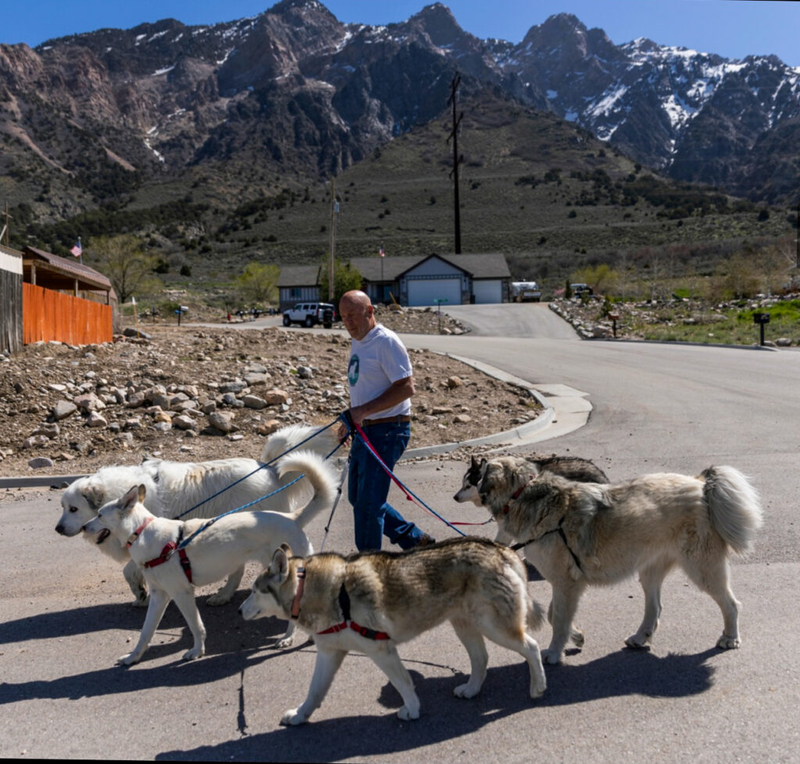
Alan Waldron, a volunteer for a rescue group for Great Pyrenees, walks a group of dogs. (Photo courtesy of Alan Waldron)
The following story was reported by The Utah Investigative Journalism Project in partnership with The Signpost and Utah News Dispatch.
Lisa Boggs was hoping to make a difference when she joined Weber County Animal Services. Those hopes were dashed after a disagreement between Boggs and shelter management over how to care for a Great Pyrenees named Ricky.
Great Pyrenees are large, white, and fluffy. Despite their soft appearance these dogs were bred to defend. As “livestock guardian” dogs they are bred to protect sheep flocks from wolves and bears and are known for their protective and independent nature. They’re a tough breed, but Ricky was anything but when he came to the shelter. Boggs wrote in a report to shelter officials that Ricky would not stand when he came into the shelter, even urinating and defecating where he lay. A staff evaluation found Ricky was behaving this way out of fear.
Boggs, who started as a volunteer before hiring on as a kennel technician, eventually left after she said management denied her request to foster the dog, instead marking Ricky for euthanaisa or rescue only. Ricky was ultimately rescued, but it was only days before he was scheduled to be put down.
“I left because I was no longer truly empowered to care for the animals,” Boggs said in an email. “I no longer had a voice under the new director.”
Alan Waldron, a volunteer for the Pyrenees rescue that took Ricky, said that while retrieving Ricky, shelter staff did not provide him with a muzzle when he requested one for his safety, nor did they help him in retrieving the dog.
Waldron said he feels shelter staff “were more inclined to have the dog put down than to actually, you know, be kind and be sociable about things.”
Siri Main, the shelter director since 2025, has drawn criticism from more than just Boggs and Waldron. Ex-volunteers and employees, animal fosters and rescue personnel expressed concerns about poor treatment of shelter animals — and the beleaguered staff and volunteers taking care of them. Community members have taken to social media and spoke with the Utah Investigative Journalism Project about the issues they are seeing. They also worry members of shelter leadership lack key knowledge of animals and are not being transparent in how they manage care and decide when animals need to be euthanized.
Meanwhile, other volunteers say they have appreciated the changes and the structure Main has brought to the shelter.
When asked why Boggs was not allowed to foster Ricky, Main said if an individual is not qualified to foster an animal they will not be allowed to do so and did not elaborate further. Boggs’ report showed that she had been working with Ricky daily at the time.
Main said she did not recall the timeline of Ricky’s rescue and scheduled euthanasia and that there was nothing for her or her staff to do but watch as Waldron took the dog. She added that while there are muzzles in the facility, it is possible that staff did not have a muzzle big enough for a dog of that size.
Main stressed that she is paid to ensure the shelter is using best practices and caring for the animals well.
“If someone wants to have genuine constructive criticism, a respectful one, with me or my staff they are welcome to,” Main said when asked about criticisms community members had regarding the shelter. She noted that this would include a willingness to understand shelter leadership may not agree with what is being proposed.
Concerns about animal welfare
Allison Kenney volunteered at the shelter cleaning kennels in the animal holding room every Sunday for over three years before she quit. Kenney said she was involved with the nonprofit The Friends of Weber County Animal Services, which was established so that monetary donations could go to the shelter without a portion being given to the sheriff’s office.
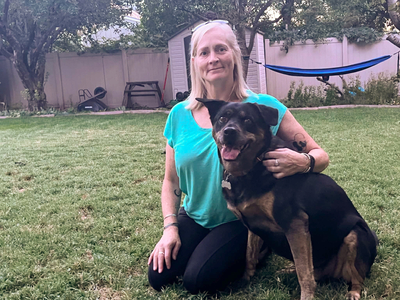
When Main asked to be a member of the nonprofit’s board of directors, she was denied. Kenney said this was because the nonprofit’s position from the beginning was that the board would be made up solely of shelter volunteers. The nonprofit has since ended its work with the shelter to instead help other local rescues with funding and has been renamed twice. It was initially renamed to Friends of Weber County Animals and then again to Friends of Utah Paws and Tails when the nonprofit became a rescue. Kenney said the name was changed to avoid association with the shelter and that there were multiple reasons for the split, including a falling out between the nonprofit and Main.
“She was just very negative and derogatory about the things we have done,” Kenney said. She said the nonprofit had raised thousands of dollars for the shelter up to that point, and was aiding in the costs of spaying and neutering the animals in their care.
Main declined to comment on the relationship with the nonprofit or her inquiry into joining the board of directors.
Kenney added that when concerns of animal negligence at the shelter arose, multiple volunteers, rescue personnel and employees went to the Weber County commissioner’s office and to the shelter’s human resources department, all receiving the same response.
“We were all sent the same email just saying ‘nope we have faith in the new director and the direction things are going,” Kenney said. “When you have that many people from that many different places or outlooks coming in and saying the same things, there’s an issue.”
Other volunteers disagree and believe the change in leadership has been beneficial. Jeff Walker, a volunteer for the shelter for eight years, said he has seen an improvement since Main’s arrival. Walker said the space has seemed cleaner and more organized and staff have better morale since the change. He said that while his experience with Main is limited, she was respectful and diplomatic.
A common concern among ex-volunteers was no longer being able to walk dogs unless those dogs were cleared for adoption. Kenney shared concerns about the amount of time the dogs spent in kennels, specifically citing a husky named Blue, who she said was in the shelter for months before being listed for adoption. When asked about this case, commissioner Sharon Bolos, the previous county commissioner over the shelter, said the public could not interact with Blue because he was involved in a court case.
Main said under previous management animals involved in court cases weren’t allowed to leave their kennel, but that the shelter now has staff members who walk those animals daily. She added that all dogs who have been evaluated and recommended for adoption can be walked by volunteers.
Zach Ridderhoff used to volunteer at the shelter as a trainer, helping rehabilitate fearful or aggressive dogs. He said he stopped volunteering when he was no longer allowed to work with dogs that were not adoptable.
Main said that for safety reasons volunteers were not permitted into the animal holding area, where unadoptable dogs are housed. She also noted that there had been previous disease outbreaks when protocol was broken by volunteers.
“That room houses certain dogs that are just not for public viewing, and for the safety of those animals, and even the safety of people that are tied to those animals we take that very seriously,” Main said. She said the dogs in the holding area may be bite risks or involved in domestic violence cases, among other reasons.
Main added that the shelter is now aided by a different trainer who “is insured, has credentials, has been in the industry for over 20 years, and specializes in extreme aggression and behavioral abnormalities,” and meets the shelter’s standard for trainers.
Ex-employees who spoke about their time at the shelter asked to remain anonymous out of fear of retribution to themselves or their friends who are still employed by the shelter.
“They weren’t really focused on creating a less stressful situation for the animals,” one former employee said. “Like, they’re already in a shelter. That’s already stressful. There weren’t a lot of protocols in place to make that a less stressful environment.”
The ex-employee said she had worked under the previous director as well, but felt that relations between the staff became worse after Main took over.
The former employee added that animals in the shelter’s care were not walked daily or given enrichment other than hardboiled eggs as a new treat. She also said dogs not available for adoption were not walked and “play groups” were no longer held.
The employee said play groups used to consist of about 15 dogs being taken out to play together. The program was ended because of the risk of dog fights or diseases “which makes sense until you see how positively it impacted the animals, you know?” the ex-employee said.
“It was just, ‘put these animals in a cage and forget about them for nine months until maybe they are available for adoption,’” she said.
In an email Main said the shelter uses a variety of enrichment strategies, including snuffle mats, walks, scented toys, bubble machines and doggy daycations with the public.
“The goal is to provide and promote the animals psychological and physiological well-being while they are at the shelter by encouraging natural behaviors and improving their quality of life,” Main said in an email.
Disillusioned volunteers
Other volunteers also left the shelter after the leadership change. Tami Ridderhoff, Zach Ridderhoff’s wife, initially built the shelter’s foster program. She filed a complaint and left the shelter after she said staff were unkind to her and other volunteers.
“We had zero say even though we were all helping take care of the animals. We were treated like children, honestly,” she said. Ridderhoff and other ex-volunteers have filed complaints with Bolos regarding their treatment and the state of the shelter.
Bolos said she followed up with the individuals who came to her office and implemented changes where they were needed. She pointed to the shelter now using animal care logs, though she confirmed the policy was put in place before the complaints were received.
“The protocols are a lot more organized. The policies are tightened up. There’s a higher expectation for animal care,” she said.
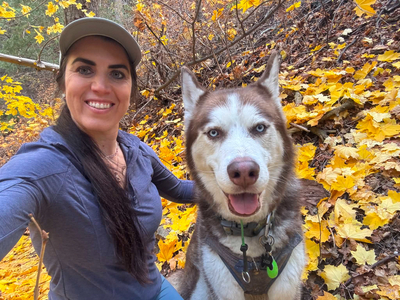
Some individuals who foster for the shelter say they have had positive experiences.
Allison Barrilleaux has fostered over 40 animals for the shelter since moving to Utah. She has been involved in rescue for years and said she was happy to work directly with a shelter.
“I have had a very good experience with the shelter. You know, no one is perfect. We all have our good days and bad days,” Barrilleaux said. “But overall my experience has been very good. I continue to support them.”
Concerns within the rescue world
One Dog Rescue called Dirt Roads refuses to work with the shelter. The rescue, along with multiple community members, have been vocal on social media about their complaints on their Facebook page “Utah Rescue Leaders Seeking Change,” which was started by Lisa Peterson, the president of Dirt Roads.
Concerns shared on the page include the shelter’s move away from listing lost animals on their website to listing them on Facebook. In her post, Peterson expressed concern for individuals with lost animals who don’t use social media not being able to find their pets and the public being able to ensure all animals are being posted, among other concerns.
Main said that while the shelter posts dogs on social media and holds them for five business days, staff also encourages owners to come into the shelter to be sure.
“From what we’ve seen, most people come directly to the shelter to look for their lost dog. We live in a social-media-heavy world and can reach more people that way,” Main said. “Our ‘return to owner’ numbers are the same.”
Peterson was initially organizing a protest against the shelter. It was announced in a Facebook post that the protest was postponed after potential participants expressed fear of retaliation.
“This is a postponement, not a surrender.” Peterson said in her post. “We will continue advocating for transparency, accountability, and better outcomes for the animals.”
Salt Lake City, UT