Flock cameras divide Tennessee governments, residents over privacy as some end their contracts
Sep 08, 2026 | 6:01 am ET
Description
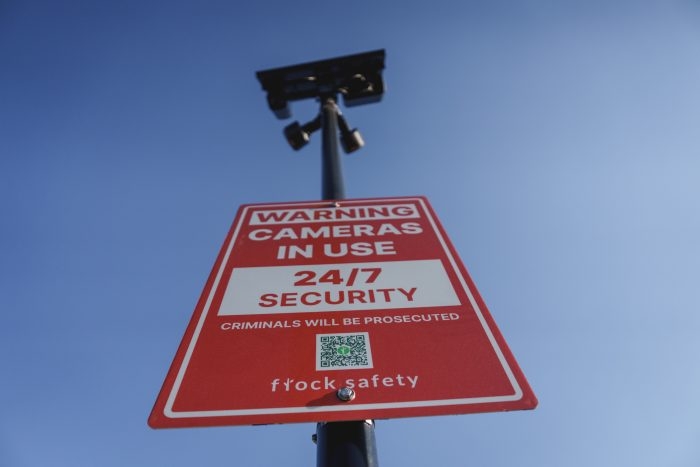
The increasing use of Flock automated license plate readers, ALPR, is drawing scrutiny from East Tennessee elected officials and members of the public. (Photo: Getty Images)
Sullivan County, Tennessee Commissioner Joe Carr made headlines in August when he proclaimed at a public meeting that the CEO of security company Flock Safety “should be hanged” for treason, calling the company “one of the most hated” in America.
His comments, though incendiary, come amid a reckoning over the security cameras monitoring traffic in many American communities over the past few years. The issue has sparked debate over the conflicting values of privacy and community safety.
With some communities sticking by Flock and others ending their contracts, there’s no clear consensus that has emerged on where communities will go from here.
Days after Carr’s comments, the Sullivan County Commission voted not to renew its Flock contract, which expires in January.
Flock, a surveillance hardware manufacturer, is known for its automated license plate reader, ALPR, cameras, which have become controversial as local governments and law enforcement use them to help solve crimes. The cameras pick up images of vehicles and license plates on the road and feed into a nationwide network, allowing law enforcement to access cameras from anywhere in the country.
This has become contentious among the public, members of whom raise alarm over mass surveillance and privacy erosion concerns.
The Institute for Justice, a nonprofit public interest law firm, has catalogued more than 100 instances of law enforcement officers using the technology for non-law enforcement uses and stalking, including two in Tennessee. Some governments are rethinking using them, including in Knoxville, while Nashville has stalled implementation of the systems.
“The American people deserve better than to be used as a beta test for unproven technology that is turning local police departments into mini-CIAs,” said Carr in an email statement.
Anderson County officials also have doubts: the county will hold a town hall in September about its use of the cameras, and Anderson County Commissioner Chad McNabb said “around 75%” of residents had serious concerns about privacy relating to them.
Still on board
Yet many east Tennessee municipalities swear by the utility of the cameras. Blount and Carter counties still partner with Flock.
In a letter to the Blount County Commissioners, Sheriff’s Office Chief Deputy Jeff French wrote that the department doesn’t track people using the cameras and doesn’t deploy AI tools to analyze the public. French writes that the department uses the cameras “as an investigative tool,” using it to find leads on crimes and look for vehicles already flagged as stolen or on national databases like missing persons.
Calling the benefits of the technology “real and significant,” French wrote that the cameras have “helped us locate missing and endangered persons, recover citizens’ stolen vehicles and property, monitor sex offenders near our schools, disrupt drug trafficking and apprehend violent offenders with arrest warrants.”
Much ado about cameras in Johnson City
Johnson City, which partnered with Flock for a 10-year contract in 2025, has 145 license plate readers and 145 pan/tilt/zoom cameras. The city also has gunshot detectors and two mobile security trailers.
At a city commission work session on Aug. 20, Johnson City Police Deputy Chief Mike Adams said the cameras were only used to take photos of cars and license plates — he said they do not track peoples’ movements and can’t take video. He added that the gunshot detectors can’t pick up human conversation.
He said the pan/tilt/zoom cameras were placed in public areas like parks or schools, and were used to monitor for crimes or suspicious individuals, including sex offenders.
Those who violate the use of the cameras would be fired, according to Adams, which he said happened in previous cases across the country. Adams said those firings proved the “system was working.”
“You’re not going to find someone who’d like to see [a bad cop] lose their job more than the cop trying to do the right thing,” he said.
The truth is, there are civil liberties set up around cameras and surveillance, to catch abuses of those systems. The same arguments could be made about handcuffs, or interrogations – everything the police do has a civil liberty attached to it.
To Adams’ knowledge, no one in the Johnson City Police Department had misused the cameras yet, he told Tennessee Lookout.
Addressing privacy concerns, Adams said it was a “reasonable expectation” that people in public would be caught on some kind of camera somewhere.
He said Johnson City Police have been able to communicate easier with law enforcement in neighboring states to find people via license plates.
“Before [the cameras], all you were doing was a report for the victim,” he said. “The suspect was out of Johnson City. We’d never see that stuff again.”
In one case, Adams said police were able to locate a child who had gone missing from a McDonalds. It turned out the boy had wandered off on his own with a friend, and was not in danger, but Adams said Flock had saved them a lot of time and helped ease the family’s worry.
“That wouldn’t have happened two years ago,” Adams said. “We wouldn’t have known where they were. We would’ve had to rely on Amber Alerts and community members to find them.”
Johnson City Commissioner Joe Wise told the Lookout they have to “separate the technology from the misuse of technology.”
“The truth is, there are civil liberties set up around cameras and surveillance, to catch abuses of those systems,” he said. “The same arguments could be made about handcuffs, or interrogations – everything the police do has a civil liberty attached to it.”
“So the question is, really, are we going to use the tools responsibly, or are we going to turn our back on it, and leave our community less-adequately served on the public safety side?” he said.
Wise and Johnson City Mayor Greg Cox believe the public ultimately will appreciate the greater safety coming from the cameras.
“Most of the arguments out there are political arguments, and they have nothing to do with anything but creating a bunch of noise,” Cox said. “People are thankful there’s these tools out there for the police. Overwhelmingly, to me, there’s a positive conversation about it. We hear a lot more conversation than the things that get shared [online].”
Fired up
Despite government confidence, plenty of people are fired up and angry about the cameras. Some of them are angry enough to physically destroy them, including Adam Heimerman, an independent candidate for the 2nd Congressional District, who was arrested on four counts of vandalism after reportedly shooting four Flock cameras in his area.
Stockard on the Stump: Lee Administration walking tightrope on license plate readers
People have been arrested for vandalizing Flock cameras across the country. In Florida, police plant decoy Flock cameras to catch vandals.
After Flock CEO Garrett Langley told Fox News that focusing on privacy “prioritizes the wrong things,” the Flock critics leaked what they purported was his home address.
Flock officials didn’t respond to a request for comment by Tennessee Lookout.
The DeFlock movement
DeFlock.org has a map of where Flock cameras have been found across the country. The group’s goal is to “raise awareness about the threats [Flock] poses to personal privacy and civil liberties, and empower the public to take action.”
Local offshoot groups have sprung up. The man who runs the “DeFlock Johnson City, Tennessee” Facebook page is Johnson City resident Connor Beske.
He said he doesn’t have any particular qualifications except passion.
“I’m dumb and stubborn,” he said. “I’ll stick with something as long as I need to.”
In the three months since he started the page, he’s gotten more attention than he knows what to do with.
“A lot of candidates” at the local and state level want to get involved, he said.
“There’s some lobbyists I’ve talked to working on this,” he said. “They’re like, can you drive to Knoxville and hang out with this and this lawmaker? I’m like, well I can’t because I have a job, and this is insane.”
Beske thinks the Flock cameras, and others like them, are a more serious problem than other privacy concerns such as Google tracking your phone or modern vehicles with smart features.
“If you don’t want them tracking you, removing a computer module from your truck isn’t a small feat, but you’re allowed to,” he said. “But if you drive that truck on the public road in a town with hundreds of cameras, you’re getting tracked anyway. You took all those steps, still the government circumvented all of it, and they still know where you’re going.”
Nashville, TN